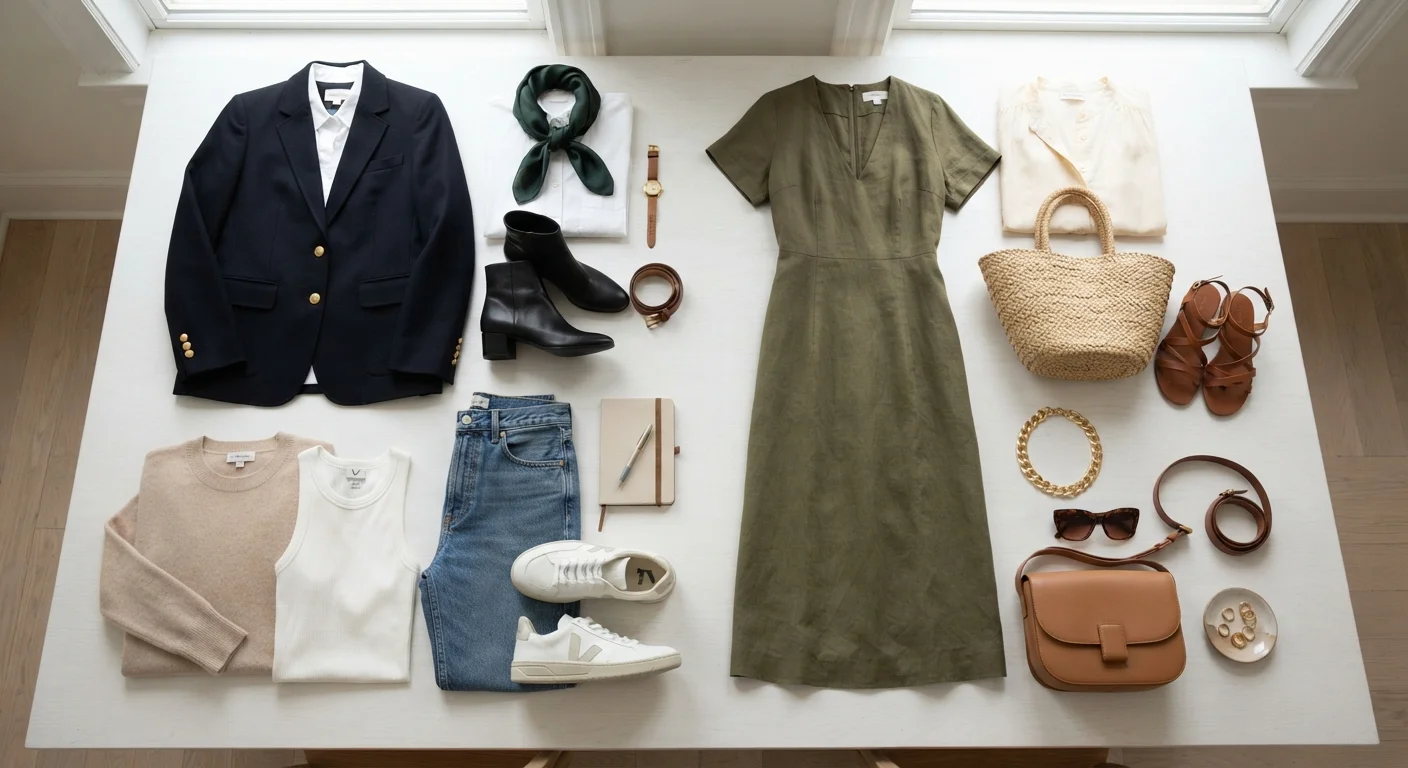
What Is a Style Archetype?
A style archetype is a named aesthetic framework — a shorthand for a consistent set of visual signals, garment choices, silhouettes, and attitudes toward dressing. Archetypes don't prescribe what you must wear; they describe clusters of choices that tend to appear together. Knowing the name for a style you're drawn to makes it easier to articulate preferences, shop intentionally, and build a coherent wardrobe over time.
Most people's actual style sits at the intersection of two or three archetypes rather than squarely inside one. Treat these definitions as reference points, not rigid boxes. If you're still working out which language fits you, our piece on where personal aesthetics come from can help contextualize what you're drawn to and why.
| Number of core archetypes covered | 8 (minimalist, maximalist, classic, bohemian, streetwear, preppy, romantic, androgynous) |
| Can styles be mixed? | Yes — most personal styles sit at the intersection of two or more archetypes |
| Primary use of archetypes | Diagnostic and communicative — helping you articulate and build toward a coherent aesthetic |
| Related design parallel | Fashion archetypes share conceptual overlap with interior design style categories |
Core Archetypes: Definitions and Hallmarks
The following archetypes appear most frequently in contemporary style conversation. Each entry covers the core philosophy, signature elements, and the sensibility behind the look.
Minimalist
Rooted in the idea that less communicates more. Hallmarks include a restrained color palette (often neutrals and monochromatics), clean silhouettes, high-quality fabrication, and the deliberate absence of decorative detail. The goal is visual calm and longevity over trend. See also: dressing with intention.
Maximalist
The deliberate embrace of abundance — layered prints, bold color combinations, statement accessories, and an overall density of visual interest. Maximalism treats dressing as performance and self-expression, where more is intentionally more. It overlaps conceptually with related design philosophies explored in minimalist vs. maximalist interiors.
Classic / Timeless
Drawn from decades of enduring tailoring traditions. Think structured blazers, trench coats, straight-leg trousers, and refined knitwear. This archetype prioritizes investment pieces over seasonal trends and tends toward a neutral, conservative palette.
Bohemian
Influenced by counterculture and folk traditions. Hallmarks include flowing silhouettes, natural fibers, earthy tones, layering, and handcrafted or artisan-feel accessories. The look reads as relaxed, romantic, and unconstructed.
Streetwear
Originated in skate and hip-hop subcultures and now spans a wide spectrum. Core elements include graphic tees, oversized silhouettes, technical fabrics, sneakers as a focal point, and a general comfort-first philosophy with strong cultural referencing.
Preppy / Collegiate
Draws from Ivy League and New England coastal tradition. Characterized by polo shirts, chinos, oxford-cloth button-downs, cable-knit sweaters, and a clean, polished finish. Color tends toward navy, red, white, and green combinations.
Romantic
Soft, feminine-leaning, and detail-rich. Common elements include ruffles, lace, floral prints, flowing fabrics, and a generally delicate or whimsical mood. The palette often favors blush, ivory, dusty rose, and soft pastels.
Androgynous
Deliberately blurs or ignores conventional gender markers in clothing. Combines structured tailoring with soft elements, or borrows freely across traditional menswear and womenswear categories, prioritizing fit and proportion over gendered convention.
Style archetype
A named aesthetic category that groups consistent visual signals, silhouettes, and sensibilities. Archetypes serve as reference frameworks rather than strict prescriptions for how to dress.
Silhouette
The overall shape or outline a garment or outfit creates on the body. Silhouette is one of the primary ways different style archetypes distinguish themselves visually.
Palette
The range of colors characteristic of a particular style or wardrobe. Many archetypes have recognizable palette tendencies — for example, minimalism tends toward neutrals, while maximalism often features bold or clashing combinations.
Capsule sensibility
An approach to dressing that prioritizes a smaller, highly intentional collection of versatile pieces over a large, varied wardrobe. Common among minimalist and classic archetypes.
Androgyny (in fashion)
A styling approach that deliberately blurs conventional gender distinctions in clothing, mixing elements from across traditional menswear and womenswear without prioritizing either category.
Ornamentation
Decorative detail added to garments — such as embroidery, ruffles, hardware, or print — that adds visual complexity. High ornamentation is characteristic of maximalist and romantic archetypes; its absence defines minimalism.
Using Archetypes to Clarify Your Own Style
Archetypes are most useful as diagnostic tools, not destination labels. One practical approach: collect images of outfits that genuinely appeal to you over several weeks without editing for practicality. Then look for recurring patterns — silhouette preferences, dominant colors, the presence or absence of pattern and ornamentation. Those recurring signals usually point toward one or two archetypes.
Archetypes Are Starting Points, Not Rules
No style archetype requires a complete wardrobe overhaul or a strict adherence to every element listed. Identifying with an archetype simply means that its core values and visual signals resonate with you — you can express those values using what you already own, adjusted gradually over time. Style labels exist to serve your clarity, not to constrain your choices.
From there, you can work backward: if you identify strongly with minimalism but your wardrobe is fragmented, the archetype gives you criteria for what to add and what to let go. If two archetypes pull at you equally — say, classic tailoring and bohemian ease — that tension is itself a style point. Mixing structured and relaxed elements is a well-established approach, not a contradiction. Our guide to expressing personal style on a limited wardrobe budget addresses how to do this without needing to overhaul your entire closet at once.
Color language also plays a significant role. Many archetypes have characteristic palettes — streetwear skews toward high-contrast darks and brights, classic leans neutral, romantic favors muted pastels. If you're unsure which palette resonates with you, finding your colour palette without overthinking it can serve as a useful companion exercise. And if you've absorbed style rules you're not sure actually apply to you, many of them don't.
Style Influences Worth Knowing
A curated look at subcultural, artistic, and historical movements that have shaped the major style archetypes — useful context for understanding where these aesthetics originally came from.
Finding Your Colour Palette Without Overthinking It
Practical guidance on identifying colors that work for your complexion and preferences, with direct relevance to narrowing down which archetypes align with your natural instincts.