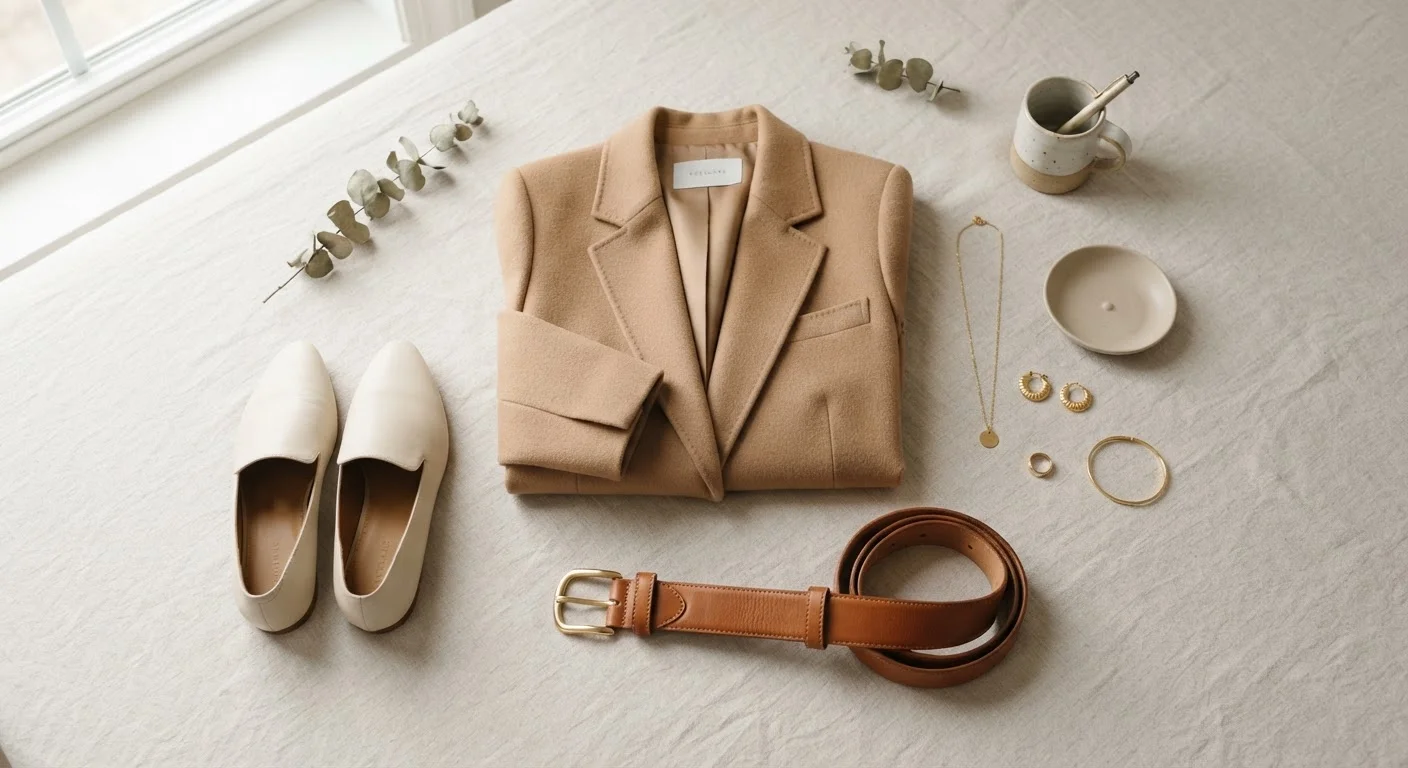
What Makes a Piece 'Signature'
The word 'signature' implies authorship — something distinctly yours. In dressing, a signature piece is any element of your wardrobe that you return to because it consistently feels right. It isn't defined by price, rarity, or trend alignment. It's defined by repetition with intention.
Signature pieces can take almost any form: a particular silhouette you favor (relaxed trousers, fitted turtlenecks), a recurring accessory (a watch, a scarf worn a specific way), a color you default to, or even a fabric texture you gravitate toward. What unifies them is that they're not random — they reflect something stable about how you want to show up.
Understanding what signature dressing really means is closely tied to the broader question of what personal style actually is — and why it matters beyond surface-level aesthetics.
Signature Pieces Aren't Uniforms
Dressing with intention doesn't mean wearing the same thing daily or eliminating variety. A signature piece anchors your look — it doesn't imprison it. Many people with strong personal style have a wide range of pieces, all of which feel cohesive because they share a common sensibility or thread.
How People Develop Signature Pieces
Most people don't sit down and deliberately assign themselves a signature. The process is more organic. You notice, in hindsight, that you've bought the same type of item in three different colors, or that every photo from the past two years shows you in the same leather boots. That's your style speaking without prompting.
A useful exercise: audit what you actually wear versus what sits untouched in your closet. The items with wear patterns — the ones that need re-soling, re-hemming, or re-dying — are often your true signatures. They're the pieces doing real work in your life.
Cultural context, personal history, and visual references all shape which items resonate. If you want to trace the deeper roots of your preferences, style influences worth knowing offers a useful framework for understanding where personal aesthetics come from.
Track Your Actual Wear, Not Your Intentions
For two weeks, note which items you put on and take off without hesitation versus the ones you debate or skip. The effortless choices are your signatures in progress. This observation exercise is more revealing than any style quiz or mood board.
Why Anchoring Your Wardrobe This Way Works
Decision fatigue is real, and the average closet full of loosely related items compounds it. When you build around a core of signature pieces, getting dressed becomes a process of arrangement rather than reinvention every morning.
Wardrobe coherence is another benefit. When your pieces share a common thread — whether that's a color story, a consistent fit philosophy, or a recurring material — outfits come together more naturally. You spend less time second-guessing combinations because the pieces were selected with similar intentions.
~80%
Clothing worn regularly vs. owned
Research on wardrobe habits consistently suggests most people wear only around 20% of their clothes regularly, underscoring how much of what we own doesn't reflect actual preferences.
35+
Daily decisions the average person makes about appearance
Behavioral studies on decision fatigue suggest that simplifying routine choices — including what to wear — can preserve cognitive resources for higher-stakes decisions.
This approach also tends to be more economically sustainable over time. Fewer, more personally meaningful purchases replace a cycle of impulse buying items that never quite fit your actual life. For practical guidance on building a cohesive wardrobe without significant spending, expressing personal style on a limited budget offers concrete strategies.
It's also worth understanding how signature dressing differs from simply favoring classics. Classic versus trendy dressing explores how each approach shapes a wardrobe differently — and how intentional dressing can draw from both.
Putting the Concept Into Practice
If you're trying to identify or establish your own signatures, start by narrowing rather than adding. Observe your existing wardrobe with fresh eyes, noting patterns without judgment. Then consider whether those patterns reflect how you actually want to dress — or habits you've defaulted into.
Naming your aesthetic can help provide structure. Style archetypes give you a vocabulary for the visual direction you're drawn to, which in turn makes it easier to recognize which pieces genuinely belong in your signature rotation.
Finally, test potential signature pieces across contexts. A true signature works in most situations you actually encounter — not just ideal ones. Understanding occasion dressing can help you assess whether a piece has the flexibility your real life demands.