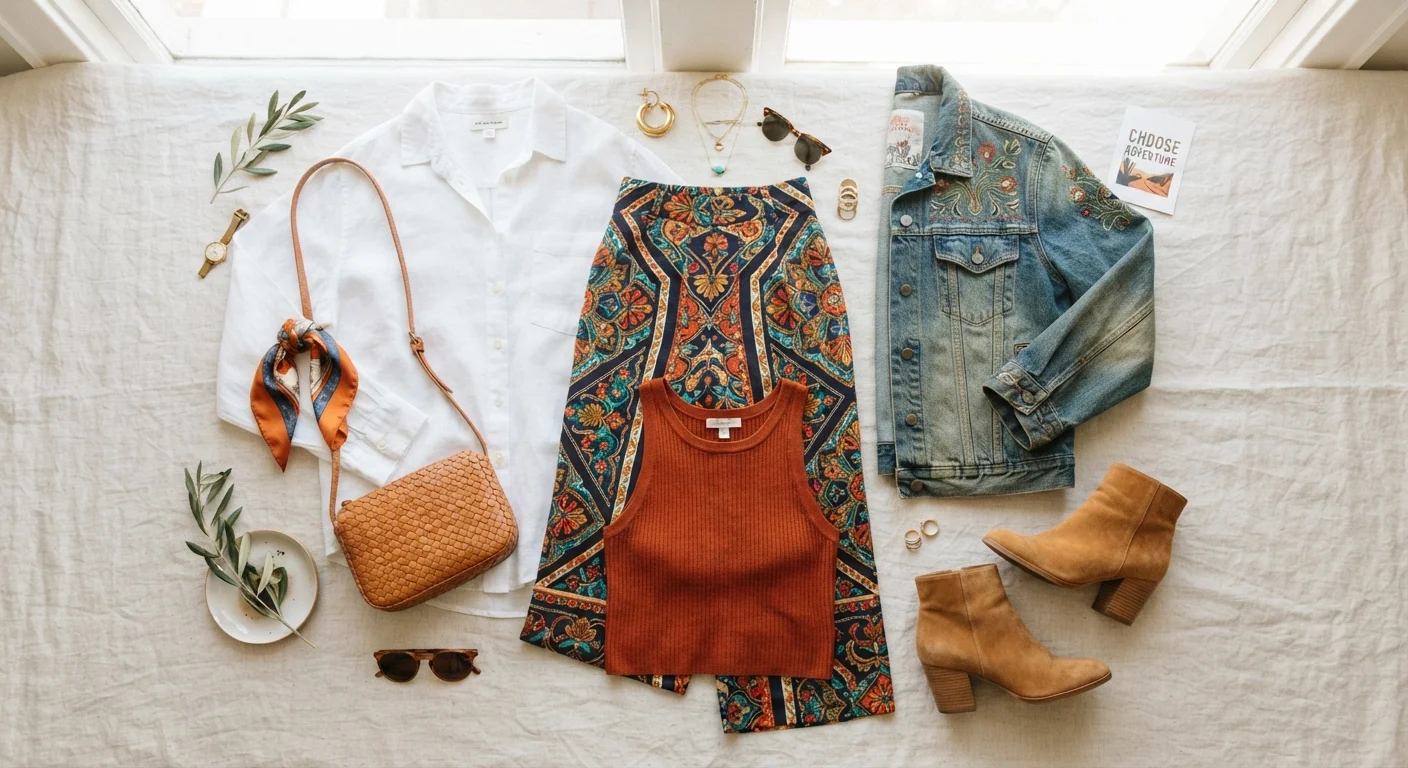
Where Fashion Rules Actually Come From
Most style rules that feel authoritative have surprisingly mundane origins — marketing campaigns, class-based social signaling, or the preferences of a narrow demographic elevated to universal truth. Understanding this context is the first step to filtering which guidelines are genuinely useful and which can be safely set aside.
That doesn't mean all conventions are meaningless. Some principles — like understanding how proportion affects visual balance, or how fit affects the overall read of an outfit — have real practical value. The difference is that useful principles expand your toolkit. Arbitrary rules limit it. As you explore your own aesthetic, our guide to classic vs. trendy dressing offers a grounded way to think about where your wardrobe investments actually make sense.
Rules vs. Guidelines: Know the Difference
True style guidelines — like understanding how proportions affect visual balance — exist to inform your choices, not restrict them. If a so-called rule makes you feel limited or self-conscious without serving any practical purpose, it's worth questioning its origins. Style should work for you, not against you.
The Myths, Corrected
Below are some of the most commonly repeated style rules — examined for where they came from, why they persist, and whether they hold up under scrutiny.
Myth
You should never wear white after Labor Day.
Fact
This rule has no practical or aesthetic basis and is widely disregarded by designers, stylists, and everyday dressers alike.
The 'no white after Labor Day' rule is believed to have originated in early 20th-century American social circles as a class signifier — a way to distinguish those who could afford seasonal wardrobes. It was never a law of aesthetics. White and cream tones appear in fall and winter collections regularly, and winter white has long been a recognized style category. Wear white when it serves your outfit, regardless of the calendar date.
Myth
You must dress for your body type by following specific silhouette rules.
Fact
Body type dressing systems are simplified frameworks, not scientific guidelines — and they often reinforce narrow ideals rather than helping people dress well.
The 'dress for your body type' model — with its pear, apple, hourglass categories — was popularized by fashion media mid-century and has since been challenged by stylists and body-positive advocates alike. These systems often assume the goal is to create one particular silhouette, which may not align with your aesthetic preferences at all. Understanding proportion can be a useful tool, but it should expand your options, not prescribe them. Wear what feels authentic and fits well — those are the real criteria.
Myth
You shouldn't mix metals — gold and silver jewelry should never be worn together.
Fact
Mixing metals is a deliberate styling technique used by professional stylists and is widely embraced in contemporary fashion.
The prohibition against mixing metals likely comes from a matching-everything approach to dressing that dominated mid-20th-century etiquette. In practice, layering gold and silver — or adding in rose gold, bronze, or oxidized finishes — creates visual texture and depth. The key is intentionality: mixing metals works when there's a coherent logic to the combination, such as a consistent tone temperature or repeated material across pieces. Done thoughtfully, it reads as styled, not sloppy.
Myth
Certain colors are off-limits based on your skin tone or 'season.'
Fact
Color analysis systems offer one perspective, but no color is objectively forbidden for any person.
Seasonal color analysis — categorizing people as 'springs,' 'autumns,' and so on — can be a fun framework for exploring what tones feel harmonious near your face. But it's a subjective system with significant variation depending on the practitioner. The underlying idea that certain undertones are more flattering in certain lights has some basis in color theory, but it doesn't mean you cannot wear a color you love. Strategic use of placement (near the face versus elsewhere in an outfit) can resolve many perceived clashes. Ultimately, confidence in a color often does more perceptual work than undertone matching.
Myth
You should dress your age — certain styles are only appropriate for younger people.
Fact
'Dressing your age' is a social expectation, not a style principle — and one that has shifted considerably over recent decades.
The idea that certain silhouettes, hemlines, or trends are age-inappropriate is rooted more in cultural convention than in any objective aesthetic logic. Stylists and fashion editors across the industry have pushed back on this framing, pointing out that what reads as 'appropriate' changes by era, culture, and individual body. What matters far more is whether a garment fits well, suits the context, and aligns with your personal aesthetic — not the number on your birth certificate. For more on how style evolves naturally over time, see our piece on adapting your style through life transitions.
Myth
Mixing patterns is a style mistake that should be avoided.
Fact
Pattern mixing is a legitimate technique with clear principles — it's a skill, not a faux pas.
The fear of mixing patterns often comes from a lack of framework rather than any real aesthetic rule. Pattern mixing works reliably when you vary the scale (pair a large floral with a small stripe, for example), maintain a shared color story, or use one neutral pattern as an anchor. Many globally recognized style approaches — including traditional menswear and maximalist aesthetics — rely on intentional pattern mixing as a core element. If you're building a more defined personal vocabulary around this, our style archetypes reference can help you identify where pattern play fits your broader aesthetic.
Don't Let 'Rules' Substitute for Fit
The one principle that does hold across nearly all style contexts is fit. Clothes that fit your actual body — regardless of trend, color season, or age — almost always look more intentional than perfectly rule-compliant pieces that don't. When in doubt, prioritize fit over formula.
Building Confidence Beyond the Rules
Once you've shed the rules that don't serve you, the more interesting work begins: identifying what you actually respond to and why. This is where personal style becomes a genuine form of self-expression rather than compliance with external expectations.
A useful starting point is naming your aesthetic — not to box yourself in, but to create a coherent framework for decisions. Our style archetypes reference walks through common aesthetic categories in plain language. And if budget is a constraint, authentic personal style is entirely achievable — expressing personal style on a limited budget outlines practical approaches that don't rely on spending. Style fluency, ultimately, comes from curiosity and repetition — not rule-following.
1920s
Decade the 'no white after Labor Day' rule emerged
Fashion historians trace the rule to early 20th-century American social customs used to signal class status, not any functional dress standard.
4 types
Original seasonal color analysis categories
The seasonal color system (Spring, Summer, Autumn, Winter) was popularized in the early 1980s and has since expanded into dozens of sub-categories with no universal standardization.