What Is a Layover, Really?
A layover is the time spent at an intermediate airport between two flight segments on the way to your final destination. While the terms are often used interchangeably, there is a practical distinction: a connection typically refers to a short stop (usually under four hours on domestic routes, or under 24 hours internationally), while a stopover generally means an intentional overnight or multi-day break at an intermediate city.
Understanding which category your itinerary falls into matters because it affects everything from immigration procedures to luggage handling. On many international itineraries, your bags are checked through to your final destination automatically — but not always. If you transit through a country where customs inspection is required (the United States being a notable example), you will claim and re-check your luggage even if your connection is tight.
For a broader view of pre-travel preparation, the pre-departure checklist covers documents and logistics worth sorting before you ever reach the airport.
Layover vs. Stopover: Why the Label Matters
Airlines and fare systems use these terms with some inconsistency, but the distinction can affect fare rules, baggage allowances, and what amenities or compensation you are entitled to. When in doubt, review the specific terms attached to your ticket rather than relying on the label alone.
How Much Connection Time Is Enough?
There is no universal answer, but context narrows it considerably. Airlines publish Minimum Connection Times (MCTs) for each airport — the shortest interval they consider operationally safe between an arriving and departing flight. Booking below the MCT is typically prevented by airline systems, but booking just above it leaves almost no margin for delays, long walks between gates, or slow security lanes.
Practical minimums by scenario:
- Domestic-to-domestic, same terminal: 45–60 minutes can be workable at smaller airports; 60–90 minutes is safer at busy hubs.
- International arrival, domestic departure: Plan for at least 2–3 hours to allow for immigration, baggage claim, re-check, and security screening.
- International-to-international, same airline/terminal: 90 minutes to 2 hours is a reasonable floor; some hub airports require more.
- Separate tickets: Add extra buffer. If you miss the second flight, the second airline has no obligation to rebook you.
When booking a connection at an unfamiliar large hub, look up that airport's inter-terminal transfer method before assuming your layover time is comfortable — some airports require a bus transfer that adds 30+ minutes.
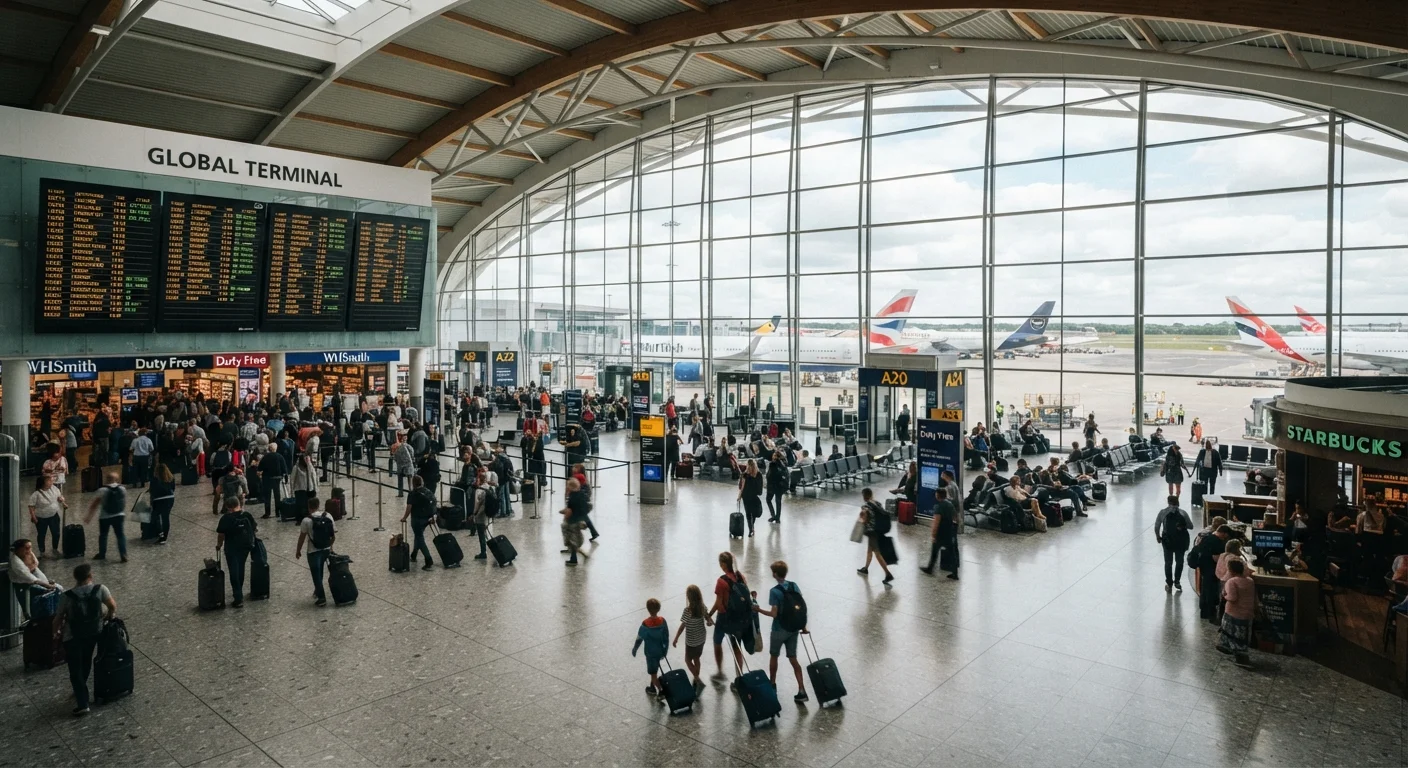
Terminal layout is one of the most overlooked variables in connection planning; travelers frequently underestimate transit time inside airports they have never visited.
If you are connecting on separate tickets and your inbound flight is delayed, contact the outbound airline proactively — some carriers will accommodate you even without legal obligation, especially if you reach them before the flight closes.
Gate agents have more flexibility before a flight departs than after; early communication often produces better outcomes than waiting until the connection is already missed.
Airport layout matters enormously. A 90-minute connection at a compact regional airport is very different from the same window at a sprawling multi-terminal hub where inter-terminal transfers require a train or bus ride. Research your specific layover airport before assuming any time is sufficient.
Transit Visas: Do You Need One?
Transit visa rules are among the most commonly misunderstood areas of international travel. The requirement is determined by three factors: your passport nationality, the country of the layover airport, and whether you will pass through immigration (i.e., leave the international airside zone). Even a brief connection can trigger a visa requirement if you must clear immigration — and some countries require transit visas even for airside transits for certain passport holders.
Common scenarios where requirements catch travelers off guard:
- Transiting through the UK, Schengen area, Canada, or Australia often requires a transit visa or eTA for certain nationalities, even without leaving the airport.
- If your connecting flight departs from a different terminal that requires passing through immigration, a simple airside transit becomes a full entry.
- Dual nationals may have different obligations depending on which passport they present.
Transit Visa Rules Can Change Rapidly
Transit visa requirements are subject to change with minimal public notice and vary based on bilateral agreements between countries. A rule that applied on your last trip may no longer apply — or new requirements may have been introduced. Always check official government sources within a few weeks of your departure date, not months in advance.
For a deeper look at how visa assumptions lead to real travel disruptions, see common visa myths debunked.
Always verify requirements using your government's official travel advisory portal and the destination country's immigration authority well in advance of travel — rules can change with little notice.
When Flights Are Delayed or Missed
How much protection you have when things go wrong depends significantly on how your ticket was booked. Single-ticket itineraries — where all segments are issued under one booking reference — place the burden of re-accommodation on the operating airline if the missed connection results from their delay. Separate tickets provide no such guarantee; each airline treats your booking independently.
Steps to take when a connection looks at risk:
- Notify your airline or gate agent as soon as the inbound delay is confirmed — do not wait until you land.
- Use the airline's app to search for alternative routing while you are still in the air.
- At the connecting airport, go directly to the gate or the airline's transfer desk — not the general ticketing queue, which is usually slower.
- Ask specifically about hotel vouchers and meal allowances if the delay results in an overnight stay — airline obligations vary by country and cause of delay.
For safety context on navigating unfamiliar airports and transit situations, the transportation safety abroad guide offers relevant grounding.
Separate Tickets Mean Separate Risk
When you book connecting flights on separate tickets to save money, each airline treats your journey independently. If you miss the second flight due to a delay on the first, you may need to purchase a new ticket at the current fare. Factor this financial risk into any decision to split your booking.
Making a Long Layover Work for You
A layover of five hours or more — especially overnight — shifts from inconvenience to opportunity if you approach it with a plan. Many international hub airports offer notable amenities: day-use lounges, showers, transit hotels, dining, and even in-terminal art installations. These can meaningfully improve a long wait without requiring you to clear immigration.
If your layover exceeds eight hours and you have the appropriate visa clearance, a brief city excursion is often feasible. Some airports are positioned close to city centers with reliable transit connections. Before attempting this, confirm:
- You have the required transit or entry visa for that country.
- You have enough time to clear immigration, travel, and return with buffer for security re-entry.
- Your checked luggage is secured at the airport (many airports offer left-luggage services).
Time zone shifts during long layovers can compound fatigue. The jet lag guide outlines general strategies travelers use to manage circadian disruption across long itineraries.
Use Airport Downtime Strategically
Long layovers are an ideal time to charge all your devices, reorganize your carry-on, download offline maps for your destination, and eat a proper meal before a long flight. Treating the time as productive rather than wasted reduces travel fatigue significantly.
Key Habits Before Every Connecting Flight
Building a short pre-travel checklist around your layover reduces the likelihood of being caught off guard. Before departure:
- Confirm your MCT and terminal layout for the connecting airport — airline apps and airport websites publish this.
- Check visa and transit requirements via your government's official travel portal, not third-party aggregators.
- Note your airline's delay and rebooking policy — particularly if segments are on different carriers.
- Screenshot your booking confirmation and gate information in case of connectivity issues abroad.
- Account for time zone changes when reading departure times; understanding UTC and local time helps avoid scheduling errors.
Layovers are a routine part of international travel, but they reward preparation. The travelers who move through connecting airports confidently are almost always the ones who understood the rules before they needed them. For broader trip-readiness strategies, the trip planning hub is a practical starting point.
~25%
US flights arriving late in a typical year
According to U.S. Bureau of Transportation Statistics data, roughly one in four domestic flights experiences some arrival delay annually.
45–90 min
Typical published minimum connection times
Airlines set Minimum Connection Times by airport and route type; the range reflects variation between small domestic airports and large international hubs.
100+
Countries requiring transit visas for some nationalities
Airside and landside transit visa requirements apply to specific passport holders across more than 100 countries, per international immigration authorities.