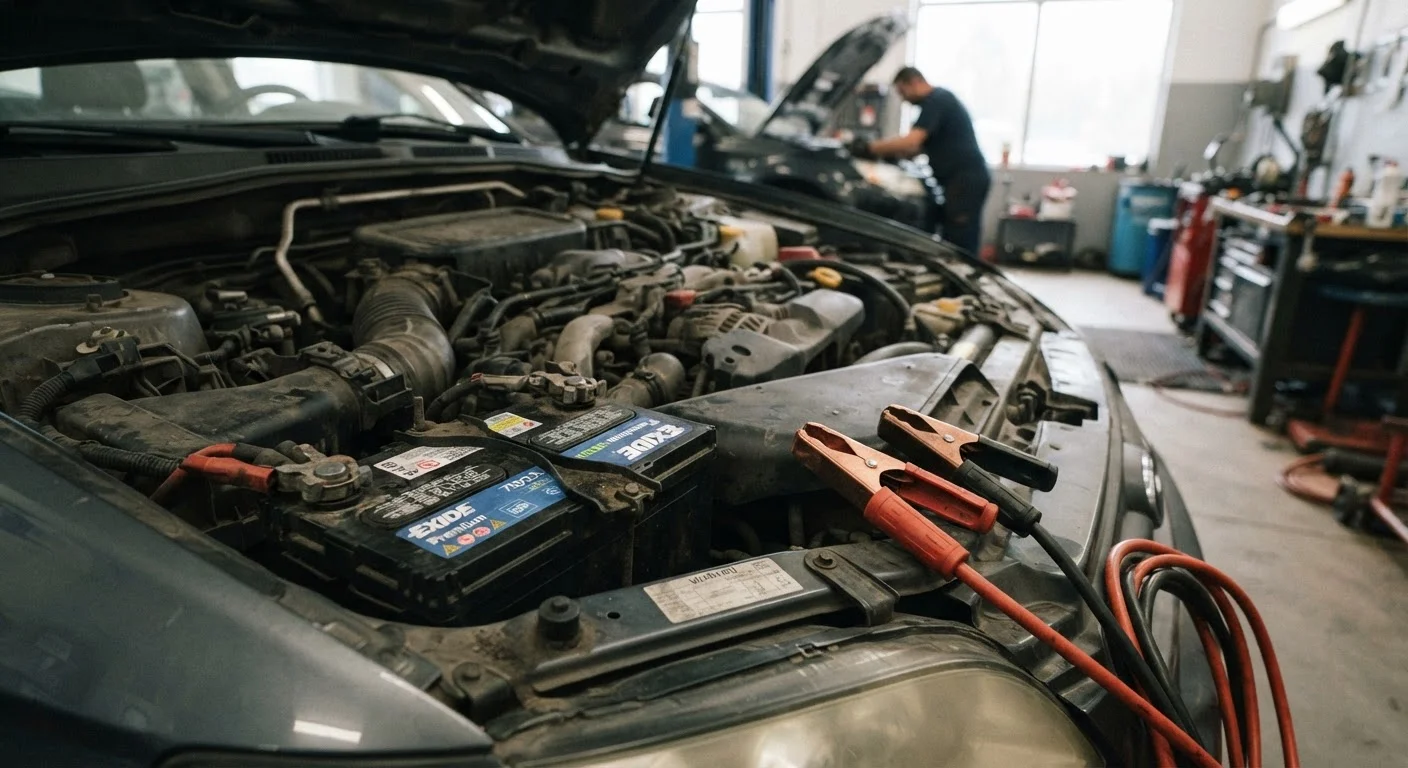
How a Car Battery Actually Works
Your car's 12-volt lead-acid battery stores chemical energy and converts it into electricity the moment you turn the ignition. That burst of current powers the starter motor, which spins the engine fast enough for combustion to begin. Once running, the alternator takes over — supplying power to the car's systems and recharging the battery simultaneously.
The battery is also responsible for stabilising voltage across the electrical system and providing backup power if the alternator can't keep up with demand. Without a healthy battery, every electrical component in your vehicle — from the fuel injection system to the infotainment screen — operates under strain.
If you're just starting out as a car owner, see our guide for first-time car owners for a broader look at how your vehicle's systems work together.
Why Batteries Lose Capacity Over Time
Inside a lead-acid battery, repeated charge and discharge cycles cause the active material on the battery plates to gradually shed and accumulate at the bottom of the cells — a process called sulfation and shedding. Over time, the plates become less effective at holding and releasing charge.
Heat is the single biggest accelerator of battery degradation. High under-hood temperatures speed up the chemical reactions that break down the battery's internal structure. Paradoxically, cold weather doesn't wear the battery out as fast — but it does reduce its available power exactly when more cranking energy is needed to start a cold engine.
3–5 years
Typical car battery lifespan
Industry guidance consistently places average lead-acid car battery life in the three-to-five-year range under normal driving conditions.
~50%
Power reduction in extreme cold
At 0°F, a lead-acid battery can deliver roughly half the cranking power it provides at 80°F, according to battery engineering references.
Over 40%
Of no-start calls linked to battery
Roadside assistance data from major motoring organisations consistently shows battery-related failures as one of the leading causes of breakdown call-outs.
Short, frequent trips compound the problem. If your engine runs for only a few minutes at a time, the alternator rarely has enough time to fully recharge what the starter motor used. Over weeks and months, a chronically undercharged battery becomes permanently weakened — a pattern common among urban drivers. This mirrors a similar phenomenon in consumer electronics: battery wear affects phones too, and the underlying chemistry shares some parallels.
Recognising the Warning Signs
Batteries rarely announce their failure clearly, but they do leave clues. The most common early indicators include:
- Slow or laboured cranking — the engine turns over sluggishly before starting, especially on cold mornings.
- Dimming headlights at idle — lights that brighten when you rev the engine suggest the battery isn't holding enough charge at low alternator output.
- Frequent need for jump-starts — a battery that keeps dying is not simply having bad luck.
- A swollen or misshapen battery case — caused by excessive heat, this is a sign the battery should be replaced promptly.
- A dashboard warning light — a battery or charging system warning deserves immediate attention. See our guide to dashboard warning lights to understand what these symbols mean.
Test Your Battery Before Winter
Cold weather is the most demanding time for any car battery, and a marginal battery that copes in autumn may fail entirely once temperatures drop. Having your battery load-tested before the cold season arrives is one of the simplest preventive steps you can take. Most garages and tyre centres offer this check at little or no cost.
Testing, Maintenance, and When to Replace
Battery testing is straightforward and takes only a few minutes at most auto service centres or repair shops. A load tester applies a controlled electrical load and measures how well the battery maintains voltage — a far more reliable indicator of health than simply checking the resting voltage with a multimeter.
For routine upkeep, keeping battery terminals clean and free of corrosion (the white or bluish crust that builds up around the posts) helps maintain a solid connection. Loose terminal connections can mimic a dead battery and cause intermittent starting problems.
As a general rule, if your battery is over four years old and showing any of the warning signs above, replacement is worth considering before it fails unexpectedly. If your vehicle is stored for extended periods, a maintenance charger (sometimes called a trickle charger) can prevent the deep discharge that shortens battery life — a point covered in more detail in our article on storing a car long-term without causing damage.
Building these habits early makes a real difference. Our vehicle maintenance guide for new drivers covers battery care alongside the other fundamentals worth knowing from the start.
Battery Replacement Is a Job Worth Delegating
While swapping a car battery is physically straightforward on many vehicles, modern cars often require a reset procedure after battery replacement to recalibrate systems such as power windows, the throttle body, and transmission. Some vehicles also require a battery registration process so the alternator charges the new battery correctly. A qualified mechanic can confirm whether your vehicle has these requirements before you proceed.