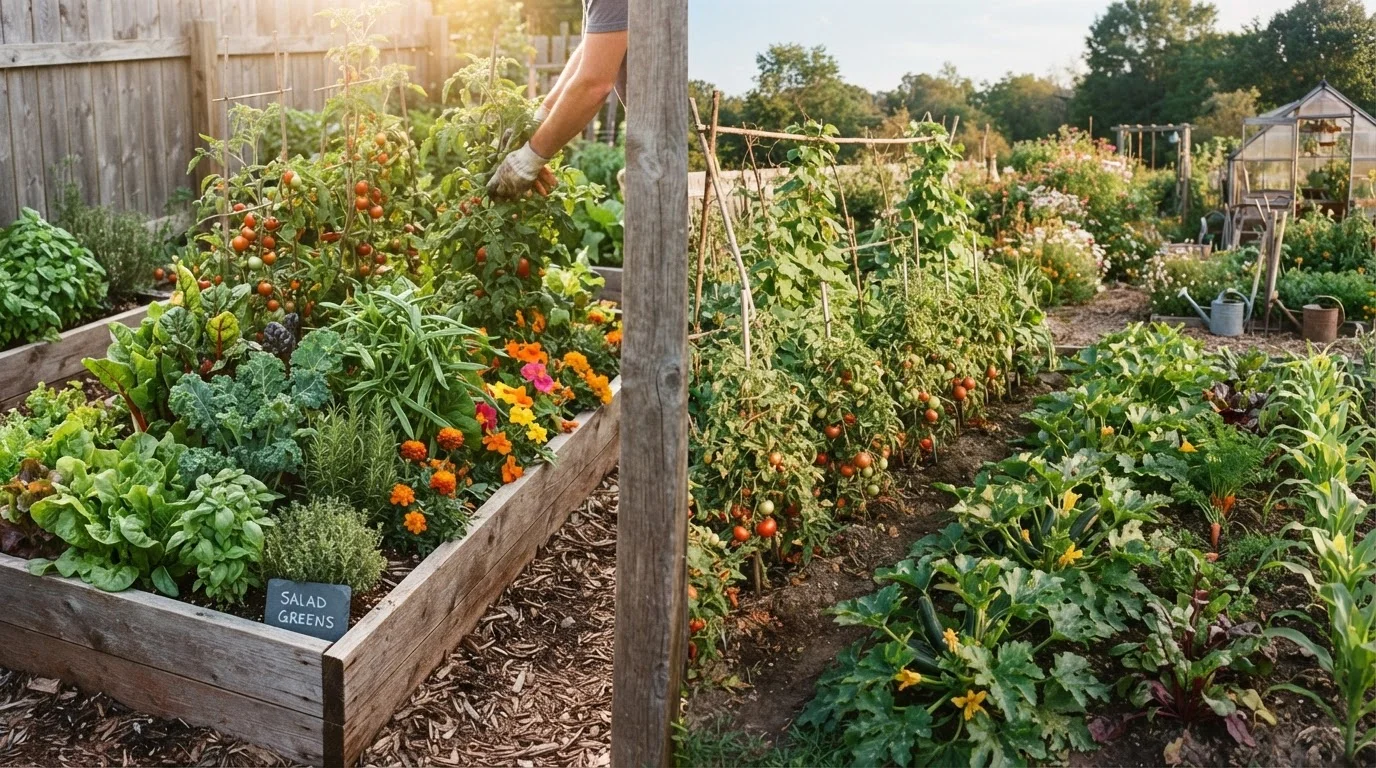
Soil Control and Drainage
One of the sharpest contrasts between the two methods is how much control you have over the growing medium. With raised beds, you fill the structure yourself — typically with a blend of topsoil, compost, and a drainage-improving amendment such as perlite or coarse sand. This means you start with known, optimized conditions regardless of what lies beneath. Drainage in a well-built raised bed is excellent, as gravity pulls excess water through the open base and into the subsoil below.
In-ground gardening means working with what you have. If your yard has heavy clay, persistent wetness, or sandy soil that loses nutrients and moisture quickly, you will spend considerable time and effort amending it before results improve. That said, well-structured native loam — common in many parts of the US — needs only moderate compost incorporation to produce generous harvests. Thoughtful soil preparation also reduces water dependency in both systems.
| Criterion | Raised Beds | In-Ground Planting |
|---|---|---|
| Upfront cost | Higher (materials + fill soil) | Lower (minimal infrastructure) |
| Soil control | Full — custom blend from day one | Depends on native soil quality |
| Drainage | Excellent by design | Variable — site dependent |
| Weed pressure | Lower initially, increases over time | Higher, especially near lawn edges |
| Scalability | Costly to expand significantly | Easy and inexpensive to scale |
| Spring warm-up | Faster — extends growing season | Slower in cold climates |
| Accessibility | High — adjustable working height | Lower — requires bending/kneeling |
| Deep-rooted crops | Limited by bed depth | Unrestricted root depth |
Cost and Setup
In-ground planting has an obvious cost advantage: the ground is already there. Getting started typically requires a spade or tiller, some compost, and seed or transplants — a modest outlay even for a sizeable plot. Raised beds, by contrast, require material for the frame (wood, galvanized metal, or composite board), structural fasteners, and a substantial volume of fill soil. A single 4×8-foot bed filled to twelve inches deep needs roughly sixteen cubic feet of growing mix, and good-quality mixes add up quickly.
Over time, raised beds can pay back their upfront cost through higher yields per square foot, reduced weed pressure, and less soil compaction — but that payback horizon matters. If you plan to grow across a large area, building the equivalent square footage in raised structures becomes cost-prohibitive compared to amending and cultivating ground rows. New gardeners evaluating their options may find it useful to review our first-timer's vegetable garden guide before committing to either layout.
16 cu ft
Fill needed per standard 4×8×12" bed
A common rule of thumb used by extension garden educators to help gardeners budget soil purchases before building.
2–4 weeks
Earlier spring planting in raised beds
University cooperative extension resources commonly cite raised beds warming several weeks ahead of in-ground soil in temperate US climates.
~30%
Less water use with proper mulching
Research from US land-grant institutions suggests mulched garden beds can reduce irrigation needs by roughly a third compared to bare soil.
Maintenance, Weeds, and Seasonal Performance
Raised beds have a well-earned reputation for reduced weed pressure, but this advantage is strongest in the first few seasons. Over time, wind-borne seeds colonize any exposed soil surface, and the contained environment can actually concentrate weed growth. Laying a weed-suppressing fabric beneath the bed at construction helps, though it may limit earthworm access from below. A consistent layer of mulch is one of the most effective ongoing strategies in both systems for suppressing weeds and retaining moisture.
In-ground beds are more exposed to foot traffic, soil compaction from rain, and broadleaf weeds spreading from surrounding lawn or garden edges — all of which require regular attention. On the seasonal side, raised beds warm up faster in spring because the soil mass is surrounded by air on multiple sides. This can extend the effective growing window by several weeks in cooler climates, a genuine advantage for warm-season crops. For gardeners thinking about plant selection within either system, pairing approaches with the right species makes a real difference — see our guide on annual vs. perennial plants for deeper context.
Soil Refresh Matters in Both Systems
Raised bed soil compacts and depletes nutrients over successive seasons, requiring annual topping-up with compost. In-ground beds benefit equally from regular organic matter additions. Neither method is a set-and-forget solution — ongoing soil care is what sustains productivity over the long term.
Which Method Fits Your Garden Goals?
Neither raised beds nor in-ground planting is universally superior — the better choice depends on your site, budget, physical needs, and what you intend to grow. Raised beds excel when native soil is genuinely problematic, when accessibility matters, or when you want the highest possible yield from a compact footprint. In-ground planting scales more economically, accommodates deep-rooted crops more naturally, and suits gardeners with good soil who want to cover more ground without large structural investment.
Mixing both approaches on the same property is also a practical option: raised beds for intensive salad crops, herbs, and high-value vegetables; open ground for sprawling squash, corn, or established fruit plantings. You might also explore how companion planting can improve yield and pest management within whichever system you choose. And if space is genuinely limited, container gardening offers a third path worth considering alongside these two.