Why Water-Wise Gardening Matters
Water is increasingly scarce across many regions of the United States, and outdoor irrigation accounts for a significant share of residential water use — often more than 30 percent, according to the EPA. Drought-tolerant gardening is not simply a trend; it is a practical response to changing climate patterns, water restrictions, and rising utility costs.
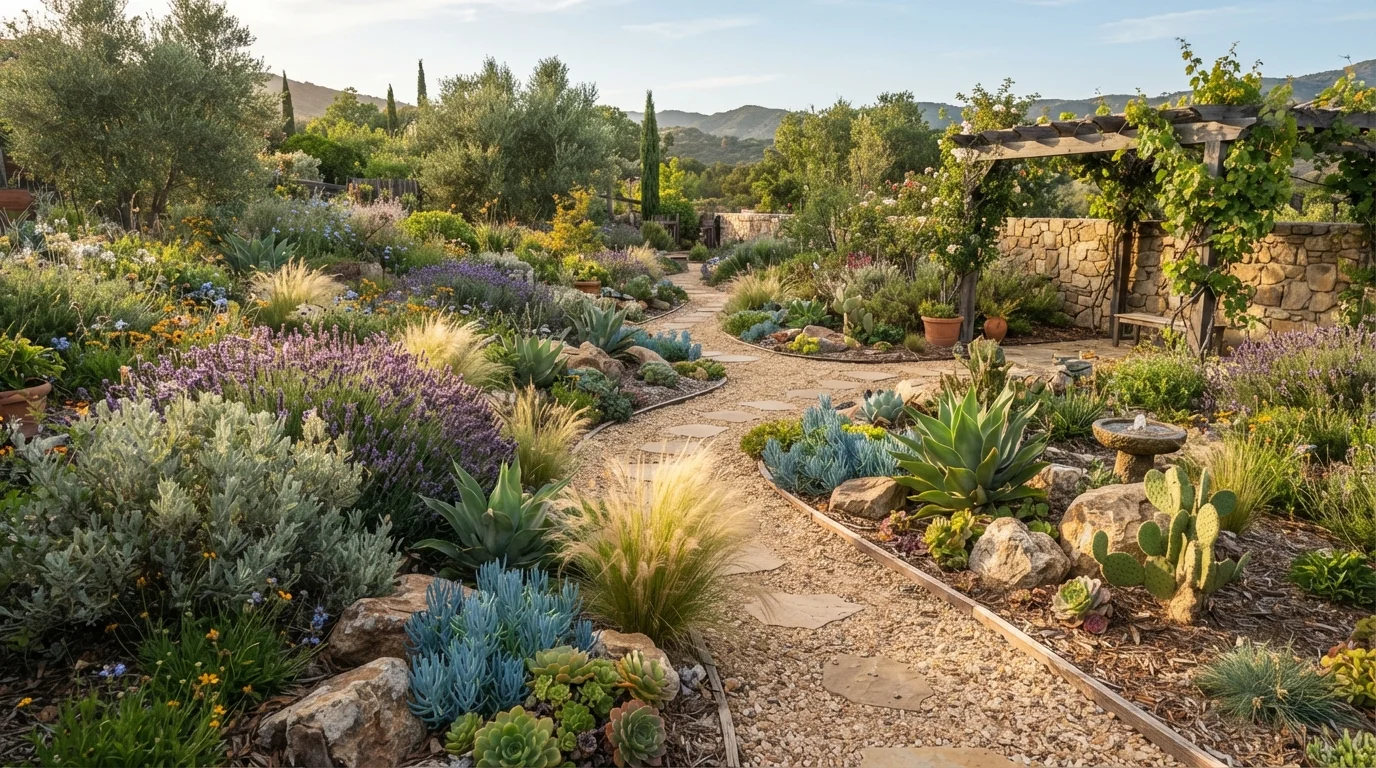
Importantly, a water-wise garden is not a barren xeriscape of rocks and cactus. When designed thoughtfully, these gardens are layered, seasonal, and genuinely beautiful. The guiding principle is efficiency: giving plants what they need, when they need it, and designing the garden so it naturally holds onto every drop. Whether you are starting from scratch or rethinking an existing space, this guide covers the foundational strategies that matter most.
30%+
Residential water used outdoors
According to the U.S. Environmental Protection Agency, outdoor water use accounts for more than 30% of total household water consumption on average.
50%
Reduction in irrigation water loss with drip systems
Drip irrigation can reduce water use by up to 50% compared with conventional overhead sprinklers, according to University Cooperative Extension research.
2–4 in
Optimal organic mulch depth for moisture retention
Horticultural guidance from multiple land-grant university extension programs recommends 2–4 inches of organic mulch to meaningfully reduce soil evaporation.
Building a Soil That Holds Moisture Intelligently
Soil is the foundation of any drought-resilient garden, and most garden soil benefits from deliberate improvement before planting. Healthy soil does two important things simultaneously: it drains well enough to prevent root rot, and it retains enough moisture to buffer plants between rain events.
The key amendment for most soils is organic matter — compost, aged leaf mold, or well-rotted manure. Worked into the top 8–12 inches of soil, organic matter improves both water retention in sandy soils and drainage in dense clay soils. Aim to incorporate 2–4 inches of compost before planting.
For gardeners weighing how much soil control matters, our comparison of raised beds vs. in-ground planting explores how each approach handles drainage and moisture differently.
Before amending soil, do a simple drainage test: dig a hole about 12 inches deep, fill it with water, and observe how fast it drains. If it takes more than 4 hours to empty, drainage improvement should come before water-retention work.
Planting into poorly drained soil causes root suffocation and crown rot — problems that no amount of drought-tolerant design can overcome. Knowing your baseline drainage saves costly plant losses.
When establishing new drought-tolerant plants, water deeply every 3–4 days for the first month, then taper to once a week, and finally to once every 10–14 days. Let the plant's appearance — not a fixed schedule — guide when to stop supplemental watering entirely.
Gradual irrigation tapering mimics natural soil-drying cycles and signals the plant to extend roots deeper, building true drought resilience rather than surface dependency.
Avoid tilling more than necessary. Repeated deep tilling breaks up the underground fungal networks (mycorrhizae) that help plants access water and nutrients more efficiently. Minimal-disturbance planting preserves these beneficial networks.
The Power of Mulch in Drought Conditions
If there is a single practice that delivers the highest return on effort in drought-tolerant gardening, it is mulching. A 2–4 inch layer of organic mulch over bare soil does the following: it slows evaporation dramatically, moderates soil temperature, suppresses weeds that compete for moisture, and gradually feeds the soil as it breaks down.
Suitable organic mulch options include shredded bark, wood chips, straw, and pine needles. Apply mulch after planting but pull it back slightly from direct contact with plant stems and crowns, which can promote rot. For a detailed breakdown of mulch types and application rates, see our mulch reference guide.
Avoid Fresh Wood Chip Mulch Around Edibles
Fresh, uncomposted wood chips can temporarily tie up soil nitrogen as they break down, which may slow the growth of vegetable crops and annuals. Aged or composted wood chip mulch is a safer choice for edible beds. Reserve fresh chips for ornamental shrubs, trees, and pathways where nitrogen competition is less of a concern.
Inorganic mulches such as gravel or decomposed granite are popular in arid climates and require no replenishment, though they do not add organic matter to the soil over time. They work particularly well around succulents and Mediterranean herbs that prefer lean, dry root zones.
Smart Irrigation: Timing, Method, and Depth
How you water matters as much as how often. Many gardeners habitually water lightly and frequently, which encourages shallow root systems that become more dependent on regular irrigation — not less. The better approach is deep, infrequent watering that wets the soil 6–8 inches down, prompting roots to chase moisture deeper into the ground where it remains available longer.
Water in the early morning when temperatures are cool and wind is minimal. Evening watering can work, but foliage that stays wet overnight is more susceptible to fungal disease. For a closer look at common watering mistakes, our article on garden watering myths clarifies what the evidence actually shows.
Drip irrigation and soaker hoses deliver water directly to the root zone, reducing evaporation by 30–50 percent compared with overhead sprinklers. They are especially effective in vegetable beds and mixed perennial borders. Pairing drip systems with a simple timer removes guesswork and prevents overwatering during cooler or wetter periods.
Use a Soil Moisture Probe Before Watering
An inexpensive soil moisture probe or even a wooden dowel inserted 4–6 inches into the ground tells you whether the soil is still adequately moist before you turn on the irrigation. Watering only when the soil is actually dry at root depth — not just dry at the surface — is one of the most effective ways to reduce total water use and avoid root problems.
Plant Selection and Garden Design Strategies
Once soil, mulch, and irrigation are addressed, plant selection becomes the next layer of drought-tolerance strategy. Native plants and regionally adapted species are naturally calibrated to local rainfall patterns and often require little or no supplemental watering once established — typically after one to two growing seasons.
Look for plants described as drought-tolerant after establishment; most need consistent moisture in their first season to develop root systems deep enough to handle dry spells independently. Group plants with similar water requirements together — a practice called hydrozoning. This prevents the common problem of overwatering drought-tolerant plants because they share a bed with thirsty ones.
Garden layout also plays a role. Low-lying areas naturally collect water and suit plants that tolerate occasional moisture; raised or sloped spots dry out fastest and suit true xeric plants. If you are designing a larger outdoor area, the principles in our guide to designing a functional outdoor space apply well to water-wise planning. Shade from trees and structures also reduces soil evaporation and plant stress, extending the time between waterings naturally.
“The best time to prepare your garden for drought is before the drought arrives. Soil health, mulch, and root depth are built over seasons — they cannot be improvised once water is scarce.”
— Cooperative Extension Service, Land-grant university outreach program on sustainable horticulture
Putting It All Together
Drought-tolerant gardening is not a single technique but a layered system. Healthy, amended soil retains moisture efficiently. Mulch preserves what rainfall and irrigation deliver. Deep, timed watering trains roots to access stored moisture. And plant selection, along with thoughtful layout, reduces how much supplemental water the garden needs in the first place.
Start with whichever layer has the most room for improvement in your current garden. Often, simply adding mulch and adjusting irrigation timing produces noticeable results within one season. For those building from the ground up, our first-timer's vegetable garden guide offers a strong foundation for incorporating water-wise habits from day one.
Container gardeners face unique water-retention challenges given how quickly pots dry out — our container gardening guide for small spaces covers drainage and watering strategies suited to that format.
The goal is a garden that works with your local climate rather than against it — resilient, lower-maintenance, and genuinely satisfying to tend.
Water Restrictions Vary by Region
Many municipalities impose seasonal watering schedules or restrictions during drought conditions. Before investing in an irrigation system or planning major planting, check with your local water utility or municipality to understand any applicable rules. Some utilities also offer rebates for drip irrigation installation or mulch purchases — a detail worth confirming directly with your provider.