Choosing the Right Spot
Before you buy a single seed packet, spend a few days observing your yard. The most important variable in vegetable gardening is sunlight — most vegetables need a minimum of six hours of direct sun each day, and eight to ten hours produces noticeably better yields. Walk your yard at midday and note which areas stay bright longest.
Once you've identified sunny candidates, consider these practical factors:
- Water access: Choose a spot within easy reach of a hose or outdoor spigot. Lugging watering cans across a yard quickly becomes a chore that gets skipped.
- Level ground: Flat or gently sloped areas drain more evenly than steep slopes, which can cause topsoil and nutrients to wash away.
- Distance from trees: Large trees compete aggressively for water and nutrients, and their roots can invade garden beds.
- Wind exposure: Some shelter from prevailing winds protects young seedlings, but avoid areas with no airflow at all — stagnant air encourages fungal problems.
If you have limited outdoor space, don't be discouraged. Our guide to container gardening on balconies and patios covers how to produce a meaningful crop even in tight quarters.
Check Local Regulations Before Digging
Before breaking ground on a new in-ground garden bed, call 811 (the national safe digging hotline in the US) to have underground utility lines marked. This is a free service and a legal requirement in most states before any digging project. Also verify whether your municipality or HOA has guidelines on garden structures such as raised bed frames.
Understanding and Preparing Your Soil
Healthy soil is the foundation of every productive vegetable garden. Before planting, take a handful of your native soil and examine it. Good garden soil is loose, dark, and slightly crumbly — it holds its shape briefly when squeezed but breaks apart easily. Heavy clay soil compacts and drains poorly; sandy soil drains too quickly and retains few nutrients. Both can be improved.
The single most effective amendment for most soils is compost — decomposed organic matter that improves drainage in clay soils, water retention in sandy soils, and nutrient availability in both. Work 2–4 inches of finished compost into the top 8–12 inches of your bed before planting.
Compost
Decomposed organic material — such as food scraps and yard waste — that is mixed into soil to improve its structure, drainage, and nutrient content.
Soil pH
A measure of how acidic or alkaline your soil is, on a scale of 0 to 14. Most vegetables prefer a slightly acidic range of 6.0 to 7.0.
Direct-sow
Planting seeds directly into the ground or a garden bed, rather than starting them indoors in trays and transplanting the seedlings later.
Hardiness Zone
A geographic designation from the USDA that indicates the average minimum winter temperatures in your area, used to determine which plants can survive and thrive in your region.
Transplant
A young plant started from seed in a protected environment (like a pot or tray) that is then moved into its permanent outdoor garden location.
Mulch
A layer of material — such as wood chips, straw, or shredded leaves — spread on the soil surface to retain moisture, suppress weeds, and regulate soil temperature.
Consider a basic soil pH test before your first planting. Most vegetables perform best in soil with a pH between 6.0 and 7.0 (slightly acidic to neutral). If your soil is too acidic, ground limestone can raise the pH; if it's too alkaline, sulfur can lower it. Your local cooperative extension office can advise on quantities based on your test results.
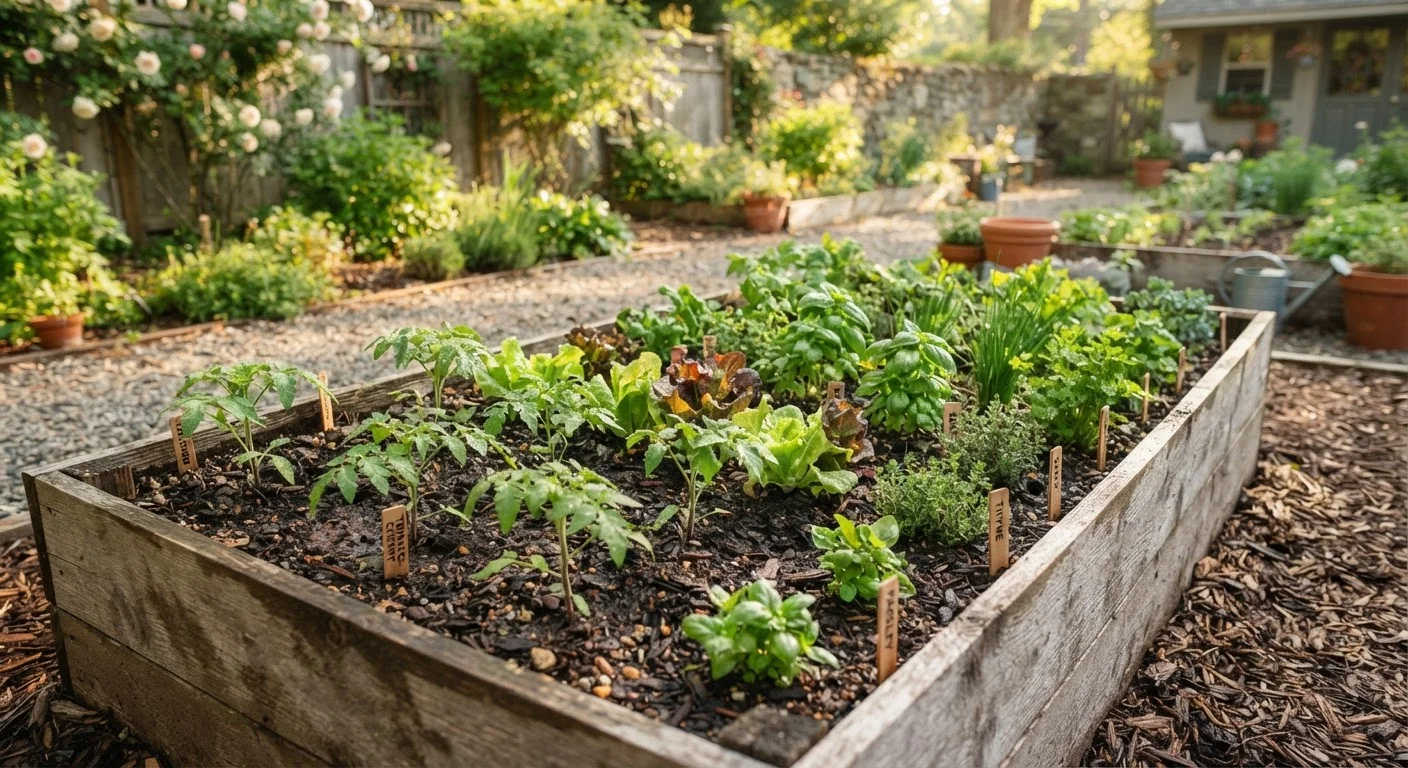
For new beds, a raised bed filled with a quality mix of topsoil and compost sidesteps many native soil challenges entirely and gives beginners an immediate advantage.
Deciding What to Grow First
A common beginner mistake is trying to grow too many things at once. Start with a small, curated list of vegetables well-suited to your region and growing season. Check your USDA Plant Hardiness Zone and your area's average last frost date — both are essential for timing plantings correctly.
Reliable first-season crops include:
- Lettuce and salad greens: Fast-growing, tolerant of minor care errors, and harvestable in as little as 30 days. Can be direct-sown.
- Radishes: The quickest reward in the garden — most varieties mature in 25–30 days from seed.
- Green beans: Direct-sow after your last frost date for a productive, low-maintenance crop.
- Cherry tomatoes: More forgiving than slicing tomatoes; most varieties produce heavily over a long season.
- Zucchini: Extremely productive and easy to grow, though one or two plants is usually plenty.
Pairing plants thoughtfully can also boost productivity. Our article on companion planting explains which plant combinations have genuine support behind them.
Planting, Watering, and Feeding
Seeds and transplants have different requirements, but both need correct depth and spacing. Read seed packets carefully — planting too deep is one of the most common germination failures. As a general rule, plant seeds at a depth roughly twice their diameter.
Watering fundamentals: Aim for about one inch of water per week. Water deeply and less frequently rather than shallowly every day — deep watering encourages roots to grow downward, making plants more drought-resilient. Water at the base of plants in the morning to reduce evaporative loss and minimize foliage wetness that can encourage disease.
After planting, apply a 2–3 inch layer of mulch around (not touching) plant stems. Mulch suppresses weeds, retains soil moisture, and moderates soil temperature. Our reference on types, uses, and application rates for mulch can help you choose the right material.
Feeding: If you've worked compost into your soil before planting, your plants have a nutritional head start. A balanced, slow-release granular fertilizer applied at transplant time or when seedlings are a few inches tall supports steady growth without overstimulating leafy growth at the expense of fruiting.
Track What You Plant and When
Keep a simple garden notebook or use your phone to photograph plant labels and record sowing dates. This record becomes invaluable by mid-season when you're troubleshooting growth or timing second sowings. At the end of the year, your notes will tell you exactly what to repeat and what to adjust.
Managing Pests and Keeping the Garden Healthy
No garden is pest-free, but most pest problems are manageable with early attention and simple methods. Walk your garden every two to three days and inspect both sides of leaves. Catching problems early — before populations explode — keeps damage minor.
Common first-garden challenges and responses:
- Aphids: Small, soft-bodied insects that cluster on new growth. A firm spray of water dislodges most colonies. Ladybugs are natural predators and a sign of a healthy ecosystem.
- Slugs and snails: More active in cool, moist conditions. Reduce hiding spots by keeping the area around plants clear of debris.
- Caterpillars: Hand-pick when populations are small. Row covers prevent many egg-laying insects from reaching plants in the first place.
- Powdery mildew: A fungal condition showing as white powder on leaves, common on squash and cucumbers in humid conditions. Improve air circulation and avoid overhead watering.
Avoid applying pesticides unnecessarily — many harm the beneficial insects that naturally keep pest populations in check. When intervention is needed, start with the least-toxic option appropriate to the specific problem.
Don't Apply Pesticides Without a Diagnosis
Many plant problems that look like pest damage are actually caused by nutrient deficiencies, watering issues, or disease — and pesticides won't help those. Misidentified problems treated with the wrong product can harm beneficial insects and make underlying issues worse. When in doubt, bring a sample to a local cooperative extension office for an accurate identification before acting.
Harvesting and What Comes Next
Most vegetables taste best — and keep producing longest — when harvested regularly at peak maturity. Leaving ripe produce on the plant signals it to stop producing. Check fast-growing crops like zucchini, green beans, and lettuce every day or two during peak season.
Harvest indicators by crop type:
- Tomatoes: Fully colored, slightly soft to gentle pressure, and pulling easily from the vine.
- Green beans: Pods are firm and snap cleanly; seeds inside should be small, not bulging.
- Lettuce: Harvest outer leaves continually, or cut the whole head just above the crown for possible regrowth.
- Zucchini: Best at 6–8 inches; larger fruits are tougher and signal the plant to slow down.
When the season winds down, a thorough shutdown sets up next year's success. Our end-of-season garden shutdown checklist walks through everything to do before the first frost — from clearing spent plants to protecting soil through winter.
Gardening is a skill that grows with practice. Your first season will teach you more than any guide can — keep notes on what worked, what struggled, and what you'd plant again. Each year builds on the last.