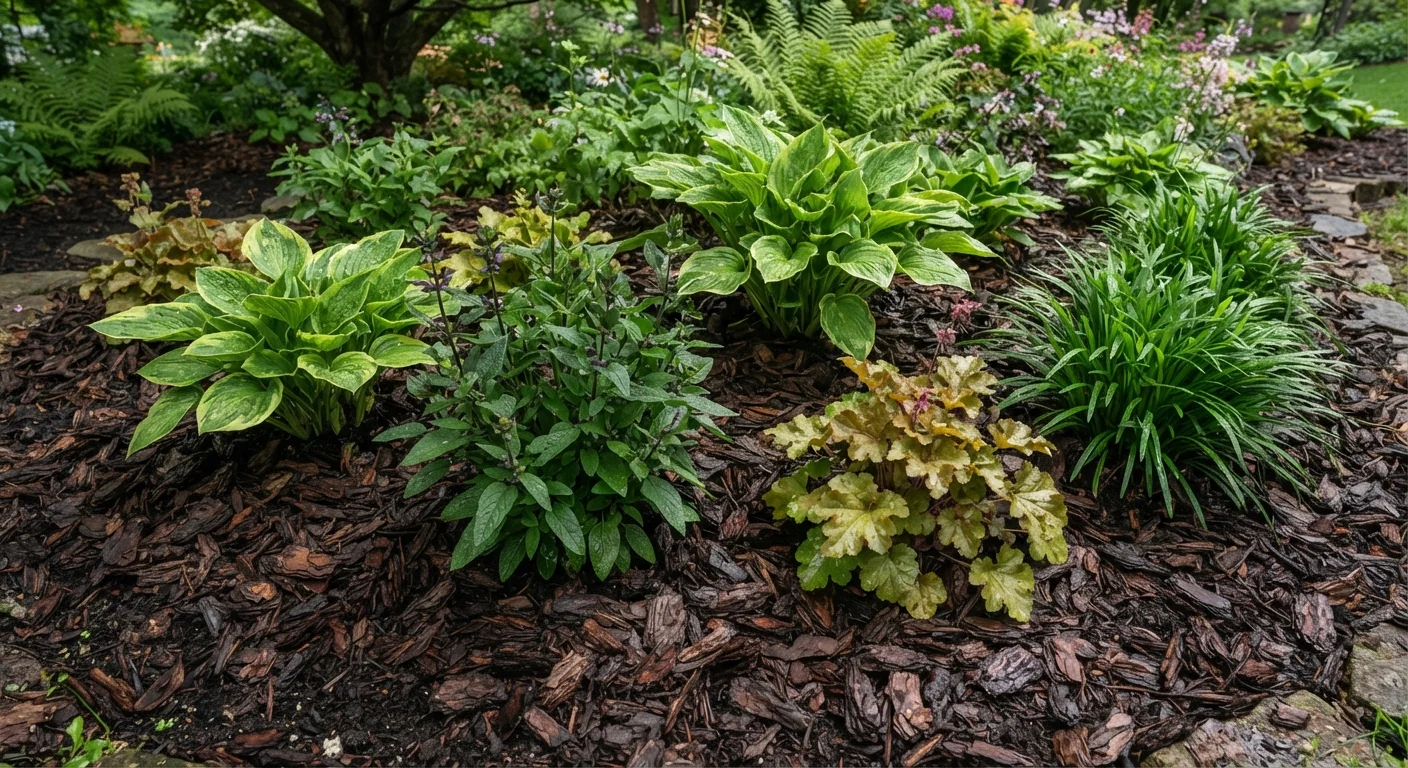
What Mulch Does and Why It Matters
Mulch is any material spread over the soil surface to modify growing conditions. Done right, it conserves soil moisture, moderates soil temperature, suppresses weed germination, and — in the case of organic types — gradually improves soil structure as it breaks down. It's one of the highest-return habits a gardener can build, particularly if you're working toward a water-efficient garden.
Understanding how mulch works starts with the soil surface. Bare soil loses moisture rapidly through evaporation, crusts under rainfall, and experiences wider temperature swings. A consistent layer of mulch acts as a buffer against all three. The right material — and the right depth — depends on what you're growing and what outcome you're prioritizing.
| Primary functions | Moisture retention, weed suppression, temperature regulation, soil improvement (organic) |
| Most versatile organic mulch | Shredded bark or wood chips |
| Typical depth range | 1–4 inches depending on material |
| Critical clearance rule | Keep mulch 2–3 inches away from plant stems and tree trunks |
| Best timing | Spring (after soil warms) and fall (before first hard freeze) |
| Organic vs. inorganic | Organic improves soil over time; inorganic offers durability without fertility |
Organic Mulch Types: Characteristics and Best Uses
Organic mulches decompose over time, feeding soil biology and improving texture. Each type has different decomposition rates, nutrient contributions, and ideal applications.
Organic mulch
Any mulching material derived from plant or animal matter that will decompose over time. As it breaks down, it adds organic matter to the soil and supports microbial life.
Inorganic mulch
Mulching materials such as gravel, stone, or plastic that do not decompose. They provide physical weed suppression and moisture retention without contributing nutrients to the soil.
Mulch volcano
A damaging practice of piling mulch in a cone shape against a tree trunk or plant stem. It traps moisture against bark, encourages rot and disease, and can slowly kill established plants.
Xeriscape
A landscaping approach designed to minimize water use, often featuring drought-tolerant plants, efficient irrigation, and inorganic mulches like gravel to reduce evaporation.
Top-dressing
A thin layer of material — often compost — spread over existing soil or turf. It improves soil structure and fertility without fully incorporating the material below.
- Shredded bark / wood chips: Long-lasting (1–3 years), excellent for paths and ornamental beds. Best applied 2–4 inches deep around trees, shrubs, and perennials. Keep a few inches away from plant stems to prevent rot.
- Straw: Lightweight and inexpensive; breaks down in a single season. A reliable choice for vegetable gardens and newly seeded areas. Apply 3–4 inches. Avoid hay, which can introduce weed seeds.
- Shredded leaves: Free and nutrient-rich. They mat when wet, so shred before applying. Use 2–3 inches in garden beds; mix with wood chips for better airflow. Pairs naturally with a home composting practice.
- Compost: More of a soil amendment than a weed suppressor, but when applied 1–2 inches thick it does double duty improving soil chemistry and structure while offering light mulching benefits.
- Pine needles (pine straw): Slow to decompose, slightly acidic — well-suited to blueberries, azaleas, and other acid-loving plants. Apply 2–3 inches.
- Grass clippings: Nitrogen-rich but must be applied thinly (no more than 1 inch) to avoid forming an anaerobic mat. Best mixed with coarser materials.
Inorganic Mulch Types: When Permanence Has Value
Inorganic mulches don't break down, which makes them low-maintenance but also means they contribute nothing to soil fertility. They're most appropriate for situations where durability or heat retention matters more than soil improvement.
- Landscape fabric: Reduces weeds under gravel or rock. Effective short-term but can hinder water infiltration and is difficult to remove after several years. Not recommended in vegetable beds.
- Gravel and crushed stone: Ideal around drought-adapted plants and in xeriscape designs. Retains heat, which benefits warm-season Mediterranean herbs. Apply 2–3 inches over landscape fabric.
- Black plastic sheeting: Warms soil effectively — useful for heat-loving crops like tomatoes and peppers in short growing seasons. Impedes rainfall penetration, so drip irrigation underneath is often necessary. Remove at season's end to avoid restricting soil biology.
- Rubber mulch: Made from recycled tires. Long-lasting, often used in playgrounds. Not recommended in food gardens due to potential leaching concerns.
For gardeners building raised beds or in-ground planting systems, the choice between organic and inorganic mulch often reflects overall soil-building goals.
25–50%
Soil moisture retained with mulch vs. bare soil
University cooperative extension research consistently shows mulched beds lose significantly less moisture to evaporation than uncovered soil.
10°F
Soil temperature moderation provided by mulch
Studies from land-grant university extension programs indicate a 2–4 inch organic mulch layer can buffer soil temperature fluctuations by roughly 10°F.
90%+
Weed suppression from adequate mulch depth
A properly applied 3–4 inch layer of opaque organic mulch can block the majority of weed seed germination by limiting light penetration to the soil surface.
Application Depth, Timing, and Common Mistakes
Applying mulch correctly is as important as choosing the right type. The most common error is piling mulch against plant stems and tree trunks — often called a "mulch volcano" — which traps moisture against bark, encourages disease, and can girdle roots over time. Always leave a 2–3 inch gap around the base of any plant.
General Depth Guidelines
| Mulch Type | Recommended Depth | Notes |
|---|---|---|
| Bark / wood chips | 2–4 inches | More for trees; less for perennials |
| Straw | 3–4 inches | Settles significantly after rain |
| Shredded leaves | 2–3 inches | Shred first to prevent matting |
| Compost | 1–2 inches | Best used as a top-dressing |
| Pine needles | 2–3 inches | Good around acid-preferring plants |
| Gravel / stone | 2–3 inches | Use landscape fabric beneath |
| Grass clippings | 1 inch max | Mix with coarser material |
When to Apply
Spring is the primary mulching window — apply after soil has warmed but before summer heat arrives. A second light application in fall helps insulate roots through winter. Avoid mulching frozen ground, as it can delay the soil warming plants need in early spring. If you're just starting a new vegetable garden, mulching after transplanting — not before — lets soil warm first.
Nitrogen Tie-Up in Fresh Wood Chips
Fresh, uncomposted wood chips can temporarily tie up soil nitrogen as they decompose — a process called nitrogen immobilization. This rarely harms established plants since the effect is confined to the mulch layer, not deep root zones. For seedlings or new transplants, use aged wood chips or a different organic mulch such as straw or shredded leaves to avoid any nutrient competition.