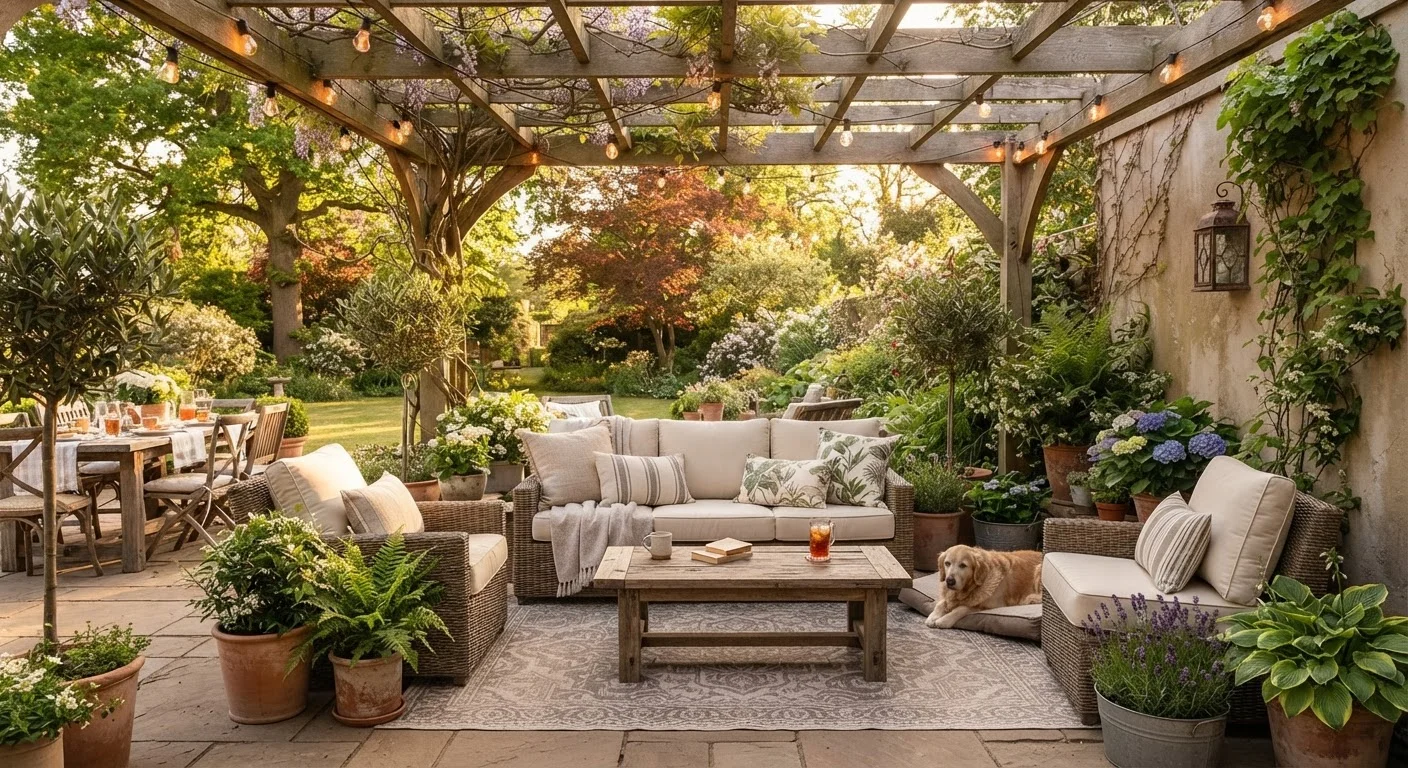
Start With What the Space Actually Does
Most underused backyards share one flaw: they were arranged, not designed. Furniture ends up where it fits, not where people want to sit. Plants go where there was open soil, not where they'd thrive or contribute to the space. The result is a yard that looks reasonable in photos but doesn't draw anyone outside.
Before moving anything, identify how you actually want to use the space. Dining? Morning coffee? Kids playing? Gardening? Each activity needs different conditions — surface type, sun exposure, proximity to the house. Listing your priorities shapes every decision that follows.
“The best outdoor spaces are designed not for a photograph, but for the way a family actually lives — where they eat, where the kids play, where someone reads in the morning.”
— Julie Moir Messervy, Landscape designer and author of 'The Inward Garden'
Read Your Site Before You Plan It
Sun angle, shade from trees or structures, wind corridors, and drainage patterns are non-negotiable constraints. A seating area placed in full western sun will be uninhabitable by 3 p.m. in summer. A planting bed in a low area may flood during heavy rain.
Spend time observing your yard at different hours and in different weather before committing to a layout. Note where shade falls in the morning versus the afternoon, where wind enters the property, and which surfaces stay damp longest after rain. This information costs nothing and prevents expensive mistakes.
87%
Homeowners who want more outdoor living space
According to the American Institute of Architects' Home Design Trends Survey, outdoor living consistently ranks among the most requested home features.
3–4x
Increased outdoor use with added shade structures
Landscape research consistently finds that comfortable shade coverage is the single most cited reason homeowners begin spending more time in their yards.
The same spatial awareness that helps with indoor rooms applies outside. If you're interested in how visual perception shapes how a space feels, our piece on why small rooms feel smaller covers complementary concepts.
Define Zones and Traffic Flow
Successful outdoor spaces have readable zones — a dining area, a lounge area, a garden edge — separated by implied or physical boundaries. Without this, the space feels like a single undifferentiated patch and no zone invites use.
Use surface changes (gravel to paving to lawn), level changes, or planting beds to mark boundaries without building walls. Keep a clear, generous path between the house and any destination in the yard. A path that requires stepping around furniture or ducking under branches discourages use quickly.
Treat Your Outdoor Space Like a Room
Apply the same zone-thinking you'd use indoors: a conversation area, a dining spot, and a transition path. Outdoor rugs, defined edges, and consistent furniture groupings help the brain read the space as organized. For more on how spatial logic works indoors and out, see our guide on furniture arrangement principles.
Traffic flow rules that apply indoors translate directly outside. Aim for at least 36 inches of clearance on main paths, and wider where groups will pass. For small patios or balconies, container gardening strategies can help you add greenery without blocking movement.
Layer Shade, Lighting, and Weather Protection
Shade is the single biggest factor in whether an outdoor space gets used. A pergola, sail shade, or mature tree canopy transforms a space from a place you pass through into one you stay in. Consider shade from multiple angles — overhead for midday sun, side screening for late afternoon glare and wind.
Permits May Apply to Permanent Structures
Adding a pergola, deck, or permanent shade structure often requires a building permit in most US municipalities. Requirements vary significantly by jurisdiction, so check with your local building department before starting construction. Unpermitted structures may create complications when selling your home or filing insurance claims.
Lighting extends usability into evenings and signals that the space is meant to be occupied after dark. String lights, solar-powered path lights, and low-voltage fixtures near seating areas add warmth and safety without requiring complex electrical installations. For guidance on balancing natural and artificial light, our article on natural versus artificial lighting offers useful framing that applies outdoors too.
Choose Plants That Do Work in the Design
Planting choices should serve the design, not just fill empty space. Use taller plantings at boundaries to define edges and create privacy. Low, spreading plants soften hard paving edges. Fragrant plants near seating make the space more inviting. The right plant choices can also bring wildlife activity that makes a yard feel alive.
In drier climates or drought-prone summers, selecting plants appropriate to your water availability will determine long-term success. Our guide on drought-tolerant gardening covers how soil preparation and plant selection reduce maintenance demands significantly.
Whatever your planting plan, build in a clear strategy for end-of-season care so the space resets cleanly for spring rather than carrying over disorder.