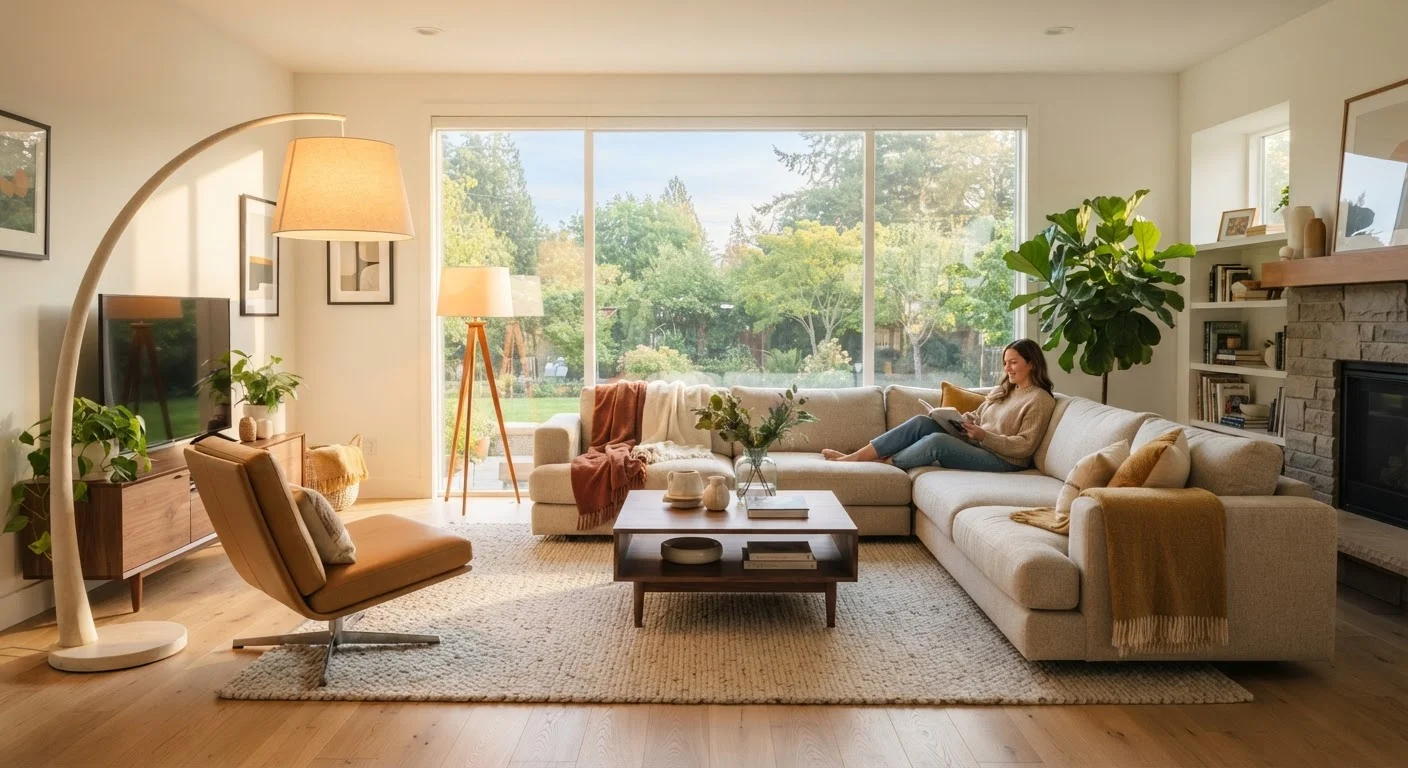
How Natural Light Actually Behaves in Your Home
Natural light is not a static resource. It shifts in color temperature, angle, and intensity from sunrise to sunset — and varies further with season, weather, and your home's orientation. East-facing rooms receive warm, low morning light; west-facing rooms glow amber in the late afternoon. South-facing spaces tend to be the brightest and most consistent in the US, while north-facing rooms stay cooler and more diffused throughout the day.
This variability is part of natural light's appeal — it lends a sense of time passing and keeps rooms feeling alive. But it also means you cannot design a room around daylight alone. A reading nook that's perfect at noon may feel gloomy by 4 p.m., and a kitchen that sparkles in summer can feel dim on an overcast winter morning.
The way light enters a space also shapes how colors read. Paint colors, fabric tones, and timber finishes can look dramatically different under cool midday light versus warm late-afternoon sun. If you're working through color choices for a room, observe paint samples at multiple times of day before committing.
Test Paint Colors in Real Daylight Conditions
Before finalizing a wall color, pin a large swatch — at least 12 inches square — directly on the wall and observe it at three different times: morning, midday, and late afternoon. Colors with undertones that aren't obvious on a paint chip can shift dramatically as the light changes. This step is especially important in north-facing rooms, where cool, diffused light can make warm tones appear muddy.
The Role of Artificial Lighting: Layers, Not Just Bulbs
Electric lighting does more than fill the dark hours — it defines the character of a room once the sun goes down. Interior designers typically organize artificial lighting into three layers: ambient (general illumination), task (focused light for work or reading), and accent (decorative or architectural highlights). When all three layers are present and dimmable, you gain far more control over a room's atmosphere than daylight can ever offer.
Bulb color temperature is one of the most underappreciated variables in home lighting. Measured in Kelvins (K), bulbs in the 2700–3000K range produce warm, yellowish light well suited to living rooms and bedrooms. Cooler bulbs (4000K and above) mimic daylight and work well in home offices, kitchens, and bathrooms where clarity matters more than coziness.
It's worth noting that the type of light your devices emit at night can affect sleep patterns — for a deeper look at the science, see how blue light exposure affects circadian rhythm. Choosing warmer bulbs in bedrooms and dimming lights in the hour before sleep reflects this research in a practical way.
| Natural Light | Artificial Lighting | |
|---|---|---|
| Consistency | Varies by time, season, and weather | Controllable and consistent on demand |
| Color rendering | Excellent — reveals true colors | Depends on bulb type and CRI rating |
| Mood & wellbeing | Strongly supports circadian rhythm | Varies; warm tones support evening wind-down |
| Design control | Limited — shaped by architecture | High — dimmers, scenes, and layers adjustable |
| After-dark functionality | Unavailable | Essential — primary light source at night |
| Energy cost | Free, but may require window upgrades | Ongoing electricity cost; LEDs reduce this |
| Room orientation dependency | High — south-facing rooms benefit most | None — works equally in any room |
Designing Rooms That Work at Every Hour
The most functional interiors treat natural and artificial lighting as partners. Start by identifying when and how each room is most heavily used. A kitchen active in early morning and evening needs excellent artificial task lighting over prep areas, even if a skylight makes it bright at noon. A home office used through daylight hours benefits from positioning a desk perpendicular to windows to reduce glare and shadow — but still needs a high-quality desk lamp for overcast days and late-evening sessions.
Mirrors and light-reflective surfaces can extend what natural light does naturally. Positioning a large mirror opposite a window bounces daylight deeper into a room — a particularly useful strategy for north-facing spaces or open-plan layouts where light needs to travel farther. If you're thinking about how room layout affects light distribution, the trade-offs between open-plan and defined rooms are worth understanding before committing to a floor plan.
Smart lighting controls — dimmers, timers, and scene-setting systems — make it easier to transition smoothly between daytime and evening modes. For readers exploring smart home integration, home and smart tech resources can help clarify what's practical versus complex to install.
Don't Underestimate Electrical Planning
Adding new lighting circuits, repositioning outlets for floor lamps, or installing recessed lighting involves electrical work that typically requires a licensed electrician and, in many jurisdictions, a permit and inspection. Always verify local code requirements before beginning any wiring project. Unpermitted electrical work can create safety hazards and may complicate home sales down the line.
Practical Priorities When Planning Your Lighting Scheme
Approaching a lighting plan room by room helps prevent the common mistake of installing a single ceiling fixture and calling it done. For each room, ask three questions: What activities happen here, and when? Where does natural light enter, and for how long each day? What artificial layers are missing?
For new homeowners building a lighting scheme from scratch, it helps to anchor decisions in foundational design principles. The ground-up introduction to interior design covers scale, balance, and light as interconnected forces — not separate choices.
A few durable principles to carry into any room:
- Install dimmer switches wherever possible — they cost little and expand flexibility enormously.
- Avoid relying solely on overhead lighting; it flattens a room and creates harsh shadows.
- Test artificial lighting at night, not in a bright showroom, before purchasing fixtures.
- Use higher-Kelvin bulbs in task areas and lower-Kelvin bulbs in relaxation spaces.
90%
Time Americans spend indoors
According to the U.S. Environmental Protection Agency, Americans spend approximately 90% of their time indoors, making interior lighting a significant factor in daily wellbeing.
2700K–3000K
Warm bulb range for living spaces
Lighting designers widely recommend bulbs in the 2700–3000 Kelvin range for bedrooms and living rooms to support a relaxing, home-like atmosphere.