Why a Fall Shutdown Sets Up a Better Spring
Most garden problems that surface in spring — weak plant emergence, fungal outbreaks, compacted or depleted soil — trace back to skipped autumn prep. The weeks between the first hard frost warning and actual ground freeze are some of the most productive you can spend outdoors. Soil amendments have months to integrate, divided perennials establish new root systems quietly underground, and cleaned-up beds deny overwintering pests and pathogens a place to hide.
Think of this checklist as a handoff from this season's garden to next year's. Work through it in sections rather than trying to tackle everything at once. A bed-by-bed approach over two weekends is more thorough — and less overwhelming — than a single rushed afternoon. Use the tools and materials list below to make sure you're equipped before you start.
Garden fork
Loosening compacted soil and lifting root clumps when dividing perennials.
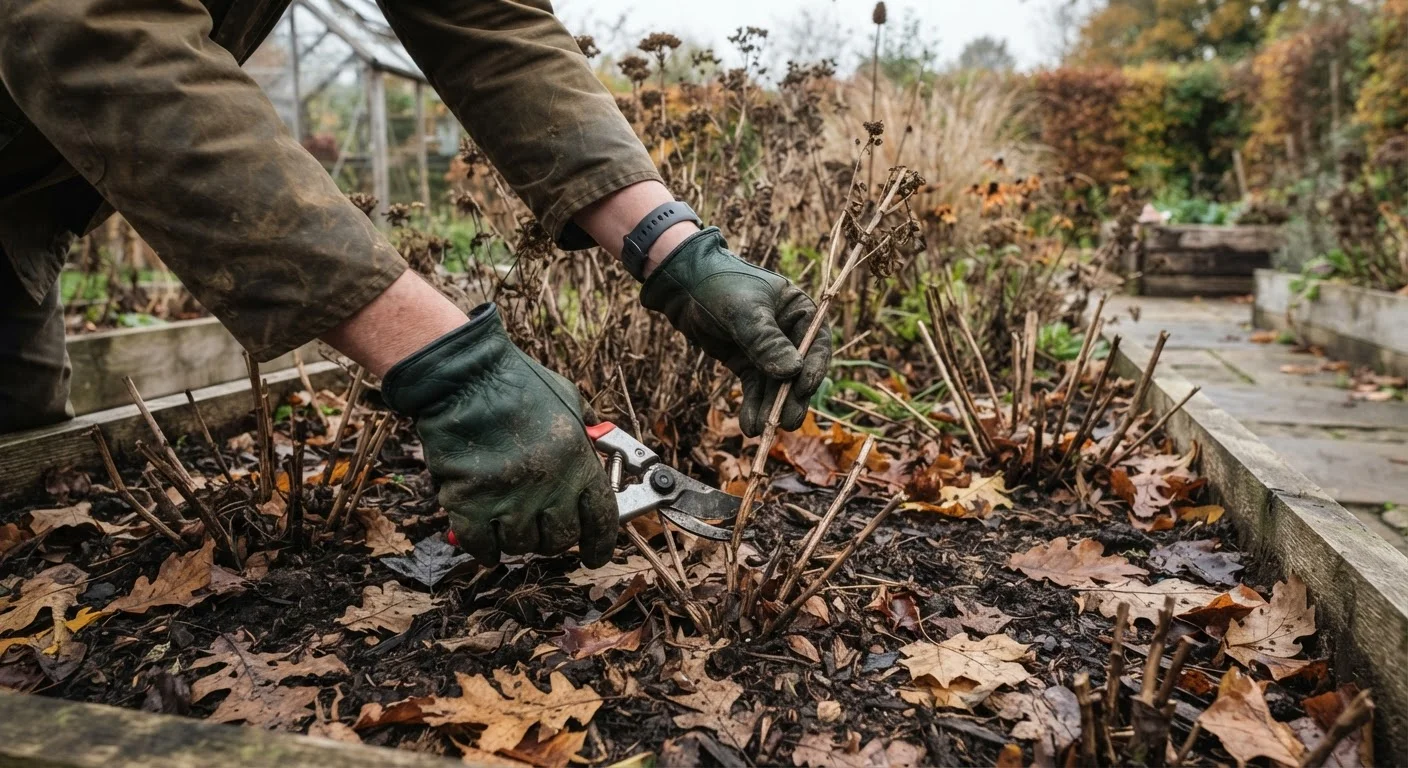
Pruning shears and loppers
Cutting back perennial foliage and removing spent woody stems cleanly.
Wheelbarrow or garden cart
Transporting compost, mulch, debris, and divided plant material across the garden.
Soil pH test kit
Measuring soil acidity or alkalinity to guide fall amendment decisions.
Shredded leaves, straw, or wood chip mulch
Providing insulating winter mulch layer over perennial beds and bulb plantings.
Linseed or mineral oil and clean rags
Protecting metal tool surfaces from rust during winter storage.
Burlap sheeting and garden staples
Wrapping marginally hardy shrubs in exposed locations against wind and frost.
The Shutdown Checklist
Work through these groups roughly in order. Soil and plant tasks should come before mulching, and tools should be cleaned and stored after you're done using them for the season.
Clearing and Cleanup
Soil Care and Bed Preparation
Plant Division and Transplanting
Mulching and Winter Protection
Tool and Equipment Storage
Don't Mulch Too Early
Applying mulch before the ground has frozen can trap warmth and delay plant dormancy, leaving root systems more vulnerable to a sudden hard freeze. It can also create ideal overwintering habitat for voles and other rodents. Wait until after your area's first hard freeze — typically when nighttime temperatures consistently drop below 28°F — before laying down your winter mulch layer.
Soil, Mulch, and Long-Term Garden Health
Fall is the single best window for improving soil structure. When you add compost or aged manure now, soil microbes have months of mild-enough temperatures to begin breaking material down before you need to plant. Topping beds with 2–3 inches of compost after clearing spent annuals is one of the highest-return tasks on this entire checklist. For a deeper look at making your own amendment material, see our guide to composting kitchen and garden waste into living soil.
Mulching deserves special attention. The goal of winter mulch is to moderate soil temperature swings, not to keep the ground warm. Apply it after your first hard freeze so you're insulating cold soil rather than delaying dormancy. A 3–4 inch layer of shredded leaves, straw, or wood chips works well for most beds. If you're designing beds with water conservation in mind year-round, the principles in drought-tolerant gardening apply equally to how you think about mulch depth and soil moisture retention going into winter.
Finally, don't neglect the hardscape while you're focused on beds. Gutters clogged with fallen leaves can direct water toward foundations and cause ice dams — the same seasonal mindset that applies to your garden applies to your roof. Our seasonal roof inspection checklist is worth running through before temperatures drop.
Never Compost Diseased Plant Material
Home compost piles rarely reach the sustained temperatures needed to kill fungal spores, bacterial pathogens, or certain pest eggs. Adding diseased stems, leaves, or roots to your compost can reintroduce problems across your entire garden when you apply that compost next spring. Bag diseased material for municipal green waste collection or dispose of it separately — never leave it in the bed to decompose in place.