Why Maintenance Habits Matter From the Start
Passing your driving test is a milestone — but it's also the beginning of a new responsibility. A car isn't just a convenience; it's a machine that requires consistent attention to stay safe and reliable. New drivers who establish basic maintenance routines early tend to avoid the unexpected breakdowns, expensive repair bills, and safety risks that often catch less-prepared owners off guard.
The good news is that the fundamentals aren't complicated. Most routine upkeep involves simple visual checks and occasional top-ups — no specialist tools, no mechanical training required. The essentials of first-time car ownership cover a broad range of topics, but maintenance habits are where day-to-day confidence is built.
Tread depth
The depth of the grooves in your tyre surface that channel water away. UK law requires a minimum of 1.6mm across the central three-quarters of the tyre, though many experts recommend replacing before 3mm.
Engine oil viscosity
A measure of how thick or thin engine oil is, affecting how well it lubricates at different temperatures. Your owner's manual specifies the correct grade for your engine.
Service interval
The mileage or time period between scheduled mechanic inspections and maintenance tasks as recommended by the car's manufacturer.
Coolant
A liquid mixture (usually antifreeze and water) that circulates through the engine to regulate temperature and prevent both overheating and freezing.
Dashboard warning light
A symbol that illuminates on your instrument panel to alert you to a system fault or condition requiring attention, ranging from minor reminders to urgent safety warnings.
The Weekly Checks Every New Driver Should Know
A handful of checks performed each week add up to reliable, safe motoring. None of them take more than ten minutes.
- Tyre pressure and condition: Under-inflated tyres affect handling, increase stopping distances, and wear faster. Check pressure when cold, using the figures in your owner's manual or inside the driver's door frame. Also look for cuts, bulges, or embedded objects. For a thorough guide, see tyre care from the ground up.
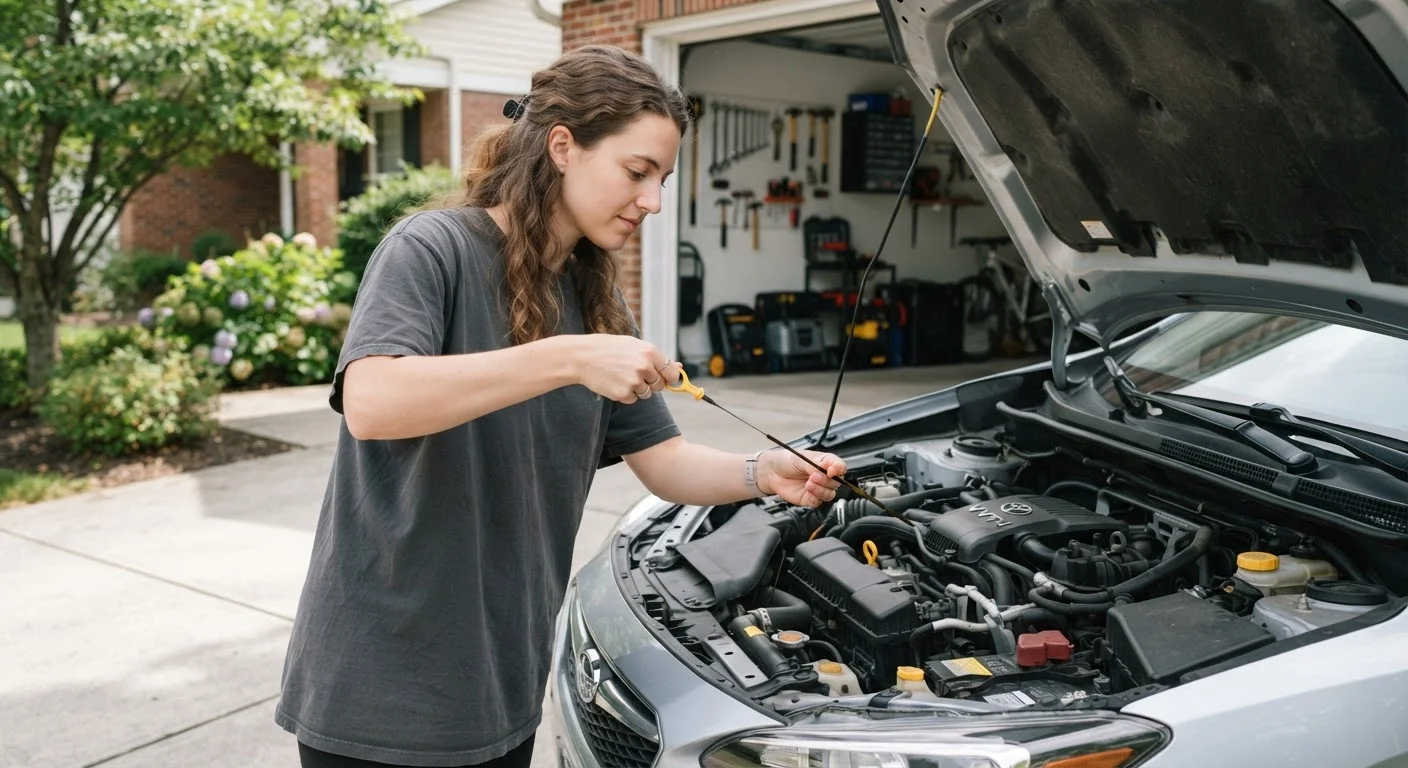
- Engine oil: Pull the dipstick, wipe it clean, re-insert, and check that the level sits between the minimum and maximum marks. Low oil can cause serious engine damage quickly.
- Coolant level: Check the translucent reservoir when the engine is cold. Low coolant risks overheating.
- Lights: Walk around the car and confirm all indicators, headlights, brake lights, and reverse lights are working. A failed brake light is both a safety risk and a legal issue.
- Windscreen washer fluid: Visibility depends on it, especially in winter spray or insect season.
For a detailed walkthrough of fluid checks, car fluid checks every driver should know is a practical reference.
Build a Pre-Drive Habit in 60 Seconds
Before any journey, take a quick walk around the car: glance at the tyres for obvious deflation or damage, check that all lights are functioning, and confirm your mirrors are correctly positioned. This 60-second habit catches the most common roadside problems before they strand you.
Understanding Your Car's Service Schedule
Every car has a manufacturer-recommended service schedule — typically set by mileage intervals, time intervals, or both. Sticking to this schedule matters for several reasons: it maintains warranty validity on newer cars, keeps safety-critical components in good condition, and protects resale value.
Services generally fall into two categories: an interim service (lighter, usually every 6,000 miles or 6 months) and a full service (more comprehensive, typically every 12,000 miles or 12 months). Your owner's manual is the authoritative source for your specific vehicle's requirements.
If you're unsure what's covered under your warranty, common misconceptions about new car warranties clarifies what most drivers get wrong. For a broader year-round maintenance overview, the year-round maintenance calendar is a useful companion.
Check Your Owner's Manual First
Service intervals and fluid specifications vary significantly between makes and models. Your owner's manual is the definitive reference — following generic advice that doesn't match your vehicle's requirements can void a warranty or lead to incorrect maintenance. If you don't have the physical manual, most manufacturers offer digital versions on their websites.
How Your Driving Style Affects Your Car
Maintenance isn't only about what you do in the driveway — it's also about how you drive. Harsh braking, sharp acceleration, and taking corners at speed all accelerate wear on components that are expensive to replace. how driving style affects mechanical wear explores this in detail, but the core principle is simple: smoother inputs mean less stress on brakes, tyres, clutch, and suspension.
New drivers naturally focus on road awareness and control. Building anticipation into your driving — reading traffic further ahead, easing off the accelerator early, braking progressively — is good for safety and good for your car simultaneously. It's also worth noting that the same principles apply in adverse weather; adapting your habits in rain, fog, and ice reinforces why smooth technique matters most when conditions deteriorate.
Don't Ignore the Low Oil Warning
Running an engine on critically low oil can cause irreversible damage within minutes. If your oil pressure warning light illuminates while driving, pull over safely as soon as possible and switch off the engine. Do not continue driving until the issue has been investigated by a mechanic.
Warning Signs You Should Never Ignore
Cars communicate problems through warning lights, sounds, and changes in feel. Learning to recognise these signals early prevents minor issues from becoming serious — and expensive — ones.
- Dashboard warning lights: Any light that stays on after starting deserves attention. An engine management light, oil pressure warning, or battery symbol should prompt a mechanic visit promptly.
- Unusual noises: Grinding when braking often means worn brake pads. A knocking from the engine at startup may indicate low oil. Squealing or vibration through the steering wheel warrants inspection.
- Changes in handling: If the car pulls to one side, the steering feels heavy, or braking distances seem longer than usual, don't delay — these affect your ability to control the vehicle safely.
- Battery trouble: Slow starting, flickering lights, or a warning light can all point to battery issues. battery health and why cars fail to start explains the signs and what to do next.
The seasonal checks most drivers skip is also worth bookmarking — many warning signs become more common at specific times of year.
This article provides general vehicle maintenance information for educational purposes. For any mechanical concern, consult a qualified mechanic before driving the vehicle.