Why Warranty Misunderstandings Are So Common
Buying a new car is one of the largest financial decisions most people make, yet warranty documents — the legal contracts defining what protection you actually have — are rarely read in full before signing. Dealership staff often summarize coverage in optimistic terms, and marketing language like "bumper-to-bumper" implies more comprehensive protection than the fine print delivers. The result is that many owners only discover the limits of their warranty when a claim is denied.
Getting familiar with warranty basics before you need them is straightforward, and it pays off. Knowing what to inspect before driving off the lot is the first step — understanding what your warranty covers is the essential follow-up.
Read Your Warranty Document in Full
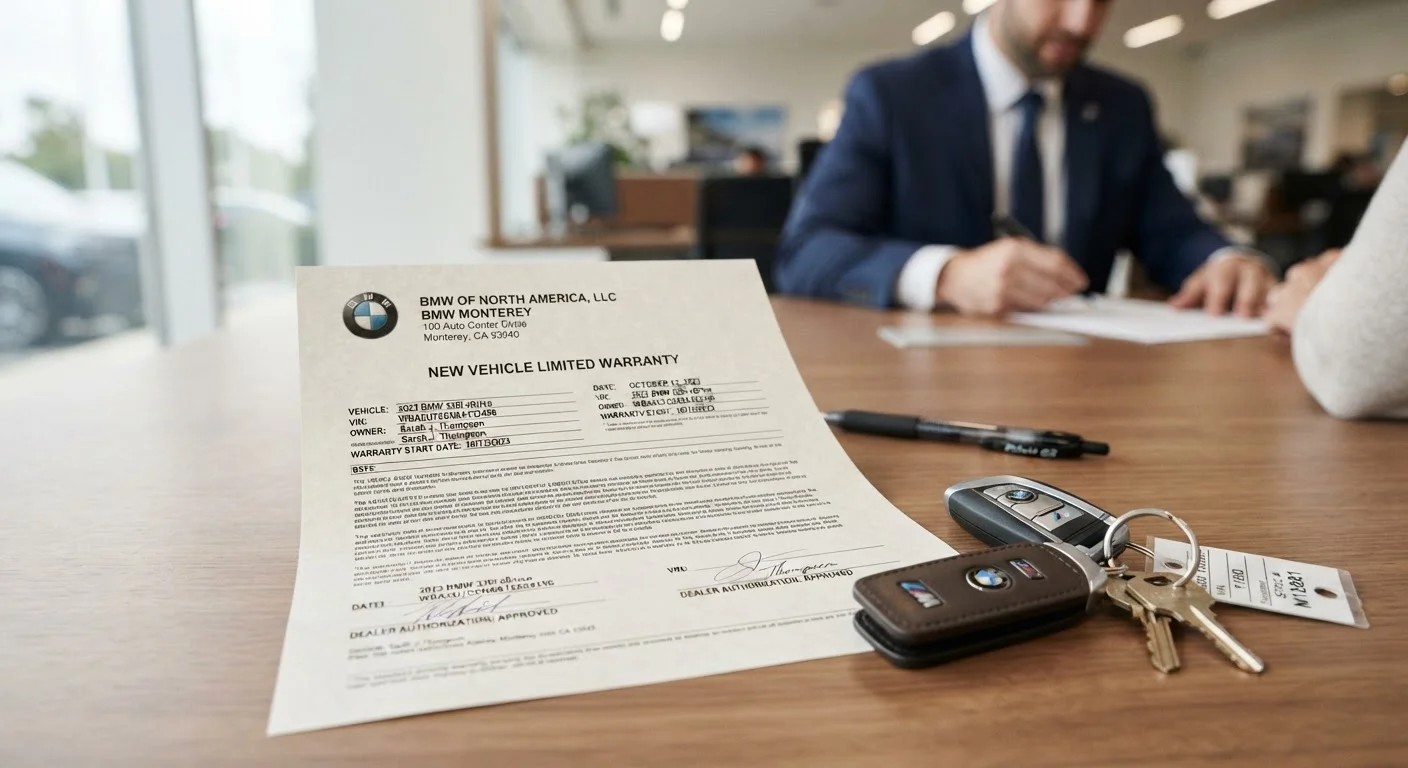
The short summary given at purchase is not the complete warranty agreement. The full document — sometimes called the "New Vehicle Limited Warranty" booklet — defines every exclusion, condition, and procedure that applies to your coverage. Relying solely on what a salesperson describes verbally can lead to costly surprises when a claim is denied. Request and read the full document before finalizing your purchase.
The Most Widespread Warranty Myths — Corrected
The misconceptions below consistently catch new-car owners off guard. Each reflects a genuine gap between what buyers expect and what the warranty document actually says.
Myth
My new car warranty covers everything that could go wrong for the full warranty period.
Fact
New-car warranties are limited warranties, not bumper-to-bumper guarantees that cover every scenario.
Even a so-called "bumper-to-bumper" warranty — more precisely called a basic or comprehensive limited warranty — excludes a significant list of items. Wear-and-tear parts such as brake pads, wiper blades, tires, and clutch linings are typically excluded from the outset. Damage caused by accidents, misuse, environmental conditions (hail, floods, road salt), or unauthorized modifications is also generally not covered. Read the exclusions section of your warranty booklet carefully — that section often runs longer than the coverage section.
Myth
I must have all maintenance done at the dealership or my warranty will be voided.
Fact
Federal law in the U.S. generally prohibits manufacturers from voiding a warranty solely because maintenance was performed elsewhere.
The Magnuson-Moss Warranty Act, a federal law governing consumer product warranties, protects owners from being required to use a manufacturer's dealership for routine maintenance as a condition of keeping their warranty intact. You may have oil changes, tire rotations, and other scheduled services performed at a licensed independent shop — provided you use parts and fluids that meet the manufacturer's specifications and retain proof of service. The manufacturer bears the burden of proving that non-dealer service caused a specific failure before denying a related claim.
Myth
If I buy a used car that's still under the original factory warranty, the coverage no longer applies to me.
Fact
Most new-car factory warranties are transferable to subsequent owners for the remainder of the original term.
Factory warranties generally follow the vehicle, not the original buyer, for the duration of the coverage period — measured in years and/or miles from the original in-service date. If you purchase a certified pre-owned or lightly used vehicle that is still within its factory warranty window, you typically inherit the remaining coverage. However, some manufacturers charge a transfer fee, require registration of the transfer, or apply different terms for powertrain versus comprehensive coverage. Confirm the exact remaining coverage and any transfer requirements with the manufacturer directly before completing a private sale.
Myth
Any aftermarket accessory or modification automatically voids my entire warranty.
Fact
Aftermarket additions void only the coverage directly related to the components they affect — not the whole warranty.
Adding aftermarket wheels, a tow hitch, or a stereo system does not invalidate your engine warranty. Manufacturers can only deny a warranty claim if they can demonstrate a causal link between the modification and the failure in question. For example, an aftermarket performance tune that alters fuel mapping could legitimately be cited if an engine component fails; that same tune would have no bearing on a door-seal defect claim. Use caution with performance modifications in particular — engine, transmission, and suspension modifications carry meaningful risk of affecting related warranty coverage.
Myth
The powertrain warranty covers the same components across all manufacturers.
Fact
What counts as "powertrain" varies by manufacturer — the definition in your specific warranty document is what matters.
Powertrain warranties exist to cover the core mechanical systems that propel the vehicle, but the exact list of covered components differs between automakers. Some include the transmission cooler and driveshafts; others do not. Seals and gaskets may or may not be listed. Electric vehicles introduce further complexity — battery coverage, electric motor coverage, and onboard charging system coverage may each carry separate terms. Never assume your powertrain warranty matches a friend's experience with a different brand. Understanding how automakers define their vehicles can help frame these differences in context.
Myth
A longer warranty always means better protection.
Fact
Warranty length is meaningless without understanding what is actually covered and what the claims process involves.
A 10-year powertrain warranty sounds impressive, but if the exclusions are broad, the claims process is burdensome, or the coverage shrinks significantly after the first few years, the practical value may be limited. Compare warranties on scope — what is covered — not just duration. Also consider whether the warranty requires a deductible per claim, whether rental car coverage is included during repairs, and what the dispute resolution process looks like. For new drivers or first-time buyers, a grounded introduction to vehicle ownership can help you ask the right questions at the dealership.
Protecting Your Coverage: Practical Steps
Once you understand what your warranty covers — and what it doesn't — a few straightforward habits keep that coverage intact for the full term.
- Document every service visit. Date-stamped receipts or service records from any licensed facility are your primary evidence if a claim is disputed.
- Follow the manufacturer's maintenance schedule. This is spelled out in your owner's manual. Deviating without documented reason gives manufacturers grounds to investigate related failures.
- Report defects promptly. Delaying a warranty repair can allow a covered condition to worsen into damage that the manufacturer may classify as owner neglect.
- Keep modification records separate. If you add accessories, document exactly what was changed and when, so the scope of any potential coverage impact is clear.
Missing Scheduled Maintenance Can Void Coverage
Manufacturers can deny warranty claims if they determine that a failure was caused by neglected maintenance. Keep dated records of every oil change, filter replacement, and inspection — whether performed at a dealership or a licensed independent shop. Without documentation, proving proper upkeep in a dispute is extremely difficult.
For drivers who are new to ownership responsibilities, building good maintenance habits early makes warranty compliance much easier to maintain over time. And if you're still evaluating whether the vehicle on the lot is truly "new," understanding model year vs. calendar year matters more than most buyers realize.
~1 in 3
Warranty claims denied due to maintenance issues
Industry data consistently shows that a significant share of warranty claim disputes involve insufficient maintenance records or neglected scheduled service intervals.
5 years / 60,000 mi
Typical U.S. new-car powertrain warranty
While individual manufacturers vary, a five-year or 60,000-mile powertrain warranty has been a common benchmark among major automakers selling in the U.S. market.