What Your Driving Habits Are Actually Doing Under the Hood
Every input you make behind the wheel — braking, accelerating, cornering — translates into physical forces on your car's mechanical systems. Those forces generate friction and heat, which are the two primary agents of wear. Understanding this connection helps explain why a high-mileage car driven gently can often be in better shape than a lower-mileage vehicle that was regularly pushed hard.
Part of the broader picture of driving knowledge is recognizing that your habits behind the wheel are as much a maintenance factor as oil changes or tire rotations.
Drive Smoothly to Save Money
Anticipating stops and accelerating gradually costs nothing but attention. Looking further ahead in traffic — 10 to 15 seconds — gives you time to ease off the throttle and coast toward a stop rather than braking hard. This single habit can meaningfully extend the life of your brakes, tires, and fuel budget simultaneously.
Braking: The Most Impactful Habit
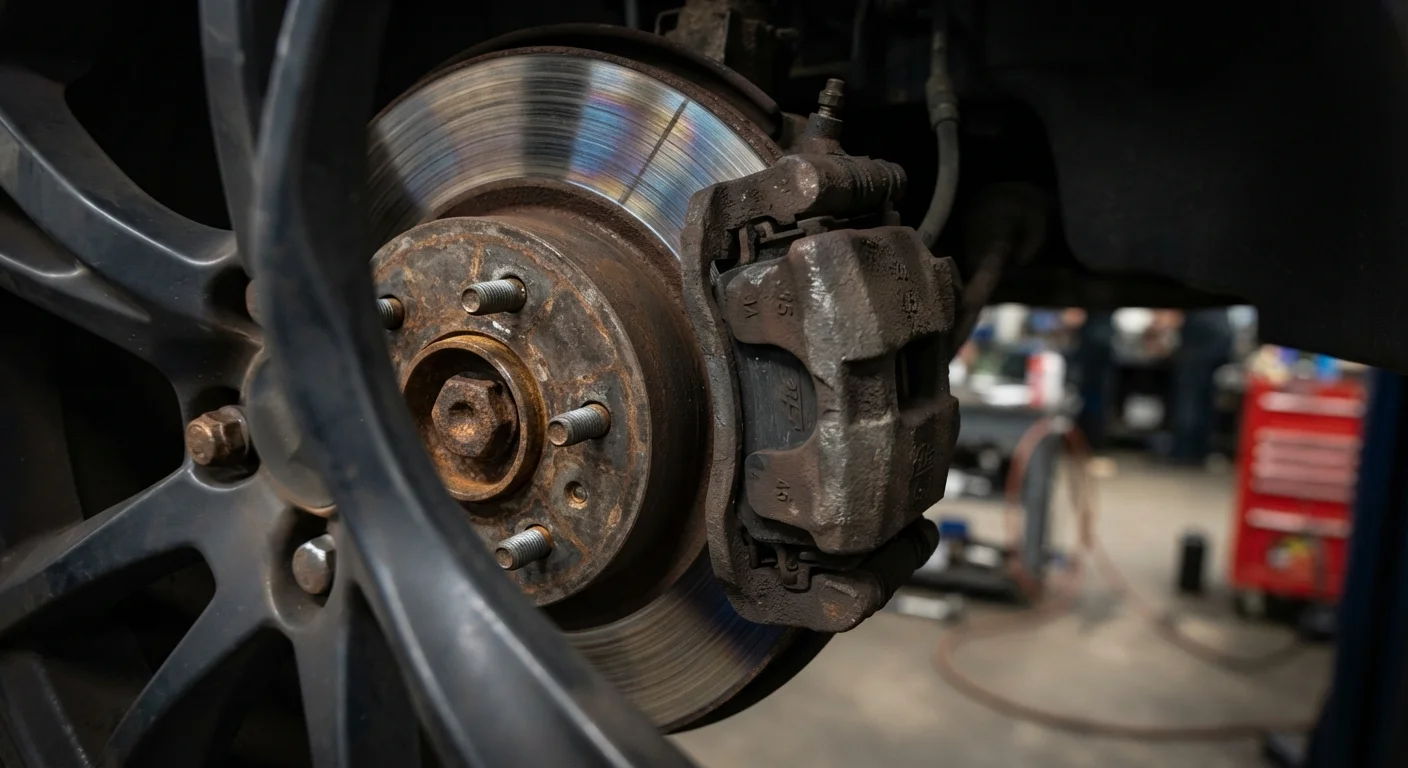
Braking behavior has one of the largest effects on mechanical wear of any driving habit. When you brake hard from high speed, the brake pads clamp onto rotors with significant force and convert kinetic energy into heat — rapidly. Repeated hard stops cause rotors to develop hot spots and eventually warp, creating the pulsating sensation felt through the pedal.
Brake pads themselves are made of friction material designed to wear gradually. Hard, frequent stops accelerate that process substantially. Driving with anticipation — reading traffic ahead and coasting to slow before applying brakes — reduces the intensity of each braking event and extends pad and rotor life considerably.
~30%
Faster brake pad wear from hard braking
Studies in automotive engineering literature consistently show that aggressive braking patterns can reduce brake pad service life by roughly 30% or more compared to smooth driving.
Up to 40%
Fuel economy reduction from aggressive driving
The U.S. Department of Energy estimates that aggressive driving — speeding, rapid acceleration, and hard braking — can lower highway fuel economy by up to 40%.
3–5x
Greater engine wear during cold starts
Engineering data suggests that a significant share of total engine wear occurs during cold starts before oil reaches optimal operating temperature and pressure.
Acceleration, the Engine, and the Transmission
Flooring the throttle from a standstill forces fuel injectors, the throttle body, and internal engine components to operate at their stress limits. While modern engines are engineered to handle occasional full-throttle use, habitual aggressive acceleration keeps the engine in high-load, high-RPM ranges that generate more heat and increase wear on piston rings, cylinder walls, and valve train components.
The transmission absorbs equally significant stress. Rapid acceleration forces clutch packs in automatic transmissions to engage harder, and repeated shock loading degrades their material over time. For vehicles with manual gearboxes, riding the clutch or slipping it through gear changes wears the friction disc prematurely.
For those new to vehicle ownership, building good habits early can prevent costly drivetrain repairs down the road.
Tires, Suspension, and the Hidden Cost of Cornering
Tires are arguably the most wear-visible component tied to driving style. Hard acceleration causes wheelspin that scrubs the tread surface. Aggressive cornering forces lateral g-loads that deform the tire contact patch and heat the rubber unevenly, causing faster degradation of the outer or inner edge depending on how the load is applied.
Suspension components — control arm bushings, ball joints, and shock absorbers — also absorb the consequences of aggressive inputs. Hitting bumps and potholes at speed, or taking corners sharply, transmits impact energy that bushings and dampers must dissipate. Over time, repeated harsh inputs cause these rubber and hydraulic components to fail earlier than they otherwise would.
Adapting to conditions matters too. Driving in rain, fog, and ice demands especially smooth inputs, as aggressive habits on slick surfaces amplify both the safety risk and mechanical stress.
Cold Starts and Short Trips: The Underestimated Wear Factor
Engine wear isn't limited to high-speed driving. Short cold-start trips are disproportionately hard on engines. Oil is thicker when cold and takes time to fully circulate through galleries and reach all bearing surfaces. Driving hard before the engine reaches operating temperature means some components are briefly running without full lubrication.
Short trips also prevent the engine and exhaust system from reaching temperatures that burn off condensation and combustion byproducts. This contributes to oil contamination and, in extreme cases, accelerated corrosion in the exhaust system.
Many of these cumulative effects are covered in detail when looking at overlooked maintenance tasks that quietly shorten a car's life. Smooth, deliberate driving habits work best alongside consistent servicing — neither alone is sufficient.
Servicing Intervals May Need Adjusting
Manufacturer-recommended service intervals are typically based on average driving conditions. If your driving style is routinely aggressive — frequent hard stops, highway speeds, or mostly short cold-start trips — consider discussing shorter oil change and brake inspection intervals with a qualified mechanic. Tailoring maintenance to actual use patterns is more protective than following a generic schedule.