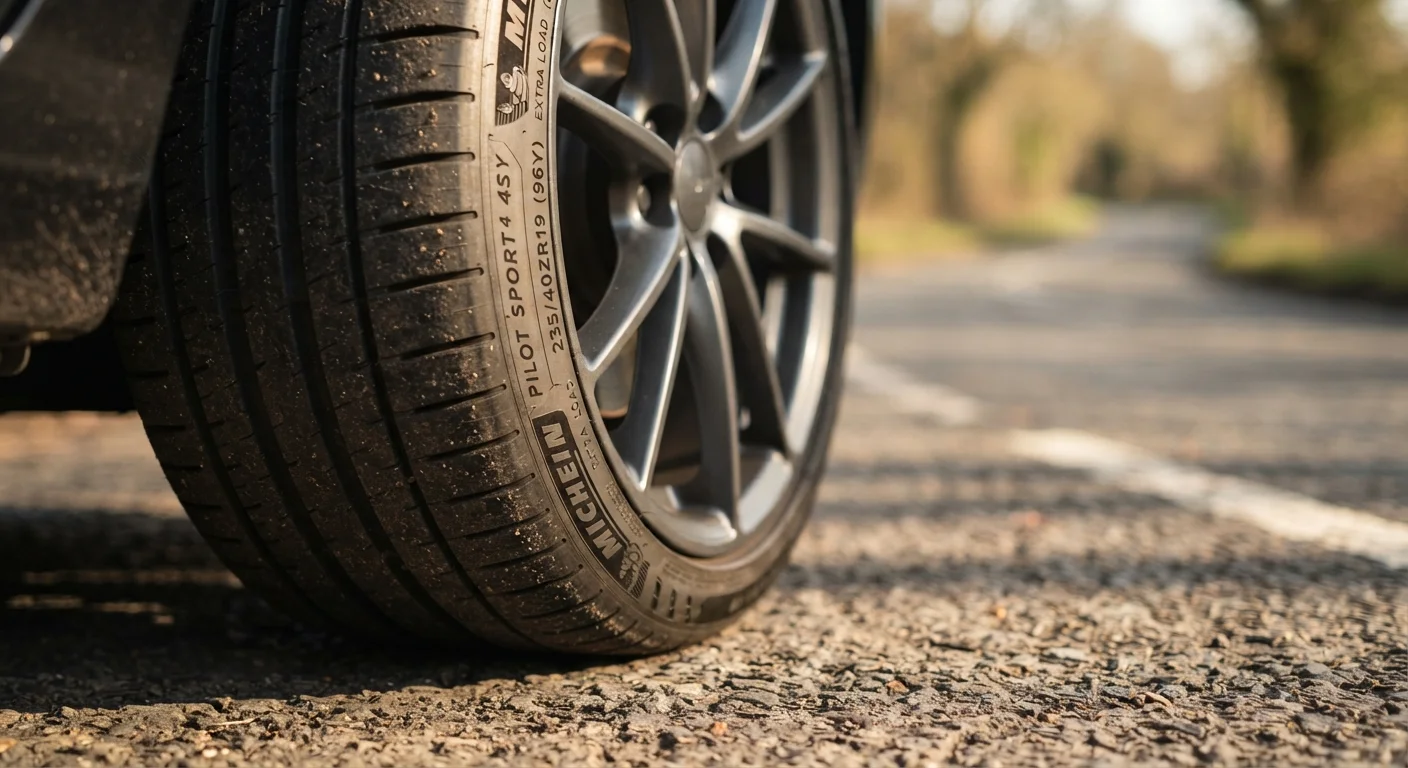
Why Tyre Care Matters
Tyres are the sole point of contact between your vehicle and the road. Every steering input, braking force, and acceleration load passes through four patches of rubber roughly the size of a hand. When those patches degrade — through low pressure, worn tread, or poor alignment — the consequences range from reduced fuel economy to loss of vehicle control.
Despite this, tyre maintenance is among the most commonly neglected areas of car ownership. A year-round maintenance calendar can help you stay on top of these checks before small issues become costly ones. This guide covers every key aspect of tyre upkeep, in plain language.
11%
Tyre-related crash involvement rate
The National Highway Traffic Safety Administration (NHTSA) has estimated that tyre problems are a factor in a significant share of crash-related fatalities each year.
0.3% per day
Average tyre pressure loss rate
Tyres naturally lose a small amount of pressure over time through permeation, making monthly checks essential even without a puncture.
4/32"
Recommended tread replacement threshold
Industry safety groups widely recommend replacing tyres at 4/32 of an inch rather than waiting for the legal minimum of 2/32 for better wet-weather stopping performance.
Tyre Pressure: Getting It Right
Tyre pressure is measured in PSI (pounds per square inch). The correct pressure for your vehicle is printed on a sticker inside the driver's door jamb — not on the tyre sidewall, which shows the tyre's maximum rated pressure, a different figure entirely.
Most passenger vehicles call for somewhere between 30 and 35 PSI. Pressure drops naturally over time and also fluctuates with temperature: tyre pressure drops roughly 1 PSI for every 10°F decrease in ambient temperature. This is why seasonal pressure checks matter, particularly going into winter.
- Underinflation increases rolling resistance, raises fuel consumption, causes uneven wear on the outer edges of the tread, and raises blowout risk — especially at highway speeds.
- Overinflation reduces the tyre's contact patch, compromising grip, and causes accelerated wear in the centre of the tread.
Check pressure when tyres are cold — meaning the vehicle has been parked for at least three hours or driven fewer than a mile at low speed. A quality gauge costs very little and takes under two minutes to use.
Always check tyre pressure first thing in the morning before driving, or after the car has sat for several hours. Driving heats the air inside tyres and raises pressure readings, which can give a falsely reassuring result.
Accurate pressure readings depend on 'cold' tyres; heat-expanded readings can mask underinflation by several PSI.
Keep a small, quality digital tyre gauge in your glovebox rather than relying on the gauges built into service-station air pumps, which are frequently inaccurate due to wear and exposure.
Forecourt gauges can read several PSI off, leading drivers to under- or over-inflate without realising it.
Tread Depth: Your Safety Margin
Tread grooves channel water away from the contact patch, maintaining grip on wet roads. As those grooves wear down, wet-weather stopping distances increase significantly. In the US, the legal minimum tread depth is 2/32 of an inch. You can do a quick check using the penny test: insert a penny into a groove with Lincoln's head pointing down — if you can see the top of Lincoln's head, the tread is at or below the legal limit.
At 2/32" Tread, Replace Immediately
A tyre at the legal minimum of 2/32 of an inch has very little ability to evacuate water on wet roads. In wet conditions, stopping distances increase dramatically compared to a tyre with full tread. Do not wait until the legal limit is reached — assess replacement well before that point.
Many tyre safety organisations recommend replacing tyres at 4/32 of an inch for meaningful wet-weather performance. A quarter works for this check: insert it head-down; if Washington's head is visible, you're at or below 4/32.
Tread wear indicator bars — raised rubber strips moulded into the grooves at 2/32-inch height — provide a built-in visual reference. When these bars are flush with the surrounding tread surface, replacement is overdue. For a deeper look at what tread and pressure mean for everyday risk, see our guide on tyre pressure, tread, and blowouts.
Rotation, Balancing, and Alignment
These three services are often confused but address entirely separate issues.
Tyre Rotation
Front and rear tyres wear differently because of steering, weight distribution, and drivetrain loads. Rotating tyres — moving them between axles and sometimes side to side according to a pattern suited to your drivetrain — evens out that wear. Most manufacturers recommend rotation every 5,000 to 7,500 miles, often coinciding with an oil change. Consistent rotation can meaningfully extend tyre life.
Wheel Balancing
Balancing corrects uneven weight distribution around the wheel-and-tyre assembly. An out-of-balance wheel vibrates, typically felt in the steering wheel or seat at highway speeds. Technicians place small weights on the rim to bring the assembly into balance. This should be done whenever new tyres are fitted and whenever vibration becomes noticeable.
Wheel Alignment
Alignment — sometimes called a wheel alignment or tracking — adjusts the angles of the wheels relative to each other and to the road. Poor alignment causes the vehicle to pull to one side, produces uneven tyre wear (often on inner or outer edges only), and can compromise steering responsiveness. Alignment should be checked after hitting a significant pothole or kerb, after suspension work, and roughly every 12 months as part of routine maintenance.
Ignore Vibration at Your Peril
Persistent vibration at highway speeds is not normal and should not be ignored. It can indicate an out-of-balance wheel, a damaged tyre, or a suspension issue. Continuing to drive on a tyre with internal damage risks a sudden blowout. Have the vehicle inspected promptly by a qualified technician if vibration appears or worsens.
Building a Tyre Care Routine
Consistent habits are the simplest way to stay ahead of tyre problems. A straightforward schedule looks like this:
- Monthly: Check tyre pressure on all four tyres (plus the spare, if applicable). Visually inspect for cuts, bulges, or embedded objects.
- Every 5,000–7,500 miles: Rotate tyres according to your vehicle manufacturer's recommended pattern.
- Annually or after impact: Have alignment checked by a qualified technician.
- When fitting new tyres or if vibration appears: Request wheel balancing.
- Ongoing: Monitor tread depth with a penny or quarter test; replace when approaching 4/32 of an inch.
If you're newer to car ownership, building these habits early makes them second nature. These checks are also a core part of the broader vehicle ownership responsibilities that keep you and other road users safe.
Inspect Your Spare Tyre Too
Many drivers only think about their spare when they need it. Include the spare in your monthly pressure checks and periodic visual inspections. A flat or degraded spare is useless in a roadside emergency, and compact 'space-saver' spares often have lower pressure requirements than standard tyres — check the placard on the spare itself.
This article is for general informational purposes. For safety-critical tyre concerns or if you are unsure about a vehicle's condition, consult a qualified mechanic or tyre specialist.