Why Seasonal Checks Slip Through the Cracks
Most drivers know they should get an oil change periodically, but the checks tied specifically to seasonal transitions are far easier to forget. Unlike an oil change interval that shows up on a dashboard reminder, there's no warning light for a cabin air filter that's packed with fall pollen or a battery that's quietly losing cold-cranking capacity ahead of January.
The result is predictable: cars that ran perfectly through summer start sluggishly on the first cold morning, or wiper blades that worked fine in dry conditions streak across a rain-soaked windshield. These aren't random failures — they're the outcome of skipped checks that are easy to perform but rarely prompted. A year-round maintenance calendar can help structure these habits so nothing falls through the gaps.
Build a Simple Seasonal Trigger
Tie your seasonal vehicle checks to an event you already do — such as daylight saving time changes or the start of a new school year. Two of these transitions align neatly with fall and spring, the two highest-risk transition seasons for vehicles. Setting a recurring reminder takes less than a minute and removes the mental overhead of remembering to check.
The Checks Worth Adding to Your Seasonal Routine
Tire Pressure as Temperatures Shift
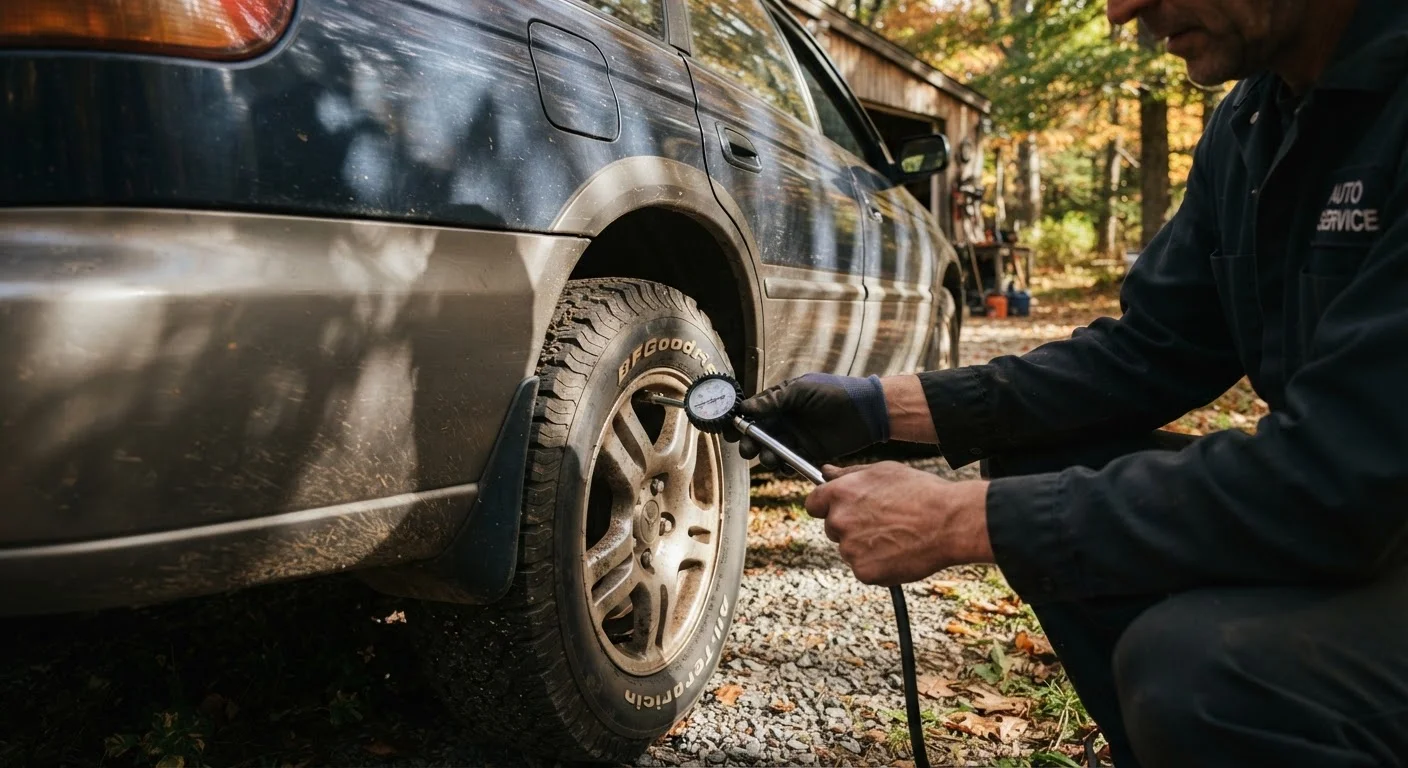
Tire pressure is one of the most temperature-sensitive aspects of any vehicle. Air contracts in cold weather, causing pressure to drop roughly 1 PSI for every 10°F decrease in ambient temperature. In summer heat, the opposite occurs — overinflation becomes a risk, especially on hot asphalt.
Check tire pressure when tires are cold (before driving more than a mile), and compare the reading against the placard in your driver-side door jamb — not the maximum rating stamped on the sidewall. This simple habit supports fuel efficiency, handling, and tread wear. See what tire pressure and tread depth mean for everyday safety for a deeper look.
Tire pressure drops about 1 PSI for every 10°F — cold seasons quietly underinflate your tires.
Coolant Concentration Before Extreme Seasons
Many drivers simply top off their coolant reservoir without ever testing the fluid's freeze or boil-over protection level. Coolant degrades over time and loses its ability to protect the engine at temperature extremes. A coolant that offers adequate freeze protection at 0°F may not handle a harsh winter further north.
An inexpensive test strip or float-style tester (available at auto parts stores) can tell you whether your current coolant mix offers appropriate protection. This check matters in fall before freezing temperatures arrive and again in spring before summer heat builds up. For a fuller picture of under-hood fluids, see the essential fluids every driver should know how to check.
Topping off coolant isn't the same as confirming it can handle the season's temperature range.
Wiper Blades and Washer Fluid Rating
Wiper blades degrade from UV exposure, heat, and use. Many drivers wait until blades are actively streaking before replacing them — by that point, visibility is already compromised in a rainstorm or snow squall. Blades typically need replacing every six to twelve months depending on climate.
Equally overlooked is the washer fluid formulation. Standard fluid can freeze in the reservoir and lines during winter, causing cracking. Use a rated winter-blend washer fluid in cold months, and switch to a standard formula in warmer seasons to avoid residue buildup on the windshield.
Wiper blades should be replaced before winter, not after they fail mid-storm.
Battery Terminals and Cold-Cranking Capacity
Car batteries are stressed most in extreme temperatures — both cold and heat accelerate internal degradation. Cold weather demands more current to start the engine while simultaneously reducing the battery's available output. A battery that performs adequately in summer may not deliver enough cold-cranking amps when temperatures plummet.
Before fall, inspect the battery terminals for white or blue corrosion buildup, which increases resistance and weakens starting power. Most auto parts stores can load-test a battery for free. If a battery is three or more years old and showing signs of sluggish starts, having it evaluated by a qualified mechanic before winter is a reasonable precaution.
A battery that starts fine in summer can fail on the first cold morning of the year.
Cabin Air Filter: A Year-Round Neglect Pattern
The cabin air filter cleans the air flowing through your vehicle's heating, ventilation, and air conditioning (HVAC) system. A clogged filter restricts airflow, reduces the effectiveness of heating in winter and A/C in summer, and can introduce allergens and particles into the cabin.
Most manufacturers recommend replacement every 15,000 to 25,000 miles, but this interval shortens in dusty or high-pollen environments. Transitioning into spring — when pollen counts rise — or into fall — when leaves and debris accumulate — are natural moments to inspect and replace this filter. It's among the overlooked tasks that quietly shorten a car's life.
A clogged cabin air filter reduces HVAC performance and exposes occupants to more airborne particles.
Brake Fluid Moisture Absorption Over Time
Brake fluid is hygroscopic, meaning it absorbs moisture from the surrounding environment over time. As water content rises, the fluid's boiling point drops — a concern during heavy summer driving on mountain roads or in stop-and-go traffic where brakes are applied repeatedly.
Testing brake fluid moisture content takes only a moment with an appropriate test strip. If water content exceeds roughly 3%, most technicians recommend a flush. This isn't a weekly check, but verifying fluid condition each spring before warm-weather driving picks up is a sound habit. A qualified mechanic should perform the flush if needed.
Brake fluid absorbs moisture over time, lowering its boiling point and degrading braking performance.
Lights and Seals After Winter Weather
Road salt, grit, and thermal cycling through winter can accelerate wear on headlight and taillight seals, causing moisture to enter the housing and cloud the lens. Reduced light output from clouded lenses is a genuine safety concern, particularly during the short days of fall and winter.
Each spring, take five minutes to inspect all exterior lights — headlights, brake lights, reverse lights, and turn signals. Look for internal condensation, yellowing, and any bulbs that have burned out. Exterior light checks are a legal requirement in most states during inspection, but waiting for an annual inspection to catch a burned-out brake light is an unnecessary risk.
Winter road salt and moisture can cloud headlight lenses, meaningfully reducing nighttime visibility.
When to Involve a Qualified Mechanic
Several checks on this list — such as battery load testing, brake fluid flushing, and coolant system work — are straightforward to assess visually or with an inexpensive tester, but the actual service should be performed by a qualified mechanic if you're unfamiliar with the procedure. This is especially true for brake-related work, where errors carry serious safety consequences. When in doubt, a pre-season inspection at a reputable service center is worth the modest cost.
Putting It Into Practice
None of the checks above require professional training or specialized tools for the inspection phase — most take under ten minutes with gear already in the car or available inexpensively. The payoff is avoiding breakdowns, maintaining safety systems, and catching small problems before they become expensive repairs. For more on what skipped services can cost long-term, see why delaying routine maintenance costs more than it saves.
If you're building these habits for the first time, vehicle maintenance habits for new drivers offers a practical foundation. Seasonal awareness is one of the clearest markers separating drivers who rarely face unexpected breakdowns from those who do.