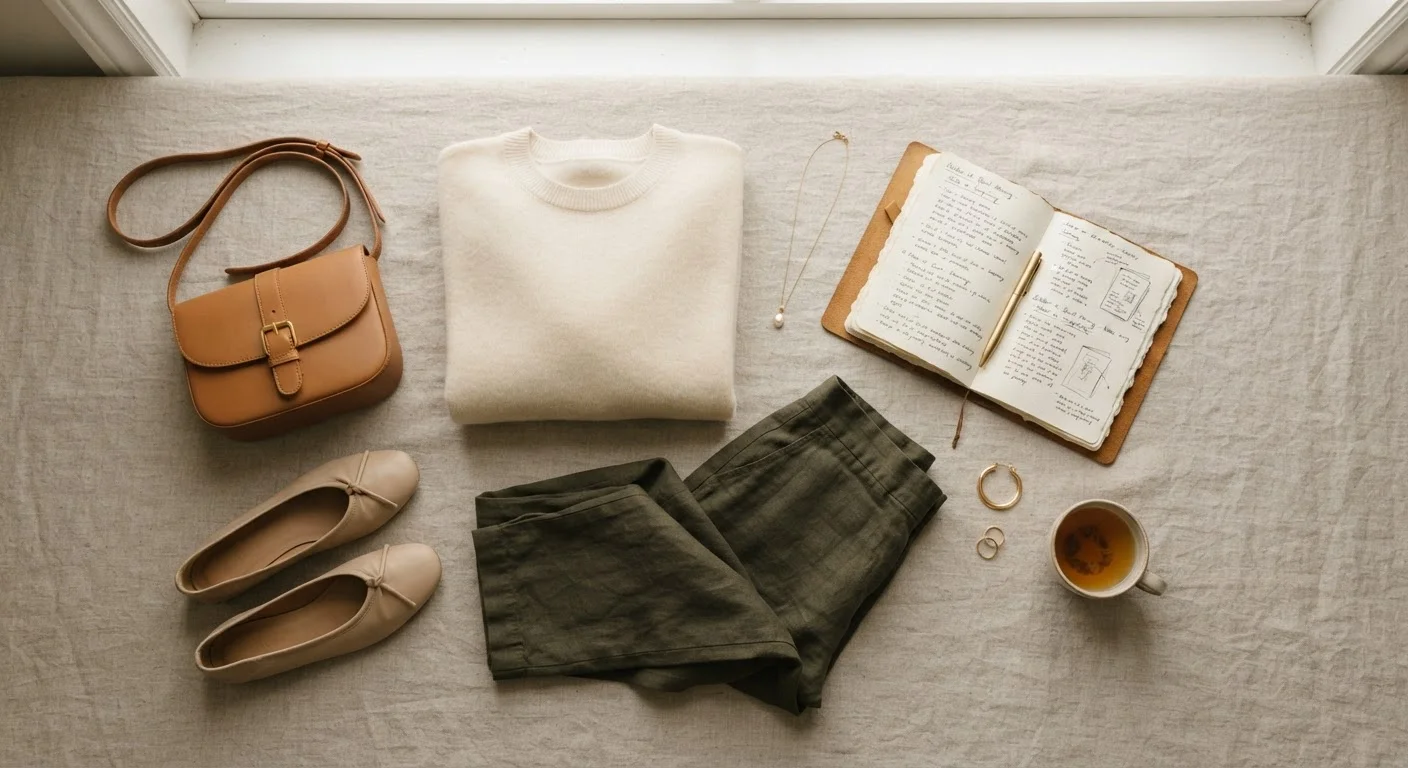
More Than Clothes: What Personal Style Actually Is
Most people encounter the phrase 'personal style' and think immediately of fashion — of trends, influencers, and shopping hauls. But personal style is something quieter and more durable than any of that. It's the visual language you've developed — consciously or not — to communicate who you are through the choices you make about how you appear in the world.
That language includes clothing, yes, but also silhouette preferences, color palettes, grooming habits, the way you carry yourself, and even what you choose not to wear. A person who always reaches for clean lines and neutral tones is making a stylistic statement just as clearly as someone who layers bold prints. Neither is more valid — they're simply different dialects of the same language.
What separates personal style from fashion is consistency and ownership. Fashion is external — it arrives in stores each season and departs just as quickly. Personal style is internal. It persists across seasons because it's rooted in something more stable: your personality, your values, your history, and how you want to move through the world.
“Style is a way to say who you are without having to speak.”
— Rachel Zoe, Fashion designer and stylist
Why Personal Style Matters Beyond Aesthetics
Style is often dismissed as superficial — a concern for people with too much time and money. But the way we present ourselves has genuine psychological and social dimensions worth taking seriously.
Research in environmental and social psychology has consistently found that what we wear can influence our own cognitive state — a phenomenon sometimes called 'enclothed cognition.' When people wear clothing they associate with competence, care, or identity, they tend to perform and feel differently than when they dress in ways that feel misaligned. This isn't about dressing for others' approval; it's about the feedback loop between self-presentation and self-perception.
Style also functions as a form of communication in social contexts. Before you introduce yourself in a new professional environment or a social gathering, your appearance has already offered information — about your cultural fluency, your degree of intentionality, and sometimes your affiliations or values. Understanding this doesn't mean performing for others, but it does mean recognizing that style has real-world relevance beyond vanity.
57%
Adults who say clothing affects their confidence
A widely cited survey by the American Psychological Association found that a majority of adults report feeling more confident when they feel their clothing represents them authentically.
35 min
Average daily time spent deciding what to wear
Studies on decision fatigue suggest that many adults spend significant time each morning on clothing choices — time that a defined personal style can meaningfully reduce.
Perhaps most importantly, a well-considered personal style can reduce daily decision fatigue. When you know what works for you, getting dressed becomes simpler, faster, and less stressful — a practical benefit with cumulative value.
How Personal Style Develops — and Where It Comes From
Style doesn't arrive fully formed. It develops through a combination of exposure, experimentation, and self-reflection over time. Most people's aesthetic sensibilities are shaped by a blend of cultural background, the communities they've belonged to, the media they've consumed, and the people they've admired.
Subcultures, art movements, and geographic context all leave marks on how individuals dress. Understanding where aesthetic influences come from can help you articulate what resonates with you and why — which is a useful step toward dressing with more intention rather than defaulting to whatever's available or expedient.
There's also a meaningful tension many people navigate between dressing in timeless ways versus embracing what's current. Classic and trendy dressing each serve different purposes, and understanding those trade-offs helps you make more deliberate choices about where your energy and resources go.
Start With What You Already Reach For
Before overhauling your wardrobe, spend a week noticing which pieces you instinctively choose and which you skip. Your existing preferences are data. The items you reach for repeatedly — regardless of whether they're 'stylish' — are telling you something real about your aesthetic comfort zone. Building from that honest baseline is more effective than starting from an aspirational image.
Style development also benefits from anchoring your wardrobe around a few consistent, well-chosen pieces. These signature pieces act as the core of your visual identity — reliable, versatile, and distinctly yours.
Style Is Allowed to Change
One of the most freeing things to understand about personal style is that it doesn't need to be fixed. Style that feels true and functional at 25 may feel entirely wrong at 40 — and that's not a failure of self-knowledge. It's evidence that you've grown.
Major life transitions — a new career, a geographic move, a change in relationship status, shifts in health or body — frequently prompt people to reassess how they dress. Navigating style evolution through life changes is a skill worth developing, because the goal isn't to lock in an identity but to stay in honest relationship with who you currently are.
The measure of a well-developed personal style isn't that it looks the same year after year — it's that at any given moment, it feels coherent, intentional, and genuinely yours. That quality of authenticity is what distinguishes personal style from simply wearing clothes.