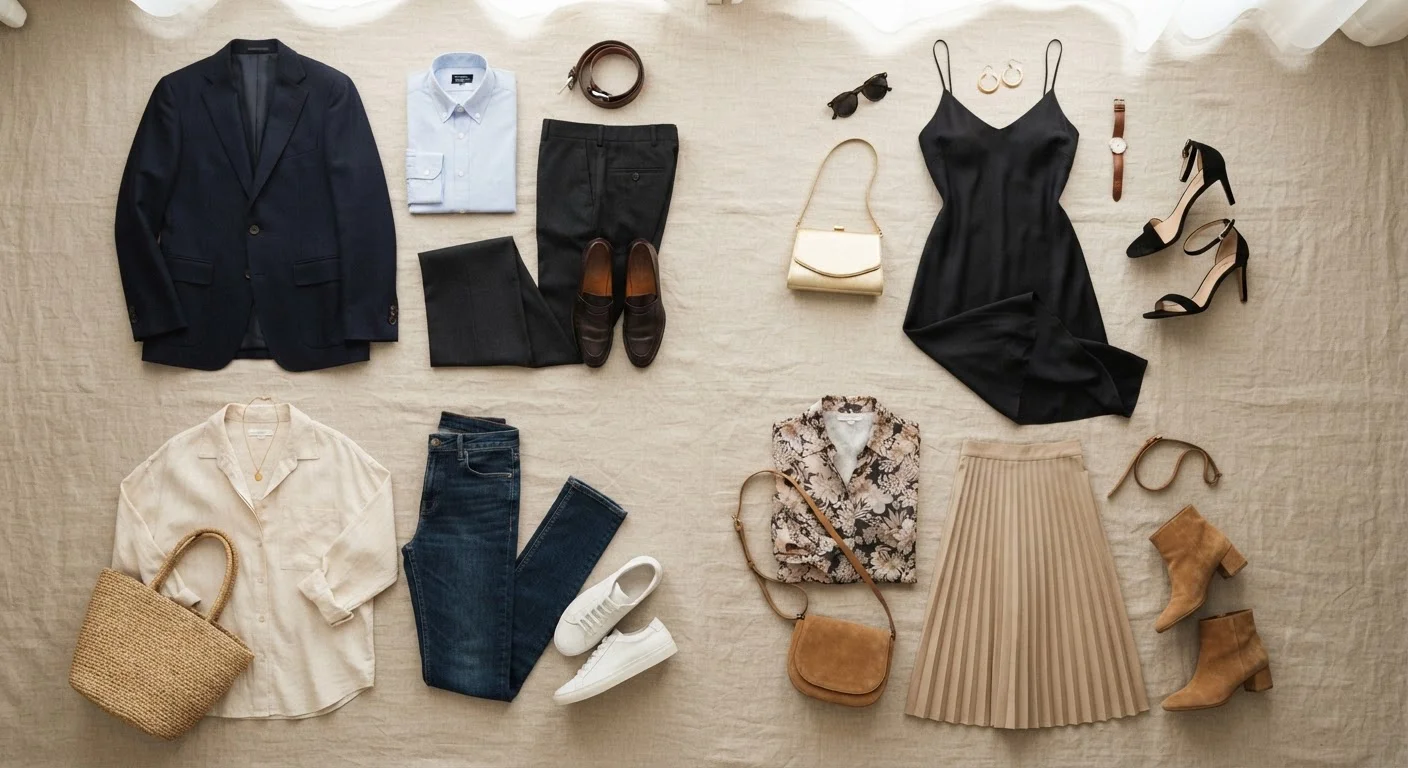
Why Dress Codes Still Matter
Dress codes exist not to restrict self-expression but to signal context — they communicate the tone of an event and help everyone feel appropriately at ease. The problem is that the language around them has grown inconsistent. "Smart casual" means something different at a London gallery opening than at a Sunday brunch in Nashville. Rather than memorizing rigid rules, the more useful skill is learning to read the intent behind the label.
Occasion dressing is really about calibrating — matching your level of formality to the setting without abandoning your personal style. As explored in our piece on style rules that don't actually apply to everyone, many dress "rules" are more cultural shorthand than law. Understanding that distinction gives you flexibility.
| Most Misread Dress Code | Smart Casual |
| Formality Levels (Low to High) | Casual → Smart Casual → Business Casual → Cocktail → Black Tie |
| Key Factor When in Doubt | Venue type and event time of day |
| Safe Default When Unsure | Dress one level above your instinct |
The Major Dress Codes, Decoded
Here is a plain-language breakdown of the most commonly misunderstood dress codes in everyday American life:
- Casual: Comfortable and relaxed, but not sloppy. Clean, well-fitting everyday clothing — jeans, t-shirts, sneakers — is appropriate. Visible stains, excessive rips, or overly revealing pieces generally fall outside even casual expectations in social settings.
- Smart Casual: The most misread code of all. Think put-together without being formal — tailored trousers or dark jeans, a blouse or button-down, clean leather or dressy footwear. The "smart" part means intentional; the "casual" part means relaxed silhouette.
- Business Casual: A workplace-adjacent standard that leans polished. Slacks, chinos, blouses, blazers, and loafers tend to work. Jeans, when allowed, should be dark and unadorned. Sportswear and open-toe sandals typically fall short of this standard.
- Cocktail Attire: Semi-formal. Knee-length or midi dresses, dressy separates, or a suit in a refined fabric. The occasion calls for elevated fabric and finish — think silk, crepe, or structured wool — rather than casual textures.
- Black Tie: Formal evening wear. Floor-length gowns or formal jumpsuits for those who wear them; tuxedos otherwise. Black tie optional slightly relaxes this — a dark formal suit is acceptable.
Dress Code
A set of conventions or expectations about appropriate clothing for a specific setting or occasion. Dress codes range from strictly formal to loosely casual and are often signaled by the host or venue.
Smart Casual
A semi-relaxed dress code that sits between casual and business casual. It calls for polished, intentional clothing without requiring formal attire — think tailored pieces in relaxed silhouettes.
Cocktail Attire
A semi-formal dress standard typically associated with evening events. It generally means knee-length to midi-length dresses or dressy separates in refined fabrics like silk, crepe, or structured knit.
Black Tie
A formal evening dress code. It typically calls for floor-length gowns or formal jumpsuits, or a tuxedo. 'Black Tie Optional' allows for a formal dark suit as an alternative.
Business Casual
A workplace-influenced dress standard that is polished but not formal. It typically includes tailored trousers, chinos, blouses, and blazers, while excluding sportswear, graphic tees, and overly casual footwear.
Reading the Room When No Code Is Given
Many invitations — especially for weddings, parties, and workplace events — either omit a dress code or use vague language. When that happens, a few practical questions help narrow the field:
- What is the venue? A rooftop bar implies a different register than a hotel ballroom or a backyard.
- What time is the event? Evening events almost always skew more formal than daytime ones.
- Who is hosting, and what do you know about their style? A creative colleague's housewarming and a corporate partner's dinner party call for different calibrations.
- What is the occasion? Milestone events — promotions, anniversaries, milestone birthdays — tend toward elevated dressing even when uncoded.
When genuinely uncertain, dressing one level above your instinct is rarely the wrong call. Being slightly overdressed signals respect; being underdressed can feel dismissive of the host's effort.
If you are navigating a wardrobe that needs to flex across multiple contexts, building around signature pieces is a practical strategy — a few versatile anchors can be styled up or down depending on the occasion.
When the Invitation Says Nothing at All
If no dress code is listed, check the venue, the time of day, and the nature of the occasion for clues. For weddings with no stated code, semi-formal is a reliable default — it respects the milestone without overstepping. When in doubt, a quick, friendly message to the host is always appropriate.
Occasion Dressing as an Extension of Personal Style
Meeting a dress code does not mean surrendering your aesthetic. The goal is to honor the formality level while staying recognizably yourself. Someone who gravitates toward minimalism can bring that sensibility to cocktail attire through clean lines and a restrained palette. Someone drawn to maximalism can express that even in business casual through texture and proportion.
Consider too that dress codes evolve. What workplaces expected a decade ago has shifted considerably, and social norms continue to loosen in some areas while tightening in others. This is part of why adapting your style through life transitions matters — the contexts you dress for will shift, and your wardrobe strategy should be able to shift with them.
Occasion dressing, at its best, is a form of considered communication. It says you understood the room — and still showed up as yourself.