Why Less Is More When You're Starting Out
The makeup aisle can feel deliberately overwhelming — rows of products, each promising something essential. But building a first kit isn't about acquiring everything; it's about acquiring the right things. A streamlined kit teaches you actual technique because you're working with a manageable set of tools rather than cycling through options before any one becomes familiar.
There's also a practical argument: makeup has a shelf life. Products that go unused sit in a drawer, expire, and get discarded — a waste of both money and space. Starting small forces intentionality, and intentionality is what actually builds skill.
Before any product enters your kit, it's worth knowing that what's underneath makeup matters just as much as what goes on top. A consistent skincare routine — even a basic one — creates a smoother, more receptive surface. See our guide to skincare as a makeup foundation for a clear starting point.
Undertone
The subtle hue beneath your skin's surface — typically warm (yellow/golden), cool (pink/blue), or neutral. Matching your undertone when selecting foundation or concealer helps the product blend seamlessly.
Coverage
How much a base product conceals or evens out the skin. Sheer coverage lightly tints the skin; full coverage masks most discoloration and texture.
Setting
Using a powder or spray to lock makeup in place after application, helping it last longer and reducing shine. Typically an intermediate technique, not essential for beginners.
Color Correcting
Applying a specific-colored concealer to neutralize a skin concern before applying regular concealer on top — for example, green to cancel redness. It adds steps and is usually unnecessary for beginners.
Blending
Working a product into the skin or over another product so there are no harsh edges or streaks. It's the core technique that separates a polished look from an unfinished one.
The Core Essentials: What Actually Belongs
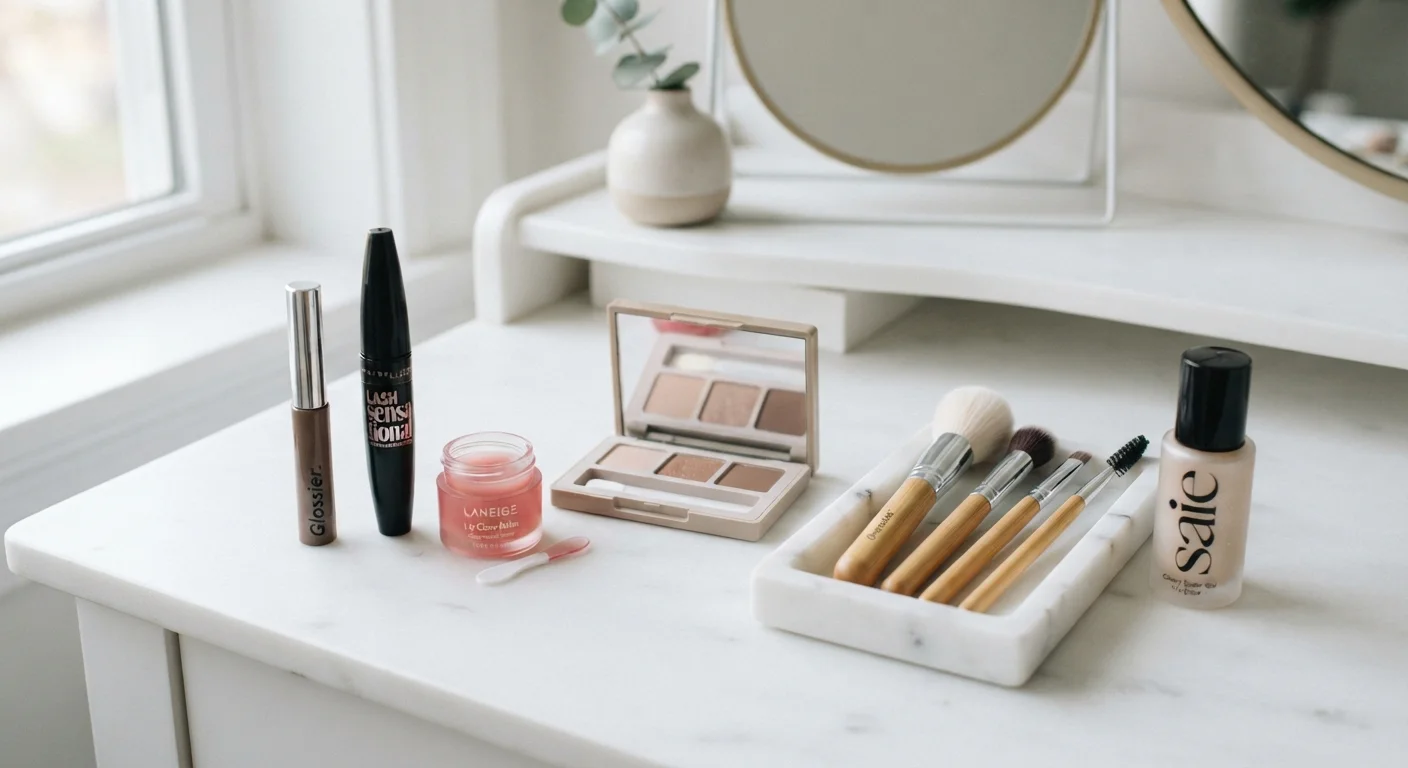
A functional first kit comes down to six categories. Within each, you need one product — not one of every option.
Base Coverage
A tinted moisturizer or light-coverage foundation evens skin tone without requiring blending skill. Tinted moisturizers and foundations serve different purposes — understanding the difference helps you choose based on your skin type and the finish you prefer.
Concealer
One creamy concealer in your shade handles under-eye circles and any spots you want to minimize. A concealer that matches your skin tone (or is one shade lighter for under eyes) is more versatile than multiple options.
Mascara
Mascara is the single product most beginners credit with making the biggest visible difference. A black or brown-black formula in a straight wand is easiest to control while you're learning application.
A Neutral Eye Product
A small neutral eyeshadow palette or a single taupe or brown shadow covers both everyday and slightly elevated looks. Once you're comfortable, learning basic blending technique is the skill that unlocks most eye looks.
A Lip Product
A tinted lip balm or sheer lipstick adds color with minimal precision required. Choosing a shade close to your natural lip color means any application looks intentional.
A Simple Brush or Two
A fluffy blending brush for eyes and either a flat brush or clean fingers for base application covers most needs. You do not need a full professional set to start.
Match Products to Your Skin Type
If you have oily skin, look for base products labeled oil-free or matte-finish. For dry skin, a hydrating or dewy-finish tinted moisturizer tends to sit more comfortably. Matching formulas to your skin type from the start avoids many common application problems — like foundation separating or settling into dry patches — before they happen.
What to Skip for Now
Equally important is knowing what not to buy yet. These products aren't bad — they're just better learned once you've built confidence with the basics.
- Contouring and highlighting kits: These require understanding your face structure and blending well enough to make shading look natural. Both take practice with simpler products first.
- Setting spray and baking powder: Useful for specific looks or longer wear, but unnecessary friction for a beginner's daily routine.
- Color-correcting concealers: Green, lavender, and peach correctors serve specific purposes but add a layer of complexity that isn't warranted before basic skin coverage feels comfortable.
- Bold or highly pigmented eyeshadow palettes: Bright or dark pigments are less forgiving. A small neutral palette gives more room to learn technique without the stakes of a vivid color going sideways.
- Eyeliner (to start): Liner is one of the most technique-dependent products in makeup. Most beginners find pencil liner approachable but liquid liner frustrating — hold off until mascara feels second nature.
Keeping your spending focused is also worth a moment of reflection. Budgeting basics can help you allocate a realistic amount without overspending on products you won't reach for yet.
Don't Buy Before You've Tried
Purchasing products online without testing shades or textures is one of the most common beginner mistakes. Whenever possible, test base products (foundation, concealer, tinted moisturizer) in natural lighting before committing. Many cosmetic retailers offer samples or return policies — take advantage of these to avoid ending up with a shade or formula that doesn't suit you.
Organizing and Caring for Your Kit
A well-organized kit saves time and protects your investment. A small makeup pouch or a simple acrylic organizer works well — the goal is that every item is visible and accessible, so nothing gets forgotten or doubled up on.
Hygiene is non-negotiable. Brushes accumulate oil, dead skin cells, and bacteria over repeated use, which can contribute to breakouts and skin irritation. Wash foundation brushes at least weekly and eye brushes every few uses. Sharpen pencil products regularly, and replace any product that changes smell or texture before its expiration — mascara especially should be replaced every three months.
As your skills grow, your kit will grow with it — but slowly and purposefully. The everyday makeup routine framework is a useful next step once your kit feels settled, offering a repeatable structure to practice with what you already have. A small, well-maintained kit used consistently will teach you more than a drawer full of products used occasionally.
This article is for informational and educational purposes only. Individual results with makeup products may vary based on skin type, technique, and personal preference.