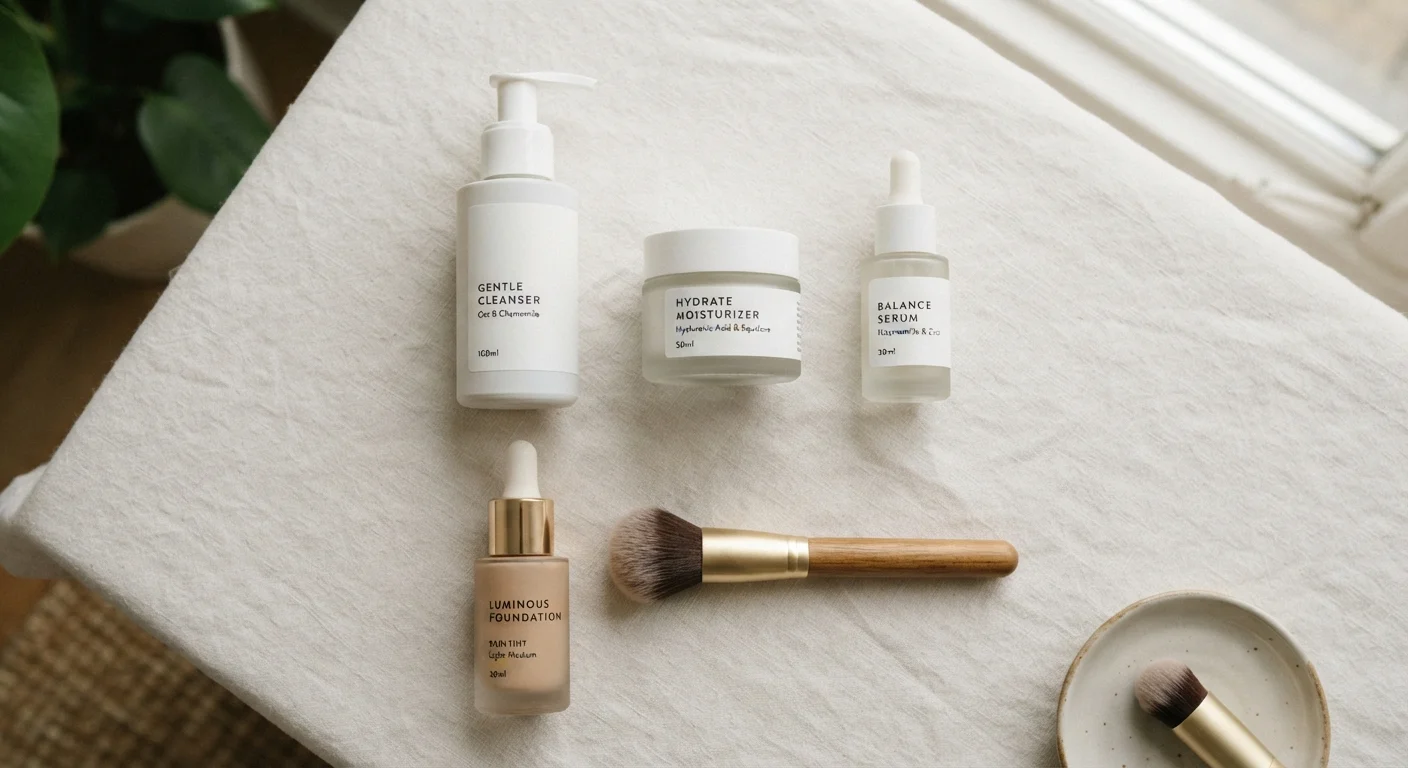
Why Skin Condition Directly Affects Makeup Performance
Think of your skin the way a painter thinks of a canvas. Apply the same pigment to a rough, dry surface versus a smooth, primed one — the results look entirely different. The same principle applies to makeup. Foundation, concealer, and blush all respond to the texture, hydration, and oil balance of the skin underneath them.
Dry or flaky skin tends to cause foundation to cling to dry patches and emphasize texture. Excess oil without proper skincare can break down makeup within hours. Uneven skin tone, when not addressed over time with targeted skincare, can require heavier coverage — which itself sits less naturally on skin.
The good news: you don't need perfect skin for makeup to look good. You just need skin that's consistently cared for. Even modest improvements in hydration and skin smoothness — achieved through a simple routine practiced over several weeks — can noticeably change how makeup wears throughout the day.
64%
Of makeup wearers skip daily moisturizer
According to survey data cited in dermatology-focused beauty industry reports, a significant share of makeup users do not apply moisturizer before foundation, which experts link to faster product breakdown.
4–6 weeks
Typical timeframe to see skincare texture improvement
Dermatologists generally note that consistent use of a basic moisturizing routine produces visible skin texture and hydration improvements within one to two skin cell turnover cycles.
1–3 min
Wait time after moisturizer before applying makeup
Cosmetic chemists commonly recommend allowing moisturizer to partially absorb before applying foundation to reduce pilling and improve product adhesion.
The Core Skincare Steps That Support Your Makeup Routine
You don't need a ten-step routine to see results. Three foundational steps, applied consistently, do most of the heavy lifting:
- Cleansing: Removes overnight oil, dead skin cells, and any residual product that could create an uneven surface. A gentle cleanser suited to your skin type is all that's needed — over-cleansing can strip the skin and worsen dryness or oil production.
- Moisturizing: Replenishes water content in the skin, softening texture and reducing the appearance of fine lines. A moisturized surface lets foundation blend seamlessly rather than dragging or settling into creases.
- Sun protection: A broad-spectrum SPF applied as the final morning skincare step protects against UV damage that contributes to uneven tone, premature aging, and dullness over time — all factors that affect how skin looks both with and without makeup.
If you're new to building a routine, the guide to building your first skincare routine walks through each step in practical detail, including how to choose products for your specific skin type without overcomplicating things.
Let Skincare Absorb Before You Apply Makeup
After your morning moisturizer and SPF, resist the urge to immediately pick up a foundation brush. Even sixty seconds of absorption time allows the product to settle into skin rather than mixing with your makeup formula. Use that window to brush your teeth or get dressed — it makes a real difference in how smoothly makeup applies.
From Skincare to Makeup: Making the Transition Work
The bridge between your skincare finish and your makeup start matters more than most people realize. Applying foundation immediately after moisturizer — before it has absorbed — can cause products to pill or slide. Giving your skin even one to two minutes makes a difference.
For those whose skin tends toward oiliness, a lightweight, non-comedogenic moisturizer allows effective hydration without clogging pores or contributing to excess shine. For drier skin types, a richer formula used consistently can transform how products apply within just a few weeks.
Primer, often seen as a mandatory step, is actually optional when the skin underneath is well-prepared. Many people find that a good moisturizer and SPF combo creates a surface smooth enough for direct makeup application — especially for everyday, lighter-coverage looks.
Once your skincare routine is established, building your actual makeup application around it becomes much more intuitive. A simple structure for that is outlined in the everyday makeup routine framework, which pairs well with a consistent skin prep habit.
Building the Habit: Consistency Over Perfection
Skincare results are cumulative. A moisturizer applied once won't transform your skin overnight, but the same moisturizer used every morning and evening for four to six weeks can meaningfully improve hydration, texture, and overall tone. This is why dermatologists consistently emphasize routine over product.
Starting simple reduces friction. A two-product morning routine — cleanser and moisturizer with SPF — is sustainable for most people and creates real change over time. From there, additional steps like serums or exfoliants can be introduced gradually based on specific skin concerns.
For a broader view of what building these habits looks like, the Skincare Basics hub covers core routines and ingredients across a range of skin types and concerns.
The relationship between skincare and makeup isn't about achieving a particular skin ideal. It's about giving whatever makeup you choose — whether that's a full-coverage foundation or just a tinted SPF — the best possible surface to work with. That starts with consistent, simple care.
This article is for general informational and educational purposes only. It is not a substitute for professional medical or dermatological advice. Consult a qualified dermatologist or healthcare provider for guidance specific to your skin type or any skin concerns.