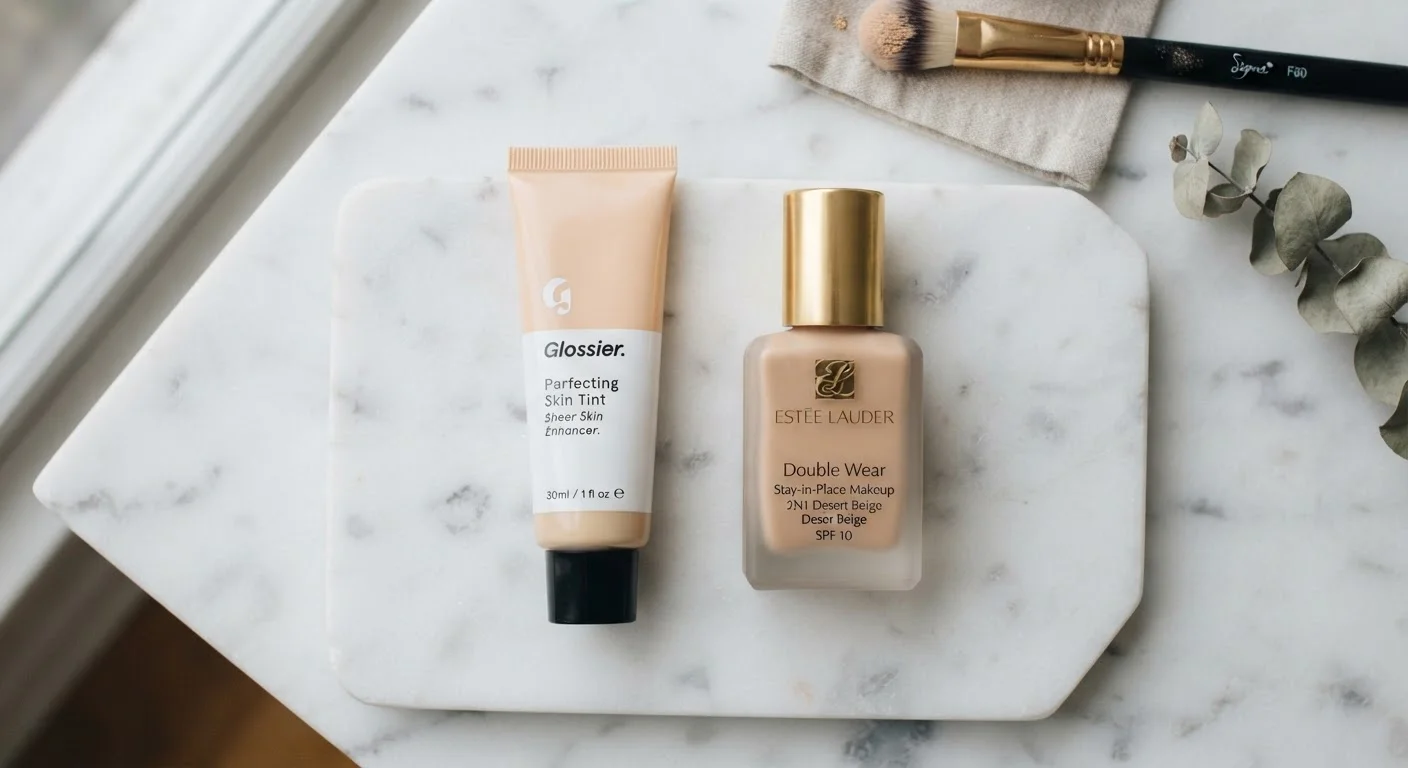
What Each Product Actually Does
At first glance, tinted moisturisers and foundations look like they do the same job. Both come in skin-matching shades, both even out your complexion — but the similarities largely end there.
A tinted moisturiser is exactly what its name suggests: a hydrating moisturiser with a small amount of pigment blended in. Coverage is typically sheer to light, and the finish reads as natural skin rather than a polished, uniform look. Many formulas also include SPF or skin-conditioning ingredients, making them genuinely multifunctional. Because the formula prioritises moisture, they work well as a skincare-makeup hybrid — particularly useful if your skincare routine already creates a healthy base.
Foundation, by contrast, is engineered primarily for coverage and wear. It contains a higher concentration of pigment and film-forming agents designed to adhere to skin, blur imperfections, and stay put. Depending on the formula — liquid, powder, stick, or cushion — coverage ranges from light and buildable to full and opaque. Finish options include matte, satin, dewy, and everything in between.
| Criterion | Tinted Moisturiser | Foundation |
|---|---|---|
| Coverage level | Sheer to light | Light to full (buildable) |
| Primary purpose | Hydration + subtle colour | Coverage + complexion perfecting |
| Finish | Natural, skin-like | Matte, satin, or dewy — varies by formula |
| Best skin type | Dry, normal, mature | All types; especially oily/combination |
| Application ease | Very forgiving; fingers work well | Requires practice and the right tool |
| Wear time | Moderate (4–6 hours typical) | Longer (6–12+ hours for long-wear formulas) |
| SPF inclusion | Common in many formulas | Occasional; varies by product |
| Shade range | Often more limited | Typically wider and more precise |
Skin Type and Coverage Needs: The Two Key Filters
Choosing between these two products comes down to two honest questions: what does your skin actually need, and how much of it do you want to show?
Skin type matters significantly. Tinted moisturisers suit dry and normal skin types especially well — the added humectants and emollients prevent that tight, uncomfortable feeling common with heavier formulas. Those with mature skin often find them flattering, as they don't settle into fine lines the way some foundations can. Conversely, those with oily or combination skin may find tinted moisturisers slip or break down within a few hours, particularly in warm conditions.
Foundation — especially matte or long-wear liquid formulas — typically performs better on oily skin because it's formulated with ingredients that absorb excess sebum and resist fading. It also gives oily-skin users more control over finish. That said, if you have dry skin and choose a foundation, opt for a hydrating or satin-finish formula rather than a matte one, and ensure your skincare underneath is doing enough work. Applying skincare in the right order before any base product can make a measurable difference in how either formula performs.
~40%
Makeup users who wear base daily
Industry surveys suggest roughly 40% of makeup wearers apply some form of base product every day, with tinted moisturiser gaining share among those preferring lighter routines.
SPF 15–30
Typical SPF range in tinted moisturisers
Many tinted moisturisers include broad-spectrum SPF, though dermatologists generally advise against relying on makeup alone for full sun protection.
Coverage preference is equally personal. A tinted moisturiser will not fully conceal significant blemishes or hyperpigmentation — but that's intentional. For targeted coverage on specific areas, layering a well-matched concealer on top of either product is the standard approach. See our guide to concealer shades and undertones for help finding a shade that won't look patchy.
Application, Skill Level, and Everyday Practicality
Tinted moisturisers have a meaningful edge for beginners: they blend easily with fingers, a brush, or a damp sponge, and patchy application is rarely noticeable because the pigment is light. There's less pressure to blend perfectly at the hairline or jawline. If you're building your first makeup kit, a tinted moisturiser is one of the lowest-risk places to start.
Foundation demands a bit more technique. Achieving a streak-free, natural finish requires the right tool — most makeup artists recommend a damp blending sponge or a flat foundation brush — and some practice to avoid tide-mark edges. The payoff, however, is precision: you can build exactly as much coverage as you need, exactly where you need it.
Can You Mix the Two Products?
Some people blend a small amount of tinted moisturiser into their foundation to lighten coverage and add dewiness — a common workaround for those who find full-coverage foundation too heavy on most days. This is a legitimate technique, but it can affect wear time and finish unpredictably. It's worth patch-testing on your hand before applying it to your full face.
In terms of daily convenience, tinted moisturisers win on speed. For occasions where a more polished, long-lasting result matters — events, formal settings, or days when you want your complexion to look more uniform — foundation earns its place in the routine. Neither product is objectively superior; they simply serve different moments and priorities.
This article is for informational purposes only. Individual skin conditions vary, and anyone with a dermatological concern should consult a qualified skincare professional or dermatologist.