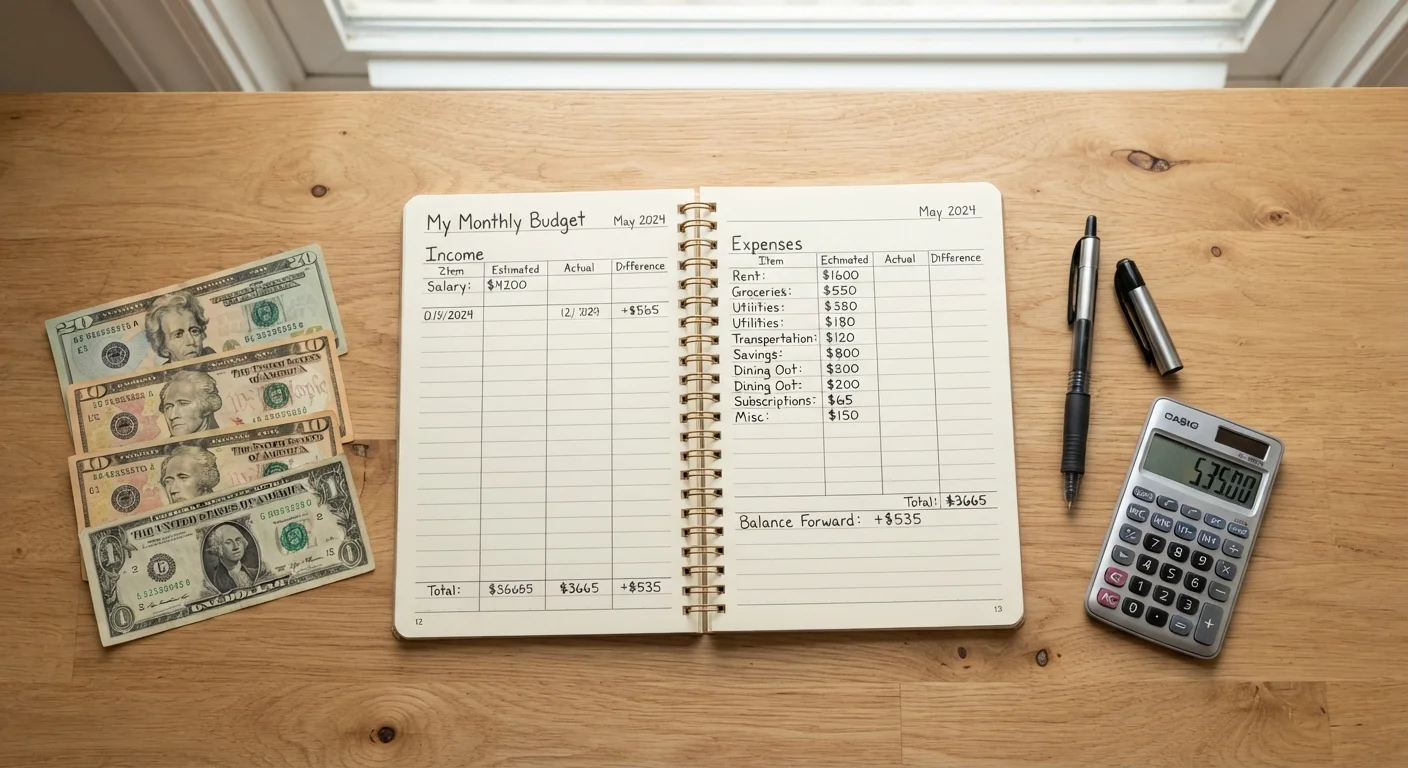
Why Budgeting Matters (Even When Money Feels Fine)
A budget isn't a punishment. It's a map — one that shows you where your money is actually going versus where you'd prefer it to go. Without that map, most people discover the gap only when something goes wrong: an unexpected bill, a missed savings goal, or a month that ends with more calendar than cash.
The good news is that budgeting works regardless of income level or financial situation. You don't need to be in debt, earning a high salary, or particularly organized. You need only two things: your income number and your expense list. If you've been putting this off because you thought budgeting was complicated or only for people in financial trouble, our companion piece on budgeting myths addresses those misconceptions directly.
You Don't Need a Perfect System to Start
Many people delay budgeting because they're waiting to find the 'right' method or tool. Starting imperfectly this week beats having a perfect plan next month. Even a rough first budget reveals patterns in your spending that you can't see any other way.
Step 1: Know Your Take-Home Income
The most important number in any budget is your take-home pay — the amount deposited into your account after taxes, Social Security contributions, and any other automatic deductions. This is your real spending power. Many first-time budgeters mistakenly plan against gross income (the bigger number on a job offer) and are surprised when the math doesn't work out.
List every reliable income source: your primary paycheck, any side income, freelance payments, or regular transfers you receive. If your income varies month to month, use your lowest recent month as a conservative baseline. This single habit — budgeting to your floor — protects you from overpromising your money.
Take-home pay
The amount of money you actually receive after taxes and other automatic deductions — the figure that lands in your bank account, not your total salary.
Gross income
Your total earnings before any taxes or deductions are taken out. This number is typically higher than what you actually have available to spend.
Fixed expense
A cost that stays the same every month, such as rent or a loan payment, making it easy to predict and plan for.
Variable expense
A cost that changes in amount from month to month — like groceries or utilities — but is still a regular and necessary part of your budget.
Discretionary spending
Money spent on non-essential choices — dining out, entertainment, hobbies — that you can adjust up or down based on your financial situation.
Emergency fund
A reserve of savings set aside specifically for unexpected expenses or income disruption, intended to prevent you from going into debt when surprises happen.
Step 2: List Every Expense
Before you allocate a single dollar, you need a complete picture of where money currently leaves. Pull up two to three months of bank and credit card statements and write down every outgoing transaction. Group them as you go:
- Fixed expenses — amounts that stay the same each month (rent, loan payments, insurance premiums)
- Variable necessities — costs that fluctuate but are non-negotiable (groceries, utilities, transportation)
- Discretionary spending — choices rather than obligations (dining out, entertainment, subscriptions)
- Irregular expenses — infrequent but predictable costs (annual memberships, car registration, holiday gifts)
Irregular expenses trip up beginners more than any other category. Divide each annual cost by 12 and treat that monthly share as a real expense. For a comprehensive category reference, see our spending categories guide.
Step 3: Choose a Budgeting Framework
A framework gives your numbers a structure. For beginners, one of the most accessible starting points is the 50/30/20 rule, which suggests dividing take-home pay into three broad buckets:
| Category | Target Share | What it covers |
|---|---|---|
| Needs | ~50% | Rent, utilities, groceries, transportation, minimum debt payments |
| Wants | ~30% | Dining out, streaming, hobbies, travel |
| Savings & Debt | ~20% | Emergency fund, retirement contributions, extra debt paydown |
These percentages are a starting point, not a law. In high cost-of-living areas, needs may consume 60% or more of take-home pay, and that's a reality to plan around rather than ignore. Adjust the buckets to fit your actual life, then use the framework as a reference point when making spending decisions. If you're carrying existing debt, the guide to managing personal debt can help you understand how repayment fits into your overall budget.
50/30/20 Is a Guide, Not a Rule
The 50/30/20 framework is widely cited because it's simple and gives beginners a sensible starting structure — not because it's the only valid approach. Depending on your income, location, and goals, a 60/20/20 or 70/10/20 split may reflect your reality more accurately. The goal is intentionality, not hitting an arbitrary percentage.
Step 4: Build and Balance Your Budget
Now bring the numbers together. Write your monthly take-home income at the top, then subtract each expense category. The equation is simple:
Income − Expenses = Remaining balance
If the result is positive, you have money to direct intentionally — toward savings, an emergency fund, debt paydown, or a future goal. If it's negative, you're spending more than you earn, and the budget has just done its most valuable job: showing you that clearly, before it becomes a crisis.
Closing a deficit typically means finding expenses to reduce, increasing income, or both. Start with discretionary categories, where adjustments are easiest and most immediate. Subscriptions and dining out are common places where small changes add up quickly. For renters new to managing full monthly costs, our renter's financial guide covers housing-related budget factors worth understanding.
Don't Budget From Your Gross Pay
Calculating your budget using your gross (pre-tax) income rather than take-home pay is one of the most common beginner errors. Your gross number can be 20–35% higher than what actually arrives in your bank account, depending on your tax situation and deductions. Always build your budget from the net figure you actually receive.
Keeping the Budget Running Month to Month
The first budget you build is a draft. Real life will diverge from it — that's expected. What separates people who stick with budgeting from those who abandon it after one month is a simple review habit: at the end of each month, compare what you planned to spend against what you actually spent. Note the gaps without judgment, then adjust the next month's plan accordingly.
A few practices that help beginners stay consistent:
- Set a recurring 20-minute calendar block each month to review your numbers
- Track spending in real time using a notes app or simple ledger — waiting until month-end makes it harder to remember everything
- Build in a small "miscellaneous" buffer (even $20–$50) to absorb minor surprises without breaking the whole plan
If your household finances involve a partner, the household budgeting guide addresses how to coordinate shared spending and savings goals. And if travel is part of your future plans, budgeting now creates the savings habit that makes funding a trip realistic — our trip planning hub can help you think through those costs when you're ready.
This article is for general informational and educational purposes only and does not constitute personalized financial advice. Consider consulting a qualified financial professional for guidance specific to your situation.