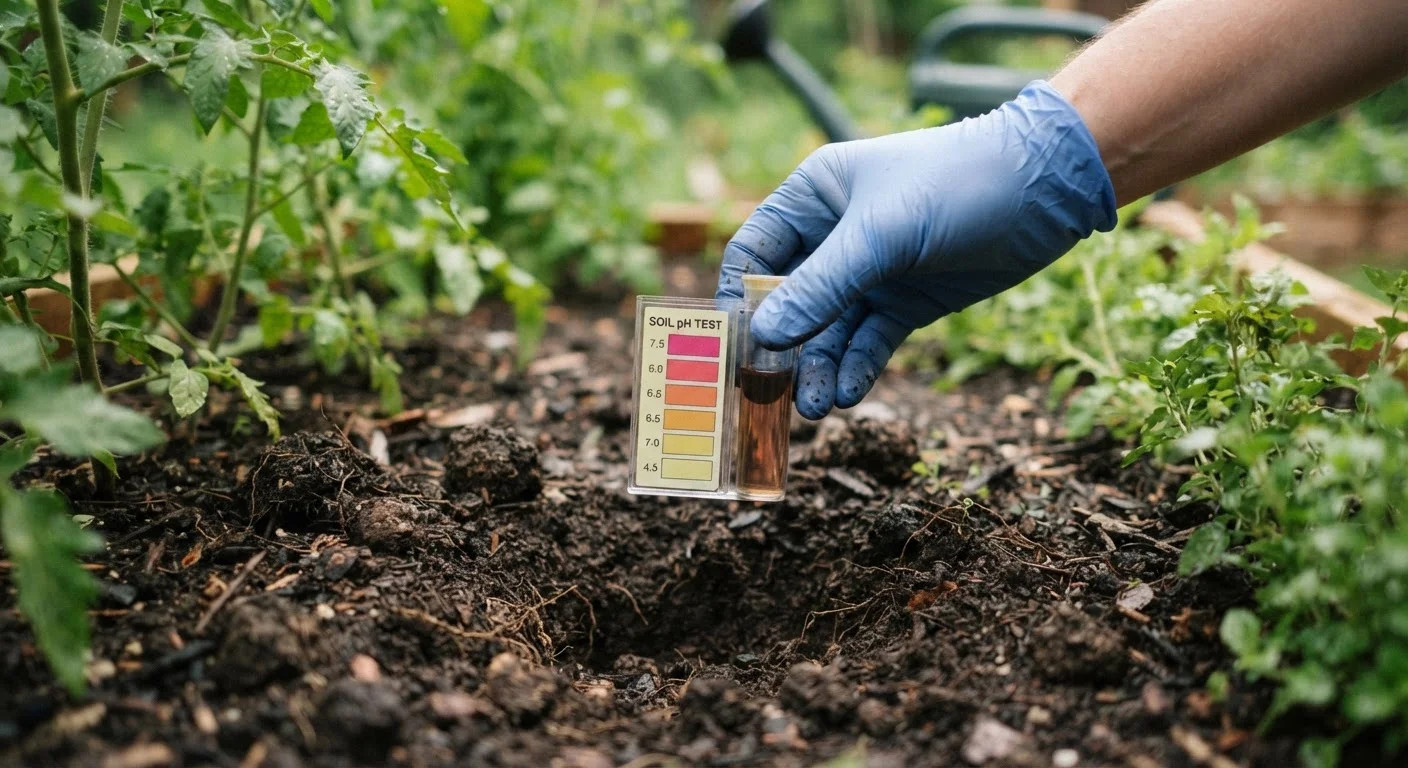
Why pH Is the Master Variable in Your Soil
You can add the best fertilizer on the market, but if your soil pH is off, your plants simply cannot use those nutrients. pH determines whether essential minerals like iron, manganese, and phosphorus exist in forms plant roots can actually absorb. When pH strays too far from a plant's preferred range, those nutrients become chemically locked in the soil — a phenomenon sometimes called nutrient lockout.
Think of pH as a dial that controls nutrient availability. In strongly acidic soils (below 5.5), aluminum and manganese can reach levels that are toxic to many plants. In strongly alkaline soils (above 7.5), iron and phosphorus become poorly available, which often shows up as yellowing leaves — a symptom called chlorosis. Correcting pH frequently resolves nutrient problems that no amount of fertilizer alone can fix.
6.0–7.0
Optimal pH range for most vegetables
University extension programs across the U.S. consistently identify this range as ideal for nutrient availability in common food crops.
4.5–5.5
Preferred pH for blueberries and azaleas
These acid-loving plants require a lower pH to properly absorb iron and manganese from the soil.
10x
Chemical difference per pH unit on the scale
Each whole-number step on the pH scale represents a tenfold change in hydrogen ion concentration, meaning small shifts have large chemical effects.
Reading the pH Scale: What the Numbers Mean
The pH scale runs from 0 to 14. Garden soils realistically fall between about 4.0 and 9.0, with most cultivated land sitting somewhere between 5.5 and 7.5. Here's a practical breakdown:
- Below 5.5 (strongly acidic): Common in regions with heavy rainfall and abundant organic matter. Blueberries, azaleas, and rhododendrons thrive here, but most vegetables struggle.
- 5.5–6.5 (mildly acidic): A sweet spot for many fruits, lawn grasses, and acid-tolerant vegetables like tomatoes and peppers.
- 6.5–7.0 (near neutral): Ideal for the widest range of vegetables, herbs, and flowering annuals.
- 7.0–7.5 (mildly alkaline): Some ornamentals and drought-tolerant plants do well, but many common vegetables show deficiency symptoms.
- Above 7.5 (strongly alkaline): Often found in arid regions and areas with limestone bedrock; requires significant amendment or careful plant selection.
If you're gardening in raised beds, you have more direct control over starting pH than you would in the ground. See our guide to raised beds vs. in-ground planting for a full comparison of how each system affects growing conditions.
Test Before You Amend
Always get a soil test before adding lime, sulfur, or any pH-altering product. Amending without a baseline reading can push your soil in the wrong direction. Your local cooperative extension service often provides low-cost, detailed soil tests with region-specific recommendations.
How to Test and Adjust Your Soil pH
Testing before amending is essential — you need a baseline reading to know how much adjustment is actually required. Home test kits provide a general snapshot; a professional soil test through your state's cooperative extension service gives far more detail, including recommendations calibrated to your specific soil type and target crops.
To raise pH (make soil less acidic): Apply ground agricultural limestone. The rate varies by soil texture — clay soils need more lime than sandy soils to achieve the same shift. Allow at least three to six months for the change to register before retesting.
To lower pH (make soil more acidic): Elemental sulfur is the standard choice, again with rates depending on soil type and the size of the shift needed. Organic matter helps too — regularly incorporating homemade compost gradually supports soil health and can buffer pH over time, though it won't replace targeted amendments for large corrections.
Patience matters here. Soil pH does not change overnight, and over-amending in a hurry can create new imbalances. Test, amend conservatively, wait, then retest.
Matching Plants to Your Soil — A Practical Strategy
Dramatically altering soil pH across a large garden is labor-intensive and requires ongoing maintenance. An equally sound strategy is to map your soil's existing pH and select plants suited to those conditions. Native and regionally adapted species often align naturally with local soil chemistry, making them lower-maintenance choices.
For example, if your soil consistently tests acidic, lean into it: blueberries, ferns, and many woodland natives will flourish with minimal intervention. If your soil trends alkaline, consider Mediterranean herbs like lavender and sage, or explore ornamental grasses. Plants that attract pollinators — many of which are adapted to local conditions — are worth exploring in this context; see our guide to pollinator-friendly plants for ideas. Pairing plant selection with thoughtful soil management, including appropriate mulching, creates a garden that works with your soil rather than against it.
“The single most important thing a gardener can do before planting is to understand their soil. pH is where that understanding begins — it shapes everything else that follows.”
— Cooperative Extension Soil Science Program, Land-grant university cooperative extension, general soil health guidance