Why Your Document Strategy Matters Before You Leave
Most travelers think about documents in the last 24 hours before departure — which is exactly when overlooking something becomes most costly. A missing visa, an expired passport, or a lost insurance card can derail a trip far more quickly than a missed connection. The good news is that a solid document strategy takes under an hour to put in place and pays dividends at every stage of travel.
This checklist covers every document worth carrying, how many copies to make, and where to store them — whether you're crossing a border for the first time or the fiftieth. For a broader view of what to handle before departure, see our pre-departure planning guide.
Verify Requirements With Official Sources
Document requirements vary significantly by destination, citizenship, and trip type. Always verify entry requirements — including visa policies, passport validity rules, and vaccination documentation — with your government's official travel advisory and the destination country's embassy or consulate before you travel. Information in this article is general and educational.
Document requirements vary significantly by destination, citizenship, and trip type. Always verify entry requirements — including visa policies, passport validity rules, and vaccination documentation — with your government's official travel advisory and the destination country's embassy or consulate before you travel. Information in this article is general and educational.
What to Carry: The Core Documents
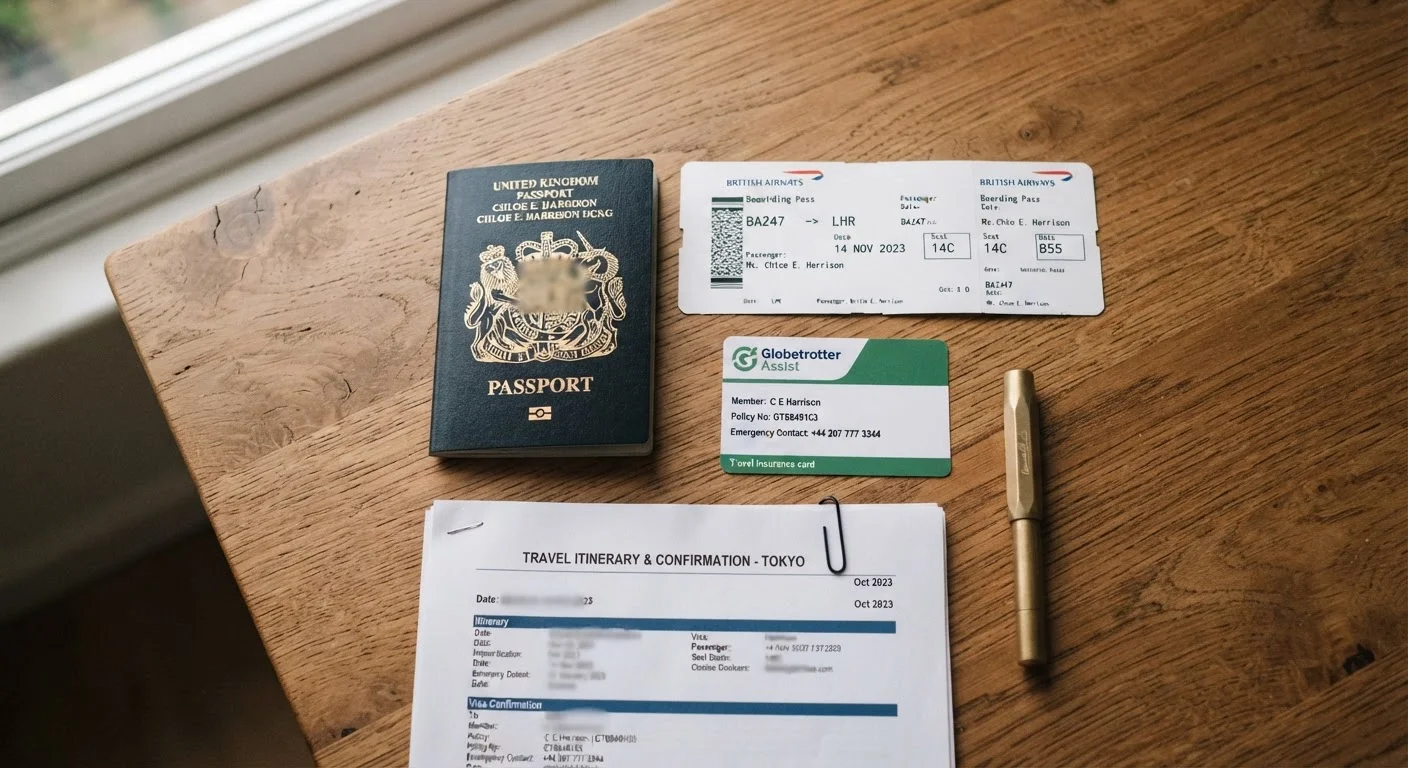
The documents below form the foundation of any traveler's kit. Whether you're taking a domestic road trip or an international flight, having these organized and accessible will help you move smoothly through checkpoints, access services, and recover quickly if something goes wrong.
Identity and Entry Documents
Travel and Booking Confirmation
Health and Insurance Documents
Financial and Emergency Information
Vehicle and Driving Documents
Keep originals in a secure, accessible location — such as a travel wallet worn close to your body. For guidance on what goes in your bag versus your carry-on, our carry-on vs. checked luggage guide outlines the key trade-offs.
Backing Up Your Documents: The Right Way
Copies matter — but only if they're stored correctly. A photocopy in the same bag as your passport offers almost no protection if that bag is stolen. A secure backup strategy uses at least two independent storage methods in two different locations.
Never Store All Copies in One Place
Keeping physical copies in the same bag as your originals means a single theft or loss eliminates all your backups simultaneously. Distribute your document set across at least two physically separate locations — for example, your carry-on and your accommodation safe. A trusted contact at home should also hold a copy of your most critical documents.
Check Passport Validity Well Before You Travel
Many countries require your passport to be valid for at least six months beyond your planned return date — not just the date of entry. Check this requirement specifically for each country on your itinerary. Renewing a passport close to a departure date can be stressful and may not be possible in time through standard processing.
Physical copies: Make two sets of photocopies of every critical document. Leave one set with a trusted contact at home and keep the other set in a separate bag from your originals — ideally locked in your accommodation's safe when not needed.
Digital copies: Scan or photograph each document and save files to a password-protected cloud storage account you can access from any device. Avoid storing sensitive files in unencrypted email attachments. For more on protecting your data while traveling, see our digital security on the road guide.
What copies can and cannot do: Copies help you prove your identity to embassies or consulates when replacing a lost or stolen document — they do not substitute for an original at border crossings. Our article on passport and ID protection explains exactly what backup steps actually help in a crisis.
Password-protected cloud storage account
Store encrypted digital copies of all critical documents accessible from any internet-connected device.
Portable document scanner or smartphone scanning app
Create high-resolution digital copies of documents before departure for secure backup.
Waterproof travel document wallet
Protect physical originals from moisture and physical damage while keeping them organized and accessible.
Secure money belt or RFID-blocking pouch
Keep original documents and cards on your person with reduced risk of pickpocketing or electronic skimming.
Staying Safe With Your Documents on the Road
Carrying the right documents is only half the equation — how you manage them day-to-day determines your real risk exposure. Consistent habits make a significant difference, regardless of your destination. Our travel safety habits guide outlines practical approaches that apply across very different trip types.
As part of a broader safety framework, document security sits alongside communication plans, situational awareness, and health preparation. The complete travel safety guide covers all of these stages in one place.
This article provides general travel information for educational purposes. Always verify document requirements with official government and embassy sources before traveling. This content does not constitute legal or immigration advice.