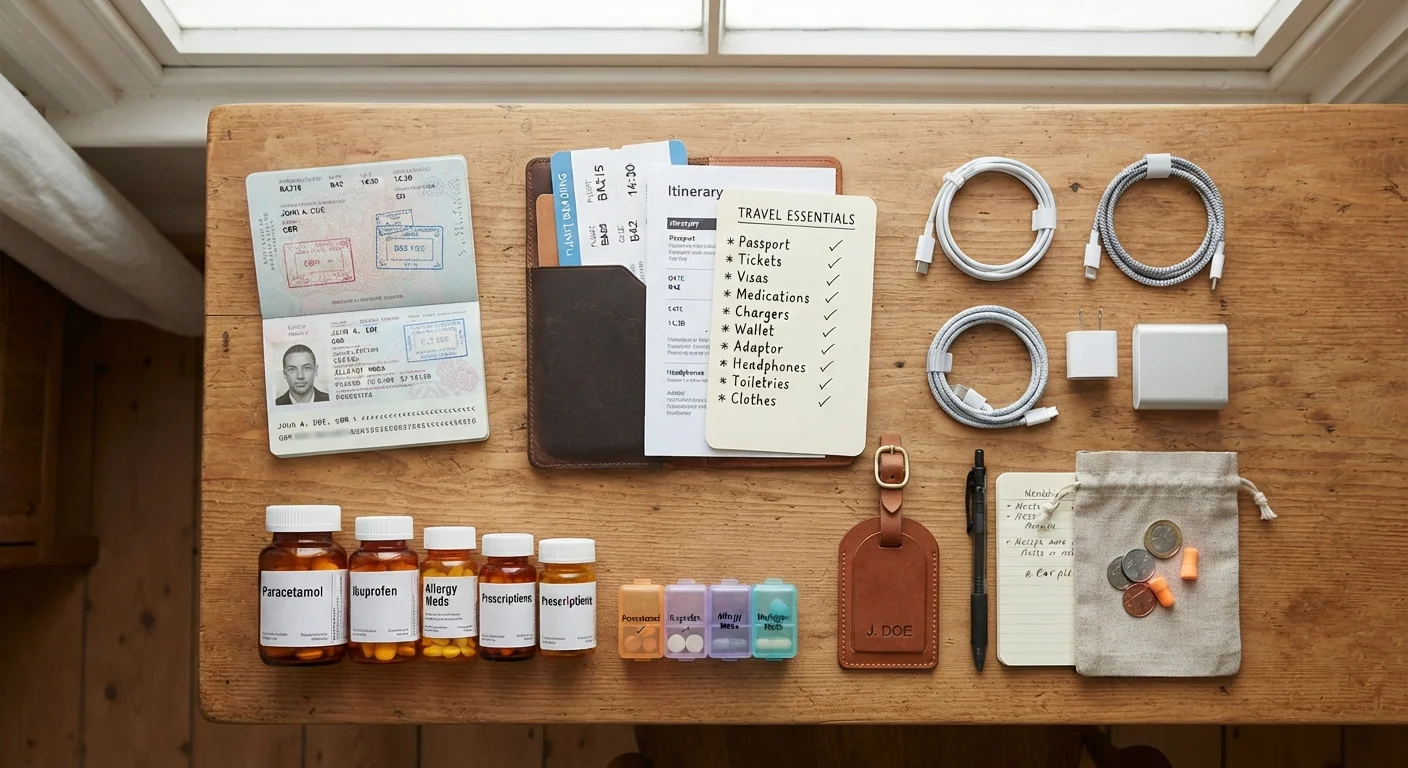
Why a Pre-Departure Checklist Matters
Most travel problems that derail trips aren't caused by bad luck — they're caused by overlooked preparation. A forgotten prescription, an unnotified bank, or a passport expiring within six months of entry can transform an exciting departure into a stressful scramble. This checklist covers five core categories: documents, finances, health, home, and communication. Work through it systematically, ideally starting at least two weeks before you travel.
If you're planning a road trip as part of your journey, pair this guide with a pre-long-journey vehicle check to make sure your car is as prepared as your bags. And for a broader view of how pre-departure fits into the full travel planning arc, see our guide on the anatomy of a well-planned trip.
Documents and Identity
Finances and Payments
Health and Medications
Home and Property
Communication and Emergency Planning
Packing and Logistics
Tools You'll Need to Work Through This List
Before you sit down with this checklist, gather the tools below. Having everything on hand prevents interruptions and helps you complete each category without losing momentum.
Physical or digital notepad
Record emergency contacts, itinerary details, and confirmation numbers in a format that doesn't rely on battery or internet access.
Secure cloud storage or encrypted app
Store digital copies of your passport, insurance card, and visa documents so they're accessible even if your bag is lost.
Offline map application
Download destination maps in advance so you can navigate without mobile data if connectivity is unreliable.
Travel health kit
A small pouch containing basic first aid items, personal medications, and health supplies for the journey.
International power adapter
Ensure your devices can charge at your destination regardless of local socket type or voltage.
Documents and Identity: Get This Right First
Document problems are the single most disruptive pre-trip failure — and entirely avoidable. Check passport validity early: many countries require at least six months of validity beyond your travel dates, and some require blank visa pages. Visa requirements vary widely and can take weeks to process, so research entry rules through official government sources well in advance.
Check Entry Requirements Through Official Sources
Visa rules, passport validity thresholds, and health entry requirements change without notice. Always verify current requirements directly with the official embassy or consulate of each country on your itinerary and your own government's foreign travel advisory pages. Do not rely solely on travel blogs or booking platforms for this information, as they may be outdated.
Beyond photocopies, consider how you store backup documents. Our guide on passport and ID protection on the road explains why simple copies often aren't sufficient and what more robust backup strategies look like.
Finances, Health, Home, and Communication
These four categories are often rushed or skipped entirely — yet each one represents a category of risk that's straightforward to manage with a little advance effort.
Finances: Inform your bank of your travel dates and destinations before you leave. Unexpected foreign transactions can trigger automatic card freezes. Carry at least one backup payment method and understand the fee structure for your cards abroad.
Health: Visit your healthcare provider or a travel medicine clinic well before departure — some vaccinations require multiple doses spread over weeks. Carry sufficient prescription medication for your entire trip plus a few extra days, and keep medications in original labeled containers. Review what your health insurance covers internationally and consider whether travel medical insurance is appropriate for your situation. Always consult a qualified healthcare professional about vaccinations, medications, and destination-specific health risks — general information here is not a substitute for personal medical advice.
Don't Leave Health Prep to the Last Minute
Some travel vaccinations require multiple doses administered weeks apart before they provide protection. If you're visiting destinations with specific health risks — such as malaria-endemic regions or areas with yellow fever — starting preparations just days before your trip may be too late. Schedule a consultation with a travel medicine professional as early as possible, ideally six to eight weeks before departure.
Home: Secure your home before you leave — hold mail, arrange for plant or pet care, check that appliances are off or unplugged, and let a trusted neighbor know you'll be away. If you're driving a long distance from home first, review pre-drive readiness considerations before setting off.
Communication: Write down — not just store in your phone — emergency contact numbers, your accommodation addresses, and the contact details for your country's embassy or consulate at your destination. Share your itinerary with someone at home. For more on building a response plan for unexpected events, see our resource on emergency preparedness for travelers. If your trip involves layovers or connecting flights, understanding layover logistics can help you avoid missed connections.
For a safety-focused version of this pre-departure process, the pre-trip safety checklist is a useful companion resource. The broader complete picture of travel safety covers what comes after you leave, too.
This article provides general travel planning information. For destination-specific entry requirements, health recommendations, and safety conditions, always verify with official government sources and qualified professionals before traveling.