What Is a Statement Wall, Exactly?
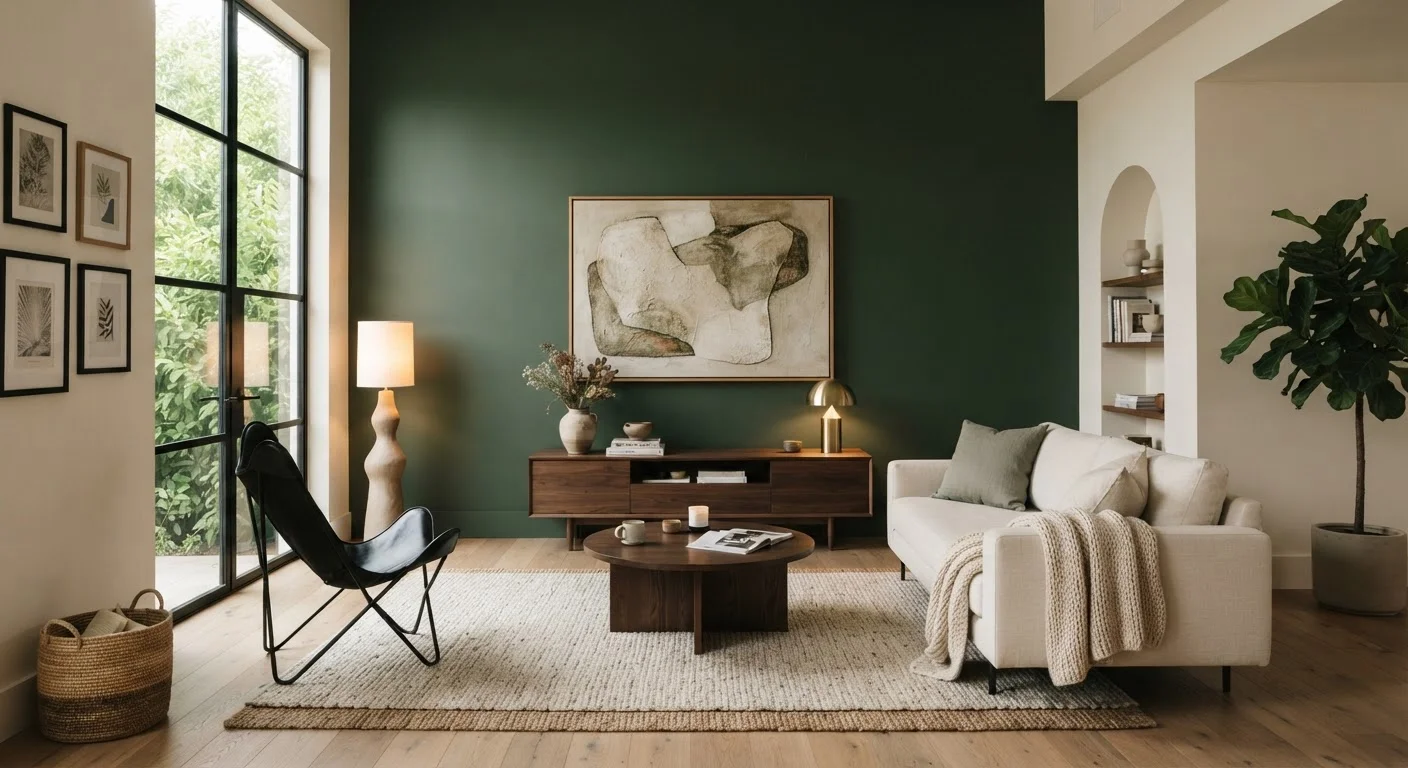
A statement wall — sometimes called a feature wall or accent wall — is a single surface in a room treated differently from the other three. The treatment might be a bold paint color, textured wallpaper, wood paneling, tile, or even a gallery arrangement. The goal is to draw the eye to one deliberate point in the room and use it to set the visual tone for the entire space.
The concept has been part of interior design for decades, cycling in and out of mainstream popularity. Before committing to one, it helps to understand both what a statement wall can genuinely do and where it tends to let homeowners down. If you're starting from scratch, reviewing what to assess before you decorate is a worthwhile first step.
The Advantages: Why Statement Walls Work
When a statement wall is well-placed, its benefits go beyond visual interest.
Creates an immediate focal point in the room
A defined focal point gives the eye somewhere intentional to land, which makes a room feel more composed and considered — even when furniture and decor are kept simple.
Adds depth and dimension without major renovation
Texture treatments like limewash paint, grasscloth wallpaper, or slat wood panels introduce tactile interest that flat painted walls can't achieve, often at a fraction of the cost of structural changes.
Allows bold color experimentation at lower risk
Committing a deep or saturated color to one wall rather than four lets homeowners explore a hue they love without fully surrounding themselves in it — a practical compromise for the color-curious.
Can visually correct awkward proportions
A darker or heavily textured treatment on a far wall in a long, narrow room can make it appear wider. Handled correctly, a statement wall functions as a subtle architectural adjustment.
Relatively fast and affordable to refresh
Repainting or repapering one wall takes significantly less time, money, and paint than treating an entire room — making it one of the more accessible ways to meaningfully update a space.
1 wall
Typical scope of a feature wall treatment
By limiting the treatment to a single surface, homeowners can achieve meaningful visual change while using roughly 25% of the paint or wallpaper a full-room treatment would require.
~30%
Proportion of wall paint used vs. full-room treatment
A single accent wall in a standard room uses approximately one-quarter to one-third of the materials needed for four walls, keeping material costs and labor time substantially lower.
Furniture arrangement also becomes more intuitive in rooms with an established focal point. A sofa facing a richly painted or papered wall, a bed positioned against a textured headboard wall — these layouts feel resolved rather than arbitrary. For more on the reasoning behind focal points in layout, see furniture arrangement principles that professional designers rely on.
The Disadvantages: Where Statement Walls Fall Short
The appeal of a dramatic wall is real, but so are the pitfalls — especially for homeowners who haven't fully accounted for the room's fixed conditions.
Can date a room quickly if trend-driven
Accent walls closely tied to a passing design moment — a specific graphic print, an on-trend color — can feel stale within a few years, and the effort to undo them undermines the original appeal.
Wrong wall choice disrupts the whole room
Treating a wall that isn't a natural focal point — such as a wall broken up by multiple doors or windows — can pull the eye in a confusing direction, making the room feel unresolved rather than intentional.
Low-light rooms amplify dark treatment risks
A deep-toned wall in a north-facing or artificially lit room can read as heavier and more oppressive than intended. Light levels need to be assessed honestly before committing to saturated or dark treatments.
Wallpaper and tile are difficult to reverse
Traditional wallpaper removal is time-consuming and can damage drywall if the surface wasn't properly primed beforehand. Tile and stone cladding are effectively permanent without significant effort and expense.
Complicates resale for some buyers
A highly personal or visually assertive feature wall may appeal to some potential buyers and put off others — a practical consideration for homeowners who expect to sell within a few years.
A common misconception is that dark or saturated walls automatically shrink a room. That's not always true — but a poorly chosen wall can make proportions feel awkward. The interior design myths that keep rooms looking off article examines this and other misunderstood rules worth revisiting before you commit.
Rental and HOA Considerations
Renters should review their lease before applying any wall treatment — even removable products can leave residue or lift paint, potentially affecting security deposits. Homeowners in communities governed by an HOA may also want to confirm whether exterior-visible treatments require prior approval. When in doubt, removable and damage-free options are the most practical choice for non-permanent living situations.
How to Make the Decision Thoughtfully
The strongest statement walls share a few common traits: they align with the room's natural focal point (a chimney breast, the wall behind a bed, a recessed alcove), they work with existing light rather than against it, and they use a treatment that can be updated without a full room overhaul.
Consider the reversibility of your chosen treatment. Peel-and-stick wallpaper, removable panels, and fabric wall hangings offer impact with lower commitment — useful for renters or anyone early in refining their design direction. Traditional wallpaper and limewash paint land in the middle: richer in texture, but more involved to remove. Full tile or stone cladding sits at the permanent end of the spectrum and warrants more certainty before proceeding.
Bold color choices carry similar trade-offs whether applied to walls or wardrobes — the case for and against bold color choices mirrors many of the same weighing questions. Confidence in your long-term direction makes the investment worthwhile; uncertainty usually argues for a lighter touch.