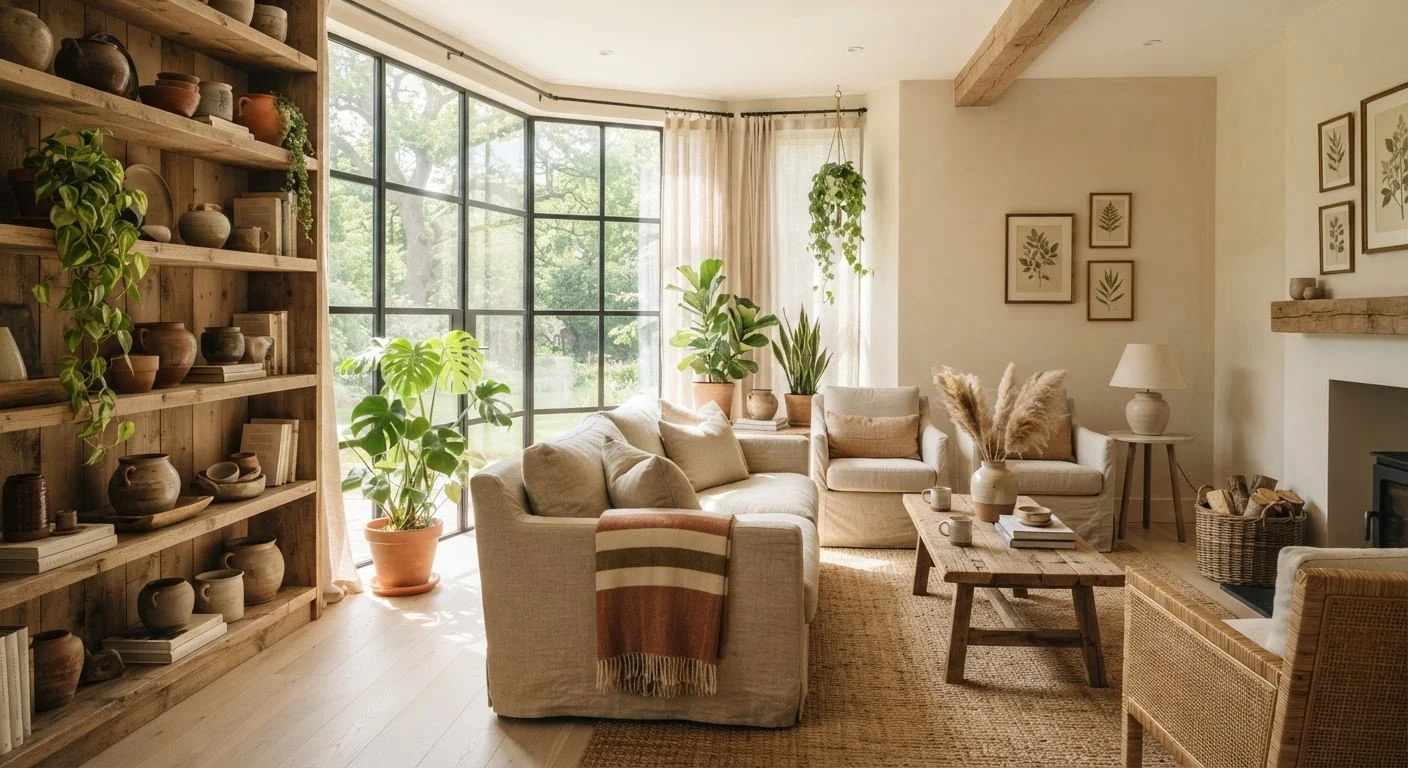
What Sustainable Interior Design Actually Means
The word "sustainable" gets applied to nearly everything these days, which can make it feel meaningless. In interior design, though, it has a reasonably concrete definition: designing, furnishing, and finishing a home in ways that minimize environmental harm, protect occupant health, and favor longevity over disposability.
That covers three broad areas. The first is material sourcing — where the wood, stone, fabric, and finishes in your home come from and how they were processed. The second is indoor environmental quality — particularly air quality, which is directly affected by the chemicals present in paints, adhesives, and synthetic materials. The third is energy and resource use — how the home's systems, lighting, and appliances consume power and water over time.
Sustainable design isn't a single style or look. As explored in our overview of global design movements, aesthetic philosophies are culturally and visually distinct — sustainability is a layer of values applied to any of them.
Sustainability Is a Spectrum, Not a Certification
There is no single standard that makes a home officially "sustainable." Professional certification programs like LEED for Homes exist, but most residential design decisions exist on a spectrum — some choices are more environmentally responsible than others. The goal for most homeowners is incremental improvement, not perfection. Every material or system choice that prioritizes durability, health, or reduced resource use moves in the right direction.
Materials: Where Most Sustainable Choices Are Made
The single largest lever most homeowners have is what they choose to bring into the home. Key material considerations include:
- Reclaimed wood and salvaged materials: Wood sourced from old buildings, barns, or industrial sites avoids new forest harvesting and often has character and density that new lumber lacks.
- FSC-certified timber: For new wood products, Forest Stewardship Council certification provides third-party verification that the timber was responsibly harvested.
- Natural fibers: Wool, cotton, linen, jute, and hemp are generally more biodegradable than synthetic alternatives like polyester or nylon. Look for fibers that haven't been heavily chemically treated.
- Recycled content: Many manufacturers now produce flooring, countertops, and tiles that incorporate recycled glass, metal, or post-consumer waste.
- Secondhand and vintage furniture: Reusing existing pieces is often the most sustainable option of all — nothing new needs to be manufactured.
Durability is an underrated sustainability factor. A solid hardwood chair that lasts 40 years has a far lower lifetime environmental footprint than a cheap upholstered piece that needs replacing every five. This is the principle behind the concept of buying less, but better — discussed further in our piece on minimalist versus maximalist design philosophies.
90%
Of time Americans spend indoors
According to the U.S. Environmental Protection Agency, Americans spend approximately 90% of their time indoors, making indoor air quality a significant public health consideration.
2–5x
Indoor vs. outdoor air pollutant levels
The EPA notes that indoor air pollutant concentrations are often 2 to 5 times higher than outdoor levels, with building materials and furnishings among the contributing sources.
75%
Energy savings from LED vs. incandescent bulbs
The U.S. Department of Energy estimates that LED bulbs use at least 75% less energy than traditional incandescent lighting over comparable lifespans.
Finishes and Indoor Air Quality
Many conventional paints, varnishes, adhesives, and synthetic flooring products emit volatile organic compounds (VOCs) — chemicals that off-gas into interior air, sometimes for months after application. Common VOCs include formaldehyde and benzene, which can irritate the respiratory system with prolonged exposure.
Choosing low-VOC or zero-VOC paints and finishes is one of the most impactful — and increasingly accessible — sustainable choices available. Most major paint lines now offer low-VOC formulations at similar price points to conventional products. Our guide to reading paint labels explains exactly what VOC ratings on the tin actually mean.
Beyond paint, consider:
- Flooring adhesives: Low-VOC or solvent-free adhesives are widely available for hardwood and tile installation.
- Composite wood products: Particleboard and MDF (medium-density fiberboard) often contain urea-formaldehyde binders. Look for products labeled CARB2-compliant or formaldehyde-free if you're purchasing flat-pack or cabinet-style furniture.
- Natural plasters and clay-based wall finishes: These are inherently low in chemical content and have been used in homes for centuries.
Ventilate After Any Finishing Work
Even low-VOC paints and finishes off-gas during and immediately after application. Open windows and run exhaust fans for at least 24–48 hours after painting or applying any new finish, regardless of the VOC rating. This is especially important in bedrooms and other spaces where occupants spend extended time.
Energy, Lighting, and Systems
Interior design isn't just about surfaces — it includes how a home uses energy. From a design perspective, this shows up in several practical ways:
- LED lighting: Replacing incandescent or halogen bulbs with LEDs uses significantly less electricity and generates less heat. Lighting choice also affects the visual mood of a room — a consideration explored in our introduction to interior design fundamentals.
- Window treatments: Thoughtful curtain and blind choices can reduce heating and cooling loads — heavy lined drapes in cold climates help retain warmth; reflective or cellular shades can reduce summer heat gain.
- Smart home technology: Programmable thermostats, occupancy-sensing lights, and energy-monitoring systems can meaningfully reduce a home's operational footprint. Our home and smart tech hub covers how these systems work in practice.
These aren't purely aesthetic decisions, but they're made during the design process and have lasting effects on both comfort and resource consumption.
What This Looks Like in Practice
Sustainable design doesn't announce itself visually — it's embedded in decisions. Here are a few ways it commonly shows up in real homes:
If you're new to thinking about your home through a design lens, our interior design vocabulary guide offers a useful grounding in the concepts professionals use — many of which connect naturally to sustainable thinking. And if you're working on home improvement projects, understanding these principles can help you make choices you'll feel good about long after the work is done.