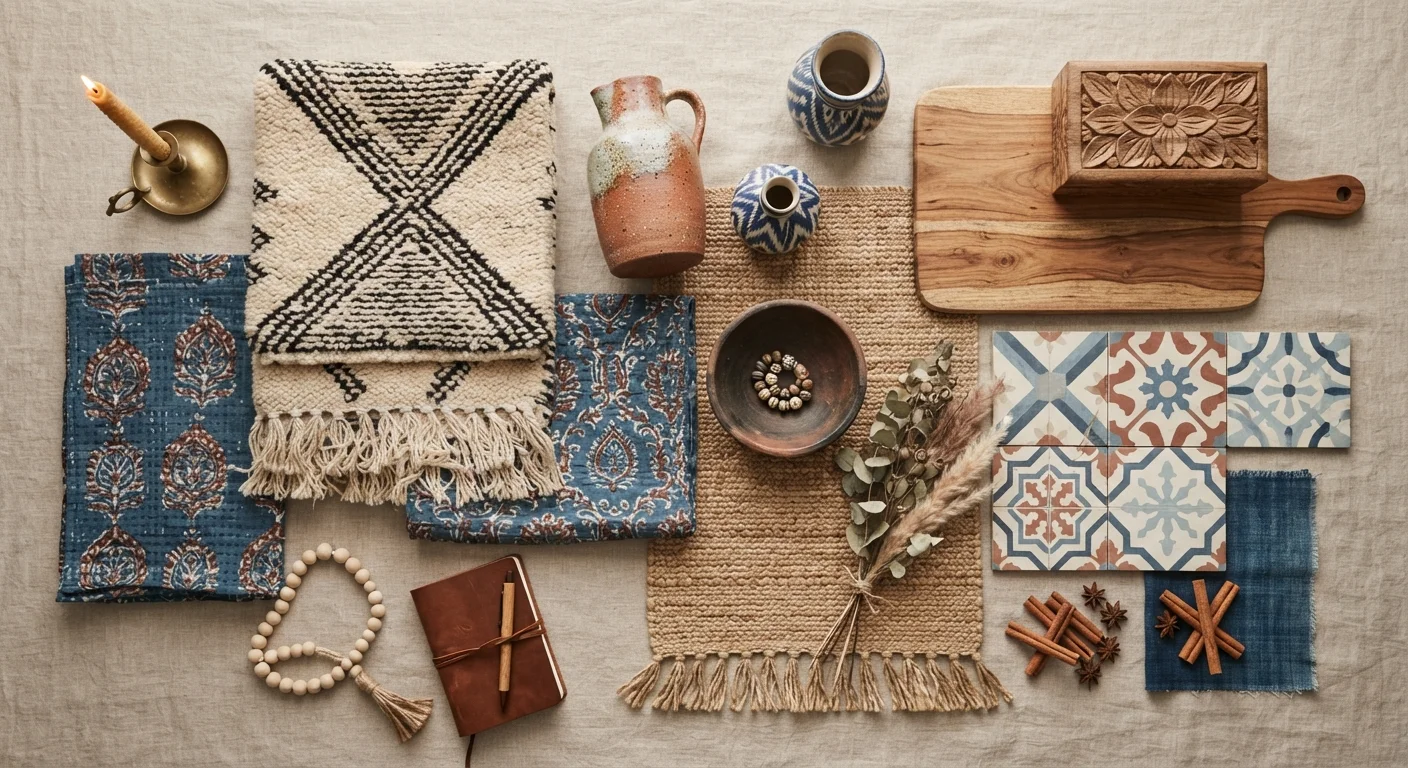
Why Global Design Traditions Matter at Home
Every interior design style that has taken hold around the world began as a practical response to something real — the materials available nearby, the local climate, deeply held cultural values, or the desire to express a particular way of living. When we understand that context, design choices stop feeling arbitrary and start feeling meaningful.
This overview covers eight globally recognized design traditions, examining what each looks like visually and where it comes from culturally. Whether you're furnishing your first space or refreshing an established home, understanding these roots gives you a more confident foundation. For anyone just beginning their decorating journey, our ground-up introduction to interior design is a practical companion to this guide.
You may also find it useful to brush up on design vocabulary as you read — key terms every home decorator should know can help you decode the professional language behind these styles.
Scandinavian (Scandi)
Origins: Northern Europe — Denmark, Sweden, Norway, Finland. Developed through long, dark winters and a deep cultural emphasis on coziness, functionality, and democratic design.
Visual hallmarks: White and light grey walls, pale wood tones (birch, ash), minimal ornamentation, clean-lined furniture, and warm textiles like wool throws and sheepskin. Lighting — both artificial and maximized natural — is central.
Core philosophy: The Danish concept of hygge (a sense of coziness and well-being) and the Swedish lagom (just the right amount) both underpin this style. Form must always serve function.
Scandi design turns long, dark winters into an art form through warmth, light, and restraint.
Japandi
Origins: A hybrid of Japanese and Scandinavian design — two traditions that share an emphasis on craftsmanship, simplicity, and nature. The term gained wide use in the 2010s as both styles surged in global popularity.
Visual hallmarks: Muted, earthy palettes (sage, charcoal, warm beige), low-profile furniture, handcrafted ceramics, natural textures, and negative space used deliberately.
Core philosophy: The Japanese concept of wabi-sabi — finding beauty in imperfection and impermanence — meets Scandi functionalism. Clutter is the enemy; every object earns its place.
Japandi finds beauty in imperfection and insists that every object in a room earn its presence.
Mediterranean
Origins: The coastal regions of Southern Europe — Greece, Italy, Spain, and parts of North Africa — where warm climates, abundant sunshine, and access to terracotta and stone have shaped centuries of living and building.
Visual hallmarks: Whitewashed walls, terracotta tiles, wrought iron accents, arched doorways, vivid blue and ochre accents, and lush indoor plants. Outdoor and indoor spaces blend naturally.
Core philosophy: Life is lived communally and outdoors as much as possible. The home is designed to stay cool, feel open, and welcome guests generously. Texture and handcraft are valued over polish and precision.
Mediterranean interiors blur the line between indoors and outdoors, built around communal, sun-drenched living.
Wabi-Sabi Japanese
Origins: Traditional Japanese aesthetics rooted in Zen Buddhism. While Japandi is a modern hybrid, traditional Japanese interior design is a distinct and older tradition with its own specific spatial logic.
Visual hallmarks: Tatami mats, shoji screens (translucent paper panels in wooden frames), low furniture, natural materials left in their raw state, and asymmetrical arrangements. Color palettes are muted to near-neutral.
Core philosophy: Space itself is considered a design element. Emptiness is not a problem to be filled — it is a deliberate feature. Objects are chosen for meaning and craft, not abundance.
In traditional Japanese design, empty space is not absence — it is a considered design decision.
Bohemian (Global Boho)
Origins: Rooted in the 19th-century European Bohemian counterculture and later influenced by the 1960s and 70s counterculture movements, global boho draws freely from Moroccan, Indian, Turkish, and Southwestern American traditions.
Visual hallmarks: Layered textiles (kilim rugs, macramé, velvet cushions), mixed patterns, warm jewel tones, eclectic furniture from varied periods, hanging plants, and collected objects with personal meaning.
Core philosophy: Maximalism as self-expression. Rules about matching and restraint are set aside in favor of accumulated personality. The home reflects travels, interests, and relationships.
Bohemian design is maximalism with purpose — every object carries personal history or cultural meaning.
Moroccan
Origins: North Africa, with strong influences from Berber, Arab, Andalusian, and French colonial traditions. Moroccan design has centuries of craft heritage behind it, particularly in tilework, plasterwork, and metalsmithing.
Visual hallmarks: Intricate zellige tile patterns, arched niches, carved plaster (tadelakt), lanterns casting geometric light patterns, richly colored textiles in saffron, cobalt, and emerald, and low cushioned seating.
Core philosophy: Craftsmanship is sacred. Pattern is not decoration — it is meaning. The riad (traditional courtyard home) reflects a desire for private, inward-facing sanctuary amid a busy exterior world.
Moroccan interiors treat pattern as language — intricate tilework and plasterwork communicate cultural and spiritual meaning.
Tropical / Coastal
Origins: Influenced by Southeast Asia, the Caribbean, Hawaii, and coastal Australia. This style is a practical and aesthetic response to heat, humidity, and proximity to natural landscapes.
Visual hallmarks: Rattan and bamboo furniture, linen and cotton upholstery, large-leafed indoor plants (monstera, banana leaf, bird of paradise), open layouts that encourage airflow, and palettes of sand, white, warm terracotta, and deep green.
Core philosophy: The interior is an extension of the natural environment rather than a retreat from it. Borders between inside and outside are soft — large windows, breezeways, and indoor plants reinforce this continuity.
Tropical interiors treat nature as a design partner, not a backdrop — plants and airflow are structural decisions.
Mid-Century Modern
Origins: Primarily the United States, from roughly the 1940s through the 1960s, shaped by post-war optimism, new manufacturing technologies, and the influence of European Bauhaus émigrés.
Visual hallmarks: Organic curves paired with clean lines, walnut and teak furniture, tapered legs, open floor plans, large picture windows, and a palette of avocado, burnt orange, mustard, and warm white.
Core philosophy: Good design should be accessible, not just luxurious. Form and function are equally weighted. The home should connect to the landscape outside — hence the emphasis on glazing and bringing the outdoors in.
Mid-Century Modern was built on the belief that great design should be liveable, not just admired from a distance.
Bringing Global Inspiration Into Your Own Home
None of these traditions exist in a sealed box. Homeowners around the world draw from multiple styles — pairing Japandi restraint with a Moroccan-inspired rug, or grounding a Tropical scheme with Scandinavian furniture. What matters is intentionality: understanding why a style works the way it does before borrowing its elements.
Start With One or Two Defining Elements
You don't need to overhaul an entire room to evoke a design tradition. Introducing a single defining material — a zellige tile backsplash, a rattan pendant light, or a low-profile walnut credenza — can anchor a space in a recognizable aesthetic. Once that element is in place, other decisions often become clearer.
If you're exploring how your interior preferences connect to your broader aesthetic identity, where personal aesthetics come from offers an interesting parallel perspective. For a sustainability-oriented angle on any of these styles, sustainable interior design in real homes explores how eco-conscious choices intersect with design philosophy.
The goal is a home that feels cohesive and genuinely yours — and global design traditions give you a rich vocabulary to work with.
Authenticity vs. Appropriation in Design
Drawing inspiration from global design traditions is common and widely practiced, but it's worth approaching with some awareness. Incorporating craftsmanship and materials from other cultures thoughtfully — ideally through artisans and makers from those traditions where possible — honors the heritage behind the style rather than reducing it to surface aesthetics. This is a judgment call each homeowner makes individually.