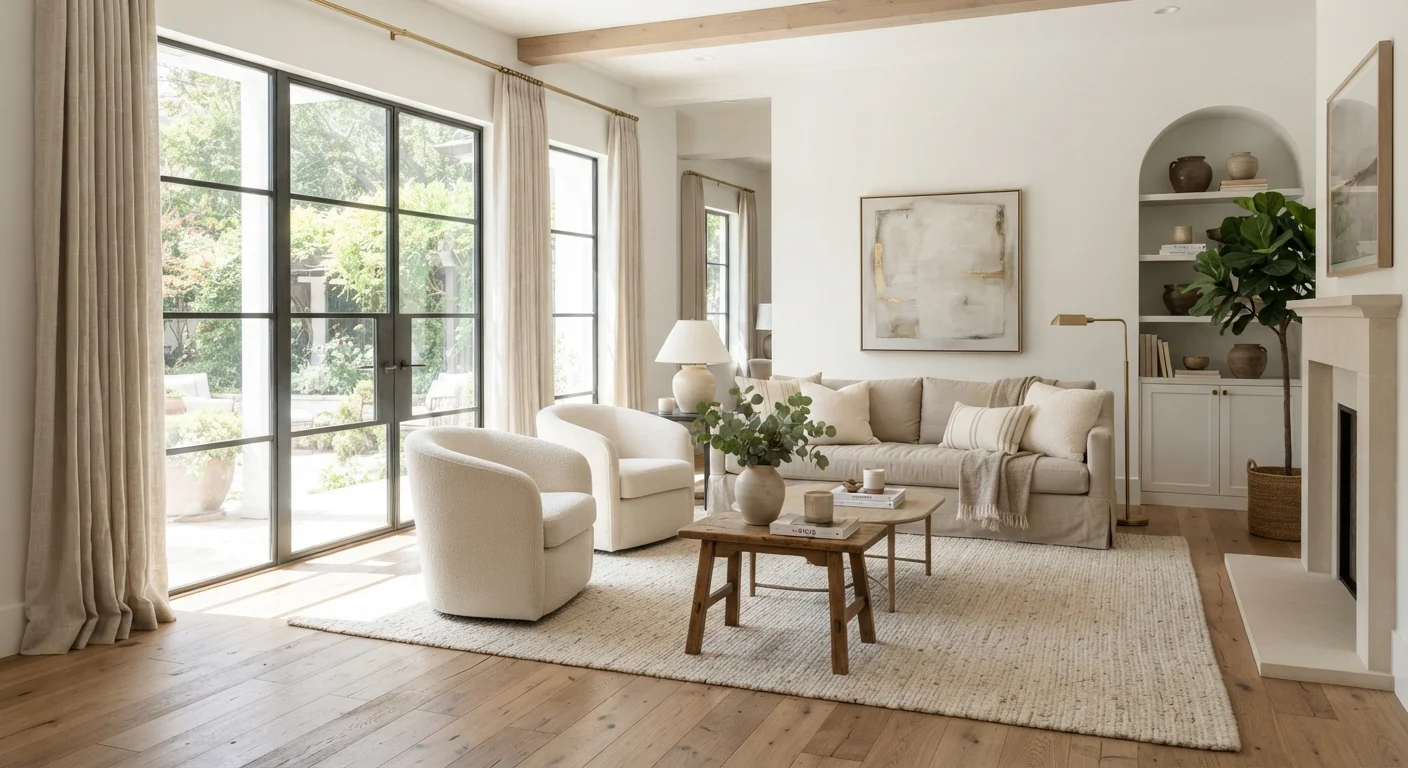
Why Scale Is the Silent Foundation of Good Design
Walk into a room that feels subtly off — furniture floating awkwardly, windows looking squat and heavy — and the culprit is almost always scale. Scale refers to how the size of individual elements relates to the room and to each other. When it works, a space feels intentional and balanced. When it doesn't, even expensive furniture and fresh paint can't rescue the result.
Rugs and curtains are the two most common places where scale goes wrong. They're also among the easiest to correct once you understand the underlying principles. This article breaks down the most frequent sizing mistakes, why they happen, and what to do instead. For a broader grounding in these concepts, see our introduction to interior design fundamentals.
Choosing a rug that's too small for the furniture arrangement.
Why it happens: Shoppers often default to smaller sizes to save money or because a rug looks substantial in a store setting, where it isn't surrounded by full-scale furniture.
Hanging curtains at window-frame height instead of ceiling height.
Why it happens: The instinct is to mount the rod directly above the window, because that's where the opening is. Most people don't consider that curtain placement affects the perceived height of the entire wall.
Buying curtain panels that are too short, creating a hovering effect.
Why it happens: Standard off-the-shelf panels are often 84 inches long, which falls short of the floor when rods are installed at ceiling height. Buyers assume standard length will work without measuring first.
Using a single narrow rug to define an open-plan space.
Why it happens: In large, open-plan areas, a modestly sized rug can seem like a reasonable anchor for one seating zone. In practice, it reads as a small accent piece adrift in a large expanse.
Choosing curtains that are too narrow for the window width.
Why it happens: Buyers often match curtain panel width to window width exactly, not accounting for the fullness needed to create proper drape and visual weight.
Placing a rug that doesn't connect any furniture to any other furniture.
Why it happens: Without a clear principle to follow, rugs get placed by feel — often centered in the room rather than anchored to the furniture arrangement — which can leave them looking decorative but purposeless.
The Rug and Curtain Mistakes That Quietly Undermine Rooms
Most sizing errors share a common cause: people choose what looks reasonable in a showroom or online without accounting for how a piece will read in context. A rug that seems generous on a warehouse floor can look like a bath mat once it's surrounded by a full sofa arrangement. Similarly, curtains that appear neutral in isolation can visually chop a wall in half when hung at the wrong height.
Measure Before You Buy — Every Time
Rug and curtain returns are often difficult, costly, or restricted by retailer policies. Measuring your space thoroughly — including ceiling height, window placement, and furniture footprint — before purchasing can save significant frustration. Use painter's tape on the floor to mock up rug dimensions and a telescoping rod or string line to visualize curtain drop before committing.
Understanding the proportional logic behind each rule makes it easier to apply — and adapt — confidently. If you're also rethinking how spatial perception affects room size, our guide on why small rooms feel even smaller covers the design principles that expand perceived space.
8×10 ft
Minimum rug size for most living rooms
Interior designers commonly cite 8×10 feet as the baseline for a standard sofa-and-chairs arrangement in a typical living room.
2–2.5×
Curtain width multiplier for proper fullness
Professional window treatment guidelines recommend total panel width equal to two to two-and-a-half times the window's width for adequate drape and visual weight.
Before decorating any room, it helps to assess what you're working with first. Our room assessment checklist covers proportions, light, and fixed elements to review before making any purchases.
Putting the Principles into Practice
Correcting scale mistakes doesn't require a full redesign — it usually requires a measuring tape and a willingness to reconsider one or two purchases. Start with the rug: map out your furniture arrangement on the floor using painter's tape to visualize the footprint before buying. For curtains, install the rod as close to the ceiling or crown molding as practical, and confirm that panels reach within an inch of the floor — or pool slightly for a more dramatic effect.
These decisions intersect with broader design principles around proportion and visual balance, many of which are explored in our article on interior design myths that keep rooms looking off. Getting scale right is less about following rigid rules and more about training your eye to notice when elements are working in harmony — and when they're fighting each other.
Scale Affects Every Room, Not Just Large Ones
It's tempting to think scaling up applies only to grand spaces, but proportion matters equally in smaller rooms. An undersized rug in a compact bedroom can make the space feel more cramped and disjointed, not cozier. In smaller rooms, a rug that fits under the bed frame and extends generously on all sides creates a sense of order and completeness — the same principle applies regardless of square footage.