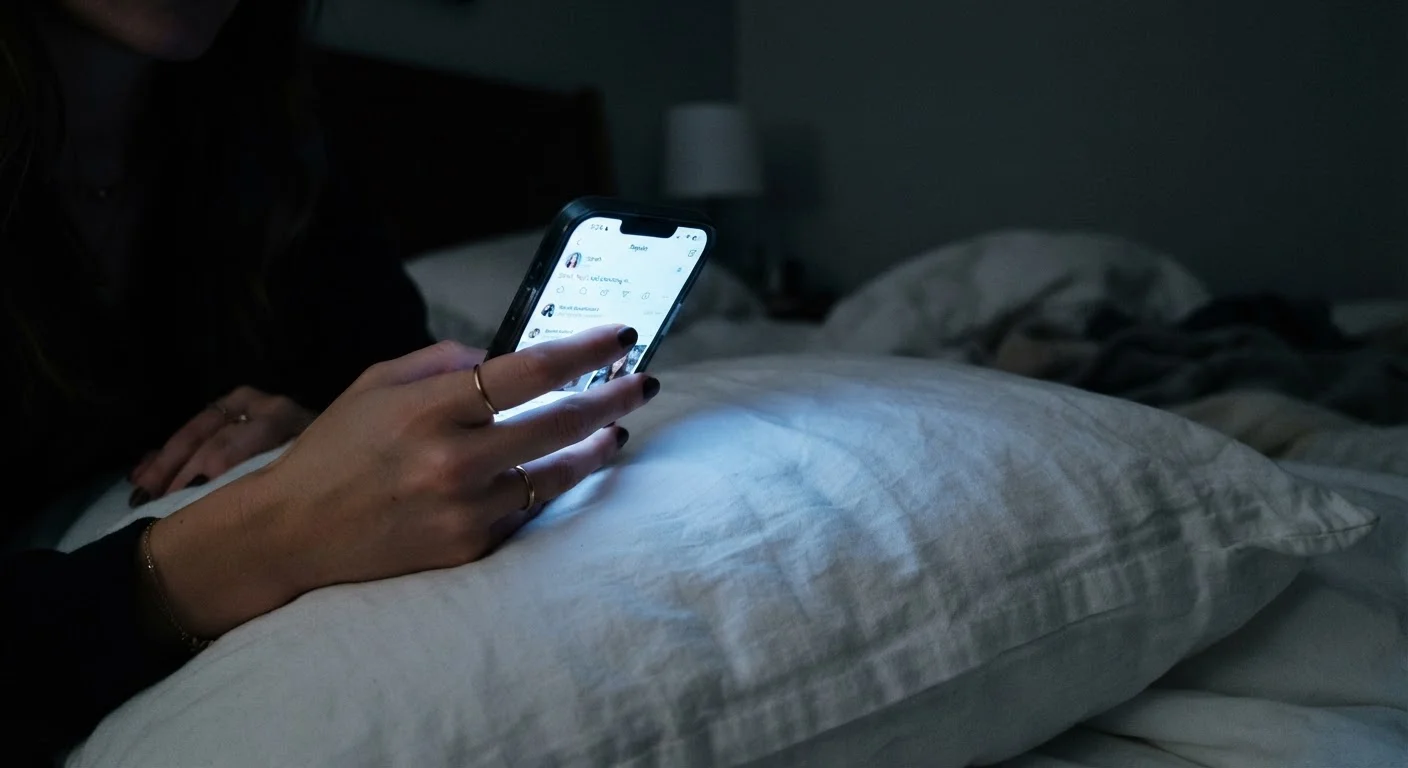
How Light Signals Your Brain to Stay Awake
Your body doesn't keep time by guesswork. It relies on environmental signals — especially light — to synchronize an internal clock located in a region of the brain called the SCN. When light enters your eyes, photoreceptors relay information to the SCN, which in turn regulates the release of melatonin from the pineal gland. Blue-wavelength light (roughly 460–490 nanometers) is particularly effective at triggering this suppression, because it closely matches the sensitivity range of those specialized retinal cells.
This biological system evolved when the only source of blue-enriched light was daylight — a reliable sign that it was daytime. Screens, LEDs, and energy-efficient bulbs now emit that same short-wavelength light well into the evening, which can confuse the system. The result, in principle, is that your brain receives a "stay alert" signal at the exact moment it should be winding down.
Understanding this mechanism is the foundation for evaluating which beliefs about blue light hold up — and which ones don't.
Myth
Blue light from your phone is the main reason screens disrupt sleep.
Fact
Blue light is one contributing factor, but mental stimulation, emotional engagement with content, and screen brightness likely play equally significant roles.
Blue light does suppress the hormone melatonin — the body's signal that it's time to sleep — by acting on specialized cells in the retina called ipRGCs. However, research suggests that the intensity of blue light from typical smartphone screens is relatively modest compared to natural daylight. A 2021 review published in Sleep Medicine Reviews noted that psychological arousal from engaging content — scrolling social media, watching intense video — is also a potent sleep disruptor, independent of light wavelength.
Myth
Blue-light blocking glasses will significantly improve your sleep.
Fact
Current evidence does not strongly support that blue-light glasses meaningfully improve sleep quality in most people.
Blue-light blocking glasses have surged in popularity, but the clinical evidence underpinning them is thin. A 2021 randomized controlled trial published in Sleep Medicine found no significant difference in sleep outcomes between participants wearing blue-light glasses and those wearing clear lenses. Researchers emphasize that the glasses may address a symptom — light-wavelength exposure — while leaving the underlying behavioral drivers of poor sleep (late-night scrolling, emotional engagement with content) completely intact.
Myth
Night mode or warm-color screen settings fix the blue-light problem.
Fact
Night mode reduces blue-light emission but does not eliminate screen-related sleep disruption.
Built-in night modes shift a screen's color temperature toward warmer amber tones, which does reduce the proportion of short-wavelength blue light reaching your eyes. That's not nothing — but studies indicate the effect on melatonin suppression and sleep-onset timing is modest. One frequently cited 2017 study from Brigham and Women's Hospital found that the more influential variable was overall light intensity rather than color alone. Lowering screen brightness substantially may do more than switching on night mode at full brightness.
Myth
Daytime screen use has no effect on how well you sleep at night.
Fact
Your circadian rhythm is shaped by light exposure across the entire day, not just the hour before bed.
The human circadian system — roughly a 24-hour internal clock — is calibrated continuously by environmental light cues. Insufficient exposure to bright light during the day can make the system less robust, causing the body to become more sensitive to light in the evening. Research on shift workers and people who spend most of the day in dim indoor environments consistently shows disrupted circadian timing. Getting adequate natural light during daylight hours is considered one of the most reliable anchors for a healthy sleep-wake cycle. See our guide to natural and artificial lighting for practical ways to design your environment around this principle.
Myth
Children and adults are equally affected by blue light before bed.
Fact
Children's eyes transmit more blue light to the retina, making them potentially more sensitive to evening screen exposure.
The lens of the human eye becomes more filtering with age. Younger eyes — particularly in children and adolescents — transmit a greater proportion of short-wavelength blue light to the retina. This means the same screen, at the same brightness, may suppress melatonin more in a child than in an adult. Pediatric sleep researchers have raised this as a concern worth taking seriously, though the full picture of how screens shape child development remains actively studied. For a broader look at that evidence, see what research says about children and screens.
What the Evidence Actually Supports
The relationship between screens and sleep is real, but it's more nuanced than a simple blue-light story.
This Is General Information, Not Medical Advice
This article provides educational information about light exposure and sleep biology. It is not a substitute for medical advice. If you experience persistent sleep difficulties, consult a qualified healthcare professional who can assess your individual circumstances.
The most evidence-backed strategies for protecting sleep from screen-related disruption focus on behavior and timing rather than hardware fixes alone. Researchers consistently highlight three actionable approaches:
- Reduce overall screen brightness in the evening — this lowers total light intensity, which matters more than color spectrum alone.
- Establish a consistent wind-down period — stepping away from engaging content 30–60 minutes before bed reduces cognitive arousal regardless of light exposure. Our article on sleep hygiene and mood explores these habits in depth.
- Prioritize daytime light exposure — a well-anchored circadian rhythm is more resilient to evening disruption.
If you're considering structural changes — like keeping devices out of the bedroom entirely — see our practical walkthrough for a device-free bedroom. For those curious about whether tracking apps help manage screen habits, screen time tracking tools have mixed results worth understanding before relying on them.
~90%
U.S. adults who use a screen within an hour of bedtime
According to a National Sleep Foundation survey, the vast majority of American adults use a phone, tablet, or TV in the hour before bed.
460–490 nm
Peak wavelength range for melatonin suppression
Research on intrinsically photosensitive retinal ganglion cells identifies this short-wavelength blue range as the most potent signal for the circadian system.
~50%
Reduction in melatonin possible from evening light exposure
Studies have shown that sustained exposure to bright artificial light in the evening can suppress melatonin production significantly, though real-world screen exposure varies widely.