The Scale of the Problem
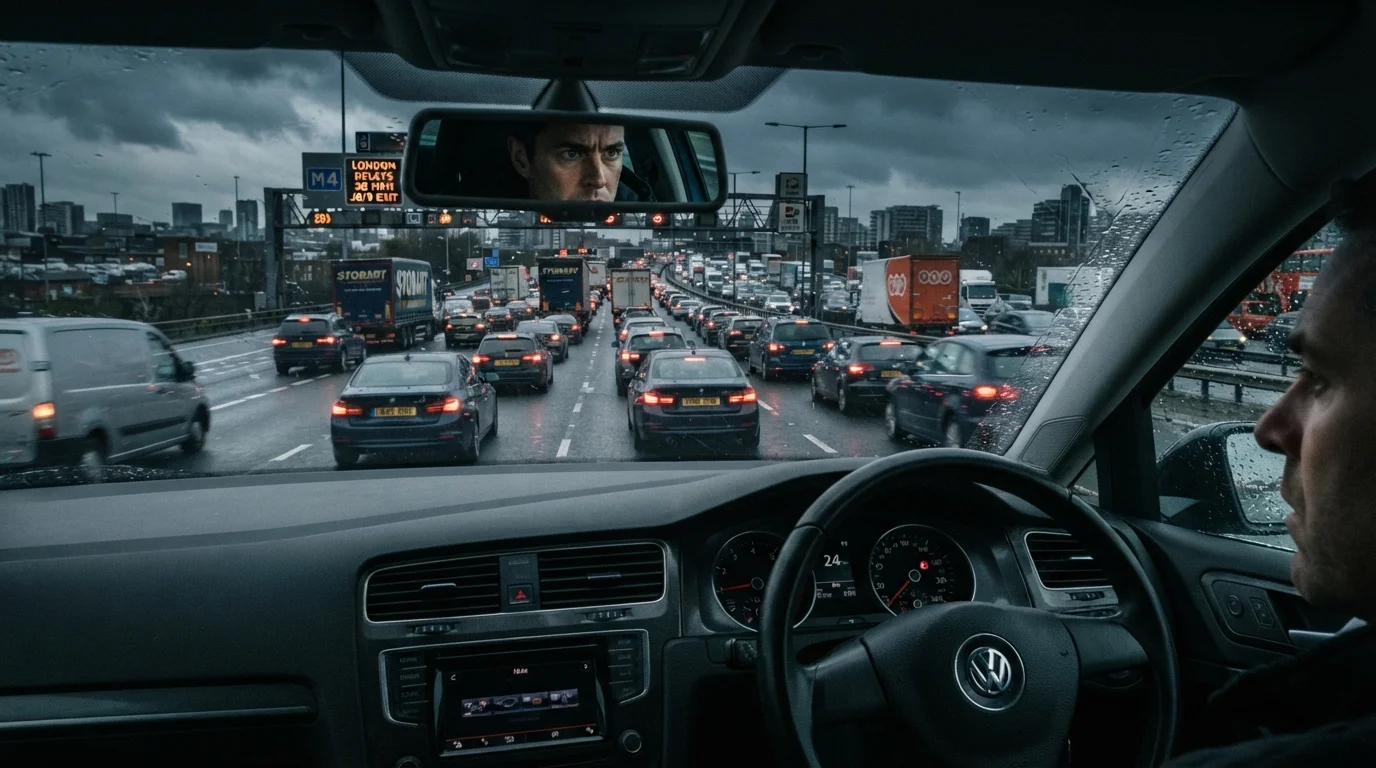
Road rage is not just an anecdote — it is a measurable traffic safety problem with real consequences. According to the AAA Foundation for Traffic Safety, nearly 80% of U.S. drivers reported experiencing significant anger, aggression, or road rage behind the wheel at least once in a given year. More critically, the National Highway Traffic Safety Administration (NHTSA) has linked aggressive driving behaviors to a substantial share of serious crashes and fatalities on American roads.
Incidents frequently involve tailgating, unsafe lane changes, deliberate blocking, and — in the most extreme cases — physical confrontation or use of a vehicle as a weapon. The anonymity of being inside a vehicle appears to lower the social inhibitions that would ordinarily moderate behavior in face-to-face interaction, a phenomenon researchers call the "vehicle anonymity effect."
~80%
U.S. drivers experiencing road rage annually
The AAA Foundation for Traffic Safety reported that approximately 80% of surveyed U.S. drivers expressed significant anger or aggression while driving at least once in the prior year.
56%
Of traffic fatalities linked to aggressive driving
NHTSA data has attributed aggressive driving behaviors — including speeding, tailgating, and unsafe lane changes — to more than half of fatal motor vehicle crashes in available study periods.
37%
Of incidents involved a firearm
Everytown for Gun Safety analysis of road rage data found that roughly 37% of aggressive driving incidents involved a firearm, underscoring the serious escalation risk these confrontations carry.
Understanding the scale matters because it reframes road rage from a personal grievance into a shared safety issue — one that demands a structured, informed response rather than instinct.
The Psychology Behind Aggressive Driving
Traffic psychology research consistently identifies several overlapping factors that fuel road rage. The most significant is displaced aggression — drivers carry stress from work, relationships, or prior events into the car, and the road becomes an outlet. A minor perceived slight (a slow merge, a missed turn signal) triggers a disproportionate reaction rooted in unrelated frustration.
A second driver is the perception of territoriality. Drivers tend to experience their vehicle and lane as an extension of personal space. Encroachments — real or imagined — are interpreted as deliberate disrespect rather than ordinary driving error. This misattribution of intent is a well-documented cognitive bias in traffic psychology literature.
“Drivers often feel that the rules of the road apply to everyone else. That sense of entitlement — that my time, my space, my journey matters more — is at the root of most aggressive driving encounters.”
— Leon James, Traffic psychology researcher and professor at the University of Hawaii
High-stress environments compound all of this. Research indicates that urban driving conditions — dense traffic, frequent stops, pedestrian crossings — create more cognitive load and frustration than open highway driving, increasing the likelihood of an aggressive response. Similarly, adverse weather conditions that slow progress or increase tension can elevate tempers; developing appropriate habits for driving in rain, fog, and ice helps reduce both physical risk and psychological stress on the road.
How to Respond When You Encounter an Aggressive Driver
Evidence from traffic safety organizations points clearly in one direction: de-escalation, not retaliation. Retaliating — honking back, brake-checking, or matching aggression — dramatically increases the risk of the incident escalating into a crash or physical confrontation. The safest documented strategies include:
- Do not make eye contact. Direct eye contact is often read as a challenge and can intensify aggression.
- Create space. Increase following distance, change lanes if safe, and let the aggressive driver move ahead and away from you.
- Avoid gestures. Even a dismissive wave can be interpreted as provocative by someone already agitated.
- Stay in your vehicle. If another driver stops and exits their car, remain inside with windows up and doors locked.
- Call 911 if threatened. If you believe you are being followed or are in danger, drive to a public location — ideally a police station — and contact law enforcement.
The Safest Move Is Always Away
When confronted by an aggressive driver, your goal is physical separation — not communication, not vindication. Every second you spend engaging (through gestures, speed, or positioning) prolongs your exposure to risk. Merge away, exit early, or simply reduce speed and let them go. Distance is your most effective safety tool.
It is also worth asking whether your own driving habits may be unintentionally provoking others. Hard braking, unpredictable lane changes, and failure to signal are common triggers. Developing hazard perception skills allows you to anticipate situations before they become frustrating for anyone.
Managing Your Own Frustration Behind the Wheel
Recognizing the early signs of your own rising frustration is a skill, and one that pays dividends. Traffic researchers note that most aggressive incidents do not begin with a single outburst — they build through accumulated small irritants. Tension in the grip, clenching the jaw, internal monologue about other drivers' competence: these are signals worth noticing.
Practical, evidence-informed techniques include:
- Build buffer time into journeys. Running late is one of the most reliable predictors of aggressive driving. Allowing extra travel time removes the time-pressure that turns minor delays into triggers.
- Reframe other drivers' behavior. Most errors on the road are inattention or inexperience, not malice. Assuming innocent intent consistently is a technique used in cognitive-behavioral approaches to anger management.
- Limit in-car stressors. Loud, stimulating audio environments can heighten arousal and lower the threshold for frustration.
- Take breaks on long drives. Fatigue is closely linked to irritability. Stopping regularly on longer journeys manages both safety and temperament.
Smooth, measured driving is also gentler on your vehicle. Eco-driving principles — steady acceleration, anticipating stops, maintaining consistent speed — reduce fuel use and mechanical wear while naturally discouraging the aggressive inputs that provoke other road users.
This article is for general informational purposes only and does not constitute legal or psychological advice. If you are experiencing significant anger management difficulties, consider speaking with a qualified mental health professional.