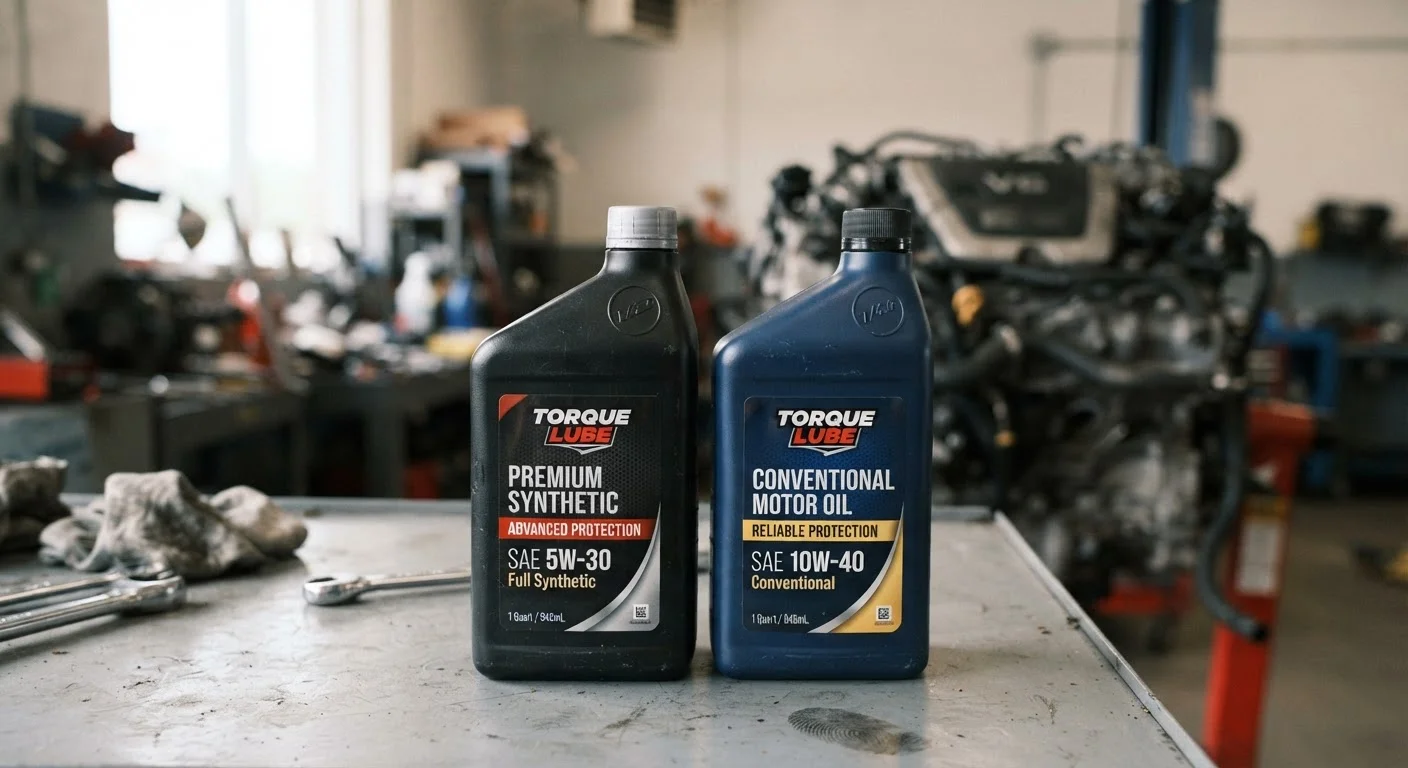
What Sets These Two Oils Apart at a Molecular Level
The fundamental difference between synthetic and conventional motor oil lies in how each is produced. Conventional oil starts as crude petroleum extracted from the ground. Refiners process it to remove contaminants and separate useful lubricating compounds, but crude oil contains an inherently irregular mix of hydrocarbon molecules — some useful, some less so.
Synthetic oil, by contrast, is either built from scratch using chemically uniform base molecules or refined to a far higher degree than conventional oil. This controlled molecular structure gives synthetic oil more predictable behavior under varying conditions. The molecules are sized and shaped more consistently, which means fewer weak points for heat or pressure to exploit.
For a deeper look at how viscosity grades interact with oil type, see our guide to engine oil viscosity and grades.
| Criterion | Synthetic Oil | Conventional Oil |
|---|---|---|
| Base composition | Engineered chemical compounds | Refined crude petroleum |
| Cold-start flow | Flows readily at low temps | Thickens more in cold weather |
| Heat resistance | Resists oxidation longer | Degrades faster under sustained heat |
| Typical change interval | 7,500–10,000+ miles (varies) | 3,000–5,000 miles (varies) |
| Cost per quart | Higher upfront cost | Lower upfront cost |
| Suitability for turbocharged engines | Generally recommended | Often insufficient under high heat |
| Molecular consistency | Uniform, predictable structure | Variable hydrocarbon mix |
Performance Under Stress: Temperature, Wear, and Longevity
The practical gap between these two oils becomes most apparent when engines are pushed beyond ordinary cruising conditions. During a cold start — especially in winter — oil must flow immediately to lubricate moving parts before heat builds. Conventional oil thickens more at low temperatures, creating a brief window where metal-on-metal contact is higher. Synthetic oil flows more readily from the first moment the engine turns over.
At the other extreme, prolonged high-temperature operation causes conventional oil to oxidize and break down faster. Synthetic oil's engineered base resists oxidation more effectively, meaning it degrades more slowly and maintains its protective film longer. This is particularly relevant for turbocharged engines, which generate significantly more heat than naturally aspirated equivalents.
~2–3×
Longer drain intervals for full synthetic vs. conventional
Industry guidelines from organizations such as the American Petroleum Institute suggest full synthetic oils can commonly support intervals roughly two to three times longer than conventional oil, depending on conditions and vehicle specifications.
~30%
Reduction in engine wear during cold starts with synthetic
Engineering analyses of lubrication behavior indicate synthetic oils can meaningfully reduce metal contact during the critical cold-start phase when oil must reach bearings quickly.
That said, no oil lasts indefinitely. Heat cycling, combustion byproducts, and accumulated contaminants degrade any oil over time. Change intervals still matter — extended synthetic intervals only apply when the manufacturer's specifications support them. Drivers interested in how driving style affects wear can also explore how eco-driving compares to performance driving on engine stress.
Change Intervals, Cost, and the Real Comparison
Synthetic oil costs more per quart than conventional oil — often noticeably so. However, the cost comparison isn't simply quart-for-quart. Full synthetic formulations are commonly rated for intervals ranging from 7,500 to 10,000 miles or more, while conventional oil has traditionally been associated with shorter intervals, often 3,000 to 5,000 miles. When you factor in the frequency of changes, the price gap narrows considerably.
Still, interval recommendations vary significantly by vehicle, engine design, driving conditions, and manufacturer specification. The owner's manual remains the authoritative source — not general industry averages or marketing claims. Many modern vehicles equipped from the factory with synthetic oil will specify intervals based on oil life monitoring systems rather than fixed mileage. It's worth dispelling some persistent misconceptions here too; our complementary piece on engine oil change myths mechanics wish would disappear addresses several enduring misunderstandings about change frequency and oil color.
Always Follow Your Manufacturer's Specification
Neither oil type delivers its full benefit if the viscosity grade is wrong for your engine. A 5W-30 synthetic and a 5W-30 conventional are not interchangeable with a 0W-20 or 10W-40. Your owner's manual specifies the correct grade — switching to a different viscosity without manufacturer guidance can affect engine protection and potentially void warranty terms. When in doubt, consult a qualified mechanic rather than relying on the label claims of any specific product.
For drivers weighing the broader question of engine type — including how oil choice intersects with hybrid powertrains — understanding alternative powertrain options provides useful context.