Why Engine Oil Myths Are So Hard to Kill
Engine oil is one of those topics where outdated advice, marketing language, and genuine misunderstanding have combined to create a fog of misinformation. Some myths originated as reasonable rules of thumb decades ago. Others were amplified by industries with a financial interest in more frequent servicing. Regardless of origin, they persist — and they cost drivers time, money, and sometimes unnecessary worry.
Understanding what the evidence actually shows starts with recognizing that vehicle technology has changed dramatically. Oils are formulated differently, engines are engineered more precisely, and onboard monitoring systems are far more sophisticated than they were when many of these myths took root. See our guide to viscosity grades and oil selection for the foundational knowledge that makes sense of what follows.
Myth
You must change your engine oil every 3,000 miles, no exceptions.
Fact
Most modern vehicles can safely go 5,000 to 10,000 miles or more between oil changes, depending on the oil type and driving conditions.
The 3,000-mile guideline dates to an era of older engine designs and less refined motor oils. Today's full-synthetic and synthetic-blend oils are engineered to maintain their protective properties far longer. Many manufacturers now recommend intervals of 7,500 to 10,000 miles for conventional oil and up to 15,000 miles for full synthetic under normal driving conditions. The best authority is your vehicle's owner's manual — not a sticker placed on your windshield by a quick-lube shop.
Myth
Dark or black engine oil means it needs to be changed immediately.
Fact
Oil darkens as it works — suspending combustion byproducts and fine particles is exactly what it is designed to do.
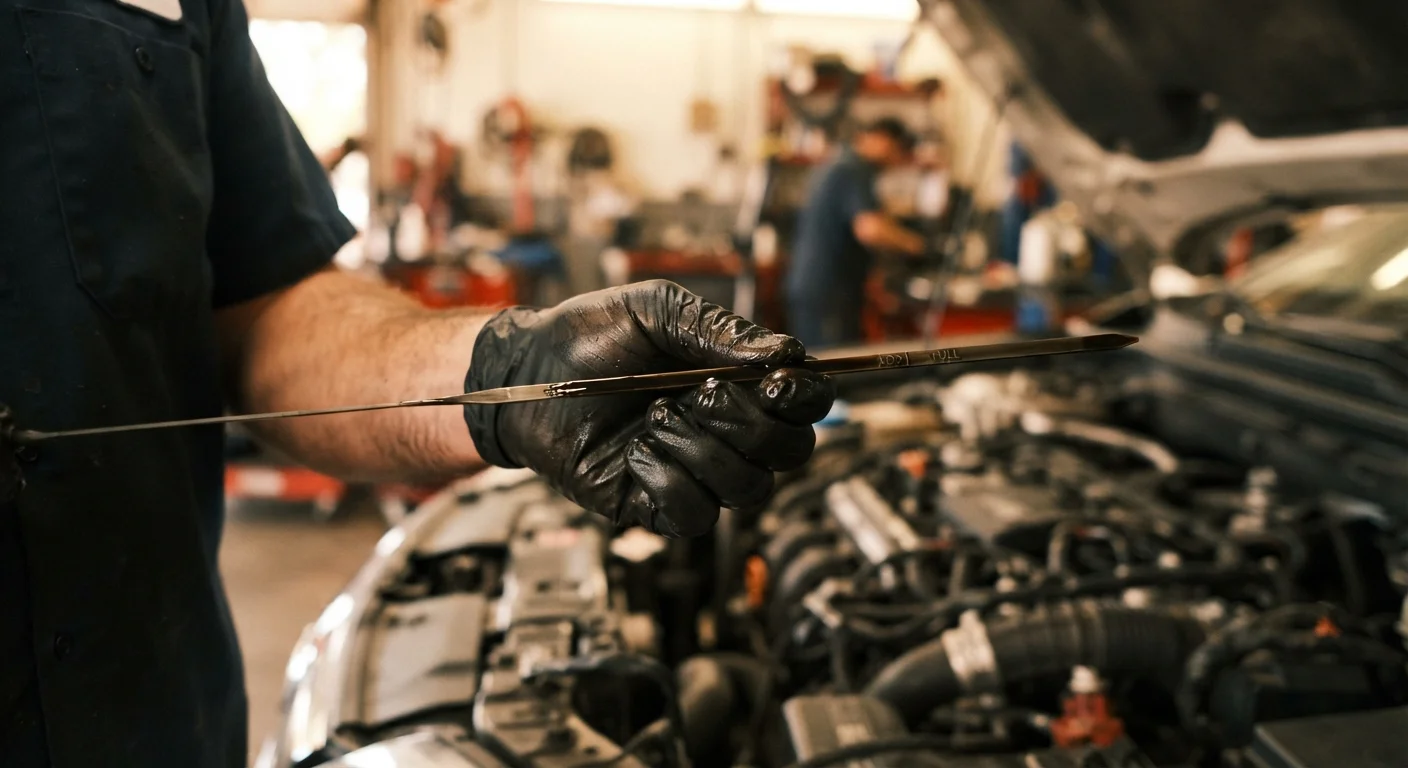
Fresh oil is typically amber in color, but it begins to darken quickly once it enters service. This darkening is a sign the oil is functioning as intended, not a sign of failure. A truly depleted oil will feel gritty, smell burnt, or appear sludgy on the dipstick. Color alone is an unreliable indicator of oil health. If you want an accurate read on oil condition, look for signs like a milky appearance (possible coolant contamination) or a noticeably metallic smell — and consult a qualified mechanic if you spot either.
Myth
Switching to synthetic oil will cause leaks in an older engine.
Fact
Modern synthetic oils are compatible with the seals and gaskets used in virtually all contemporary engines and the vast majority of older ones.
This myth likely originated from early synthetic formulations, which used chemical compositions that could affect certain older seal materials. Current synthetic oils are engineered to be seal-compatible and, in many cases, contain additives that help condition seals over time. If an engine develops a leak after an oil change, the cause is almost certainly a pre-existing seal issue that was masked by accumulated sludge — not the oil itself. A mechanic can assess seal condition before any switch is made in genuinely high-mileage or poorly maintained engines.
Myth
Once you start using synthetic oil, you can never switch back to conventional.
Fact
You can switch between synthetic and conventional oils without harming your engine, though mixing them dilutes the benefits of synthetic.
There is no chemical incompatibility between modern synthetic and conventional motor oils of the same grade. Mixing them is not ideal — you lose the performance advantages of synthetic — but it will not damage your engine. If you need to top off and only one type is available, using it is far better than running the engine low on oil. The decision about which oil type to use going forward should be based on your owner's manual recommendations and your driving conditions, not on this persistent myth.
Myth
Missing one oil change will seriously damage your engine.
Fact
A single delayed oil change is unlikely to cause measurable engine damage in a well-maintained vehicle, but chronic neglect will.
Engine oil does degrade over time and use, but it does not cross a cliff-edge failure point the moment you pass your scheduled interval. Going a few hundred or even a few thousand miles over an interval in a vehicle with clean, healthy oil and no other underlying issues is generally not catastrophic. What causes real damage is consistent neglect: running oil that has broken down completely, allowing oil levels to drop dangerously low, or ignoring the change schedule for tens of thousands of miles. Vigilance over the long term matters far more than precision on any single interval.
What Actually Matters When It Comes to Oil Changes
The single most reliable source for your oil change interval is your vehicle's owner's manual. Manufacturers set these recommendations based on extensive engine testing, and they account for the specific tolerances and materials used in your engine. Many modern vehicles also include an oil life monitoring system that calculates remaining oil life based on actual driving conditions — not just mileage.
7,500–10,000 mi
Typical recommended interval for conventional oil
Many vehicle manufacturers now set oil change intervals well beyond the old 3,000-mile guideline, reflecting advances in engine and oil technology.
Up to 15,000 mi
Full-synthetic oil change interval for some vehicles
Certain manufacturers specify extended intervals for full-synthetic oil under normal driving conditions, per owner's manual guidance.
Driving patterns matter more than most drivers realize. Short trips where the engine rarely reaches full operating temperature, stop-and-go traffic, towing, and extreme temperatures all place additional stress on oil and may warrant shorter intervals. Conversely, steady highway driving in moderate climates is far less demanding. If your driving is predominantly highway miles, your oil may be in far better condition at 7,000 miles than someone else's is at 3,500 city miles.
Never Ignore an Oil Pressure Warning Light
While oil change intervals have more flexibility than many drivers believe, a low oil pressure warning light demands immediate attention. Driving even short distances with critically low oil pressure can cause severe and irreversible engine damage. Pull over safely, turn off the engine, and have the vehicle inspected by a qualified mechanic before continuing to drive.
For a deeper look at how oil type affects interval recommendations, the comparison of synthetic and conventional motor oils covers the performance differences without the marketing spin. And if oil change myths feel familiar, the same critical thinking applies elsewhere — brake maintenance myths follow a similar pattern of outdated advice that lingers well past its usefulness.