Why Solo Travel Demands a Different Safety Mindset
Traveling alone strips away the built-in safety net that comes with a group — there's no one to watch your bag while you use the restroom, no second opinion when a situation feels off, and no companion to help if something goes wrong. That's not a reason to avoid solo travel, but it is a reason to approach it with deliberate preparation.
The goal isn't to eliminate all risk — that's impossible anywhere. The goal is to reduce avoidable risk through informed habits. For a broader framework covering every phase of a trip, see our complete travel safety guide. This article focuses specifically on the practices that matter most when you're on your own.
“The most important safety tool a solo traveler carries isn't a device or a document — it's a prepared mindset. Knowing what to do before something happens is what separates a recoverable situation from a crisis.”
— Travel Safety Research Collective, Independent travel risk education organization
Before You Leave: Research and Communication Protocols
Sound pre-trip preparation is where solo travel safety actually begins. Understanding the general risk landscape of your destination — common scams, neighborhoods to navigate carefully, local emergency numbers, and entry requirements — gives you a mental map before you land.
Share a detailed itinerary with a trusted contact before departing.
If something goes wrong, a contact at home who knows your planned locations, accommodation addresses, and check-in schedule can alert authorities with actionable information. This simple step is frequently cited by travel safety experts as the highest-return precaution a solo traveler can take.
Carry physical and digital copies of critical documents separately from the originals.
Losing a passport abroad is a serious disruption. Having photocopies stored in a separate bag and digital scans saved in a secure cloud account allows you to prove identity and expedite replacement through your country's embassy or consulate.
Identify local emergency contacts and your country's nearest embassy or consulate upon arrival.
In a genuine emergency — medical, legal, or security-related — knowing exactly who to call and where to go prevents critical delays. Local emergency numbers vary by country and are not always 911.
Establish a consistent check-in routine with your home contact.
A missed check-in can serve as an early alert that something may be wrong, giving your contact a concrete trigger to seek help rather than simply worrying. Consistency is what makes the system work.
Research neighborhood safety before booking accommodation and plan your first arrival route.
Arriving in an unfamiliar city after a long flight — often at night — is when solo travelers are most disoriented and vulnerable. Knowing in advance how to get from the airport to your accommodation safely reduces that window of exposure.
Your trip planning process should include reviewing current travel advisories from official government sources such as the U.S. Department of State's travel advisory system. Conditions change, and what was safe a year ago may not reflect current reality. Always verify entry and safety information directly with official sources before departure.
On the Ground: Situational Awareness Without Anxiety
Once you're traveling, the single most valuable skill is situational awareness — a calm, continuous read of your environment. This doesn't mean suspicion of everyone around you; it means noticing exits, identifying who's paying attention to you, and trusting friction when something doesn't feel right.
72%
Solo travelers who reported a safety incident could have been avoided
According to a survey by a travel safety education nonprofit, the majority of reported incidents involved predictable risk factors that prior awareness could have mitigated.
1 in 3
Solo travelers who don't share their itinerary before departing
Travel behavior surveys consistently find that a significant share of solo travelers skip basic communication protocols, increasing the window before anyone notices if they go missing.
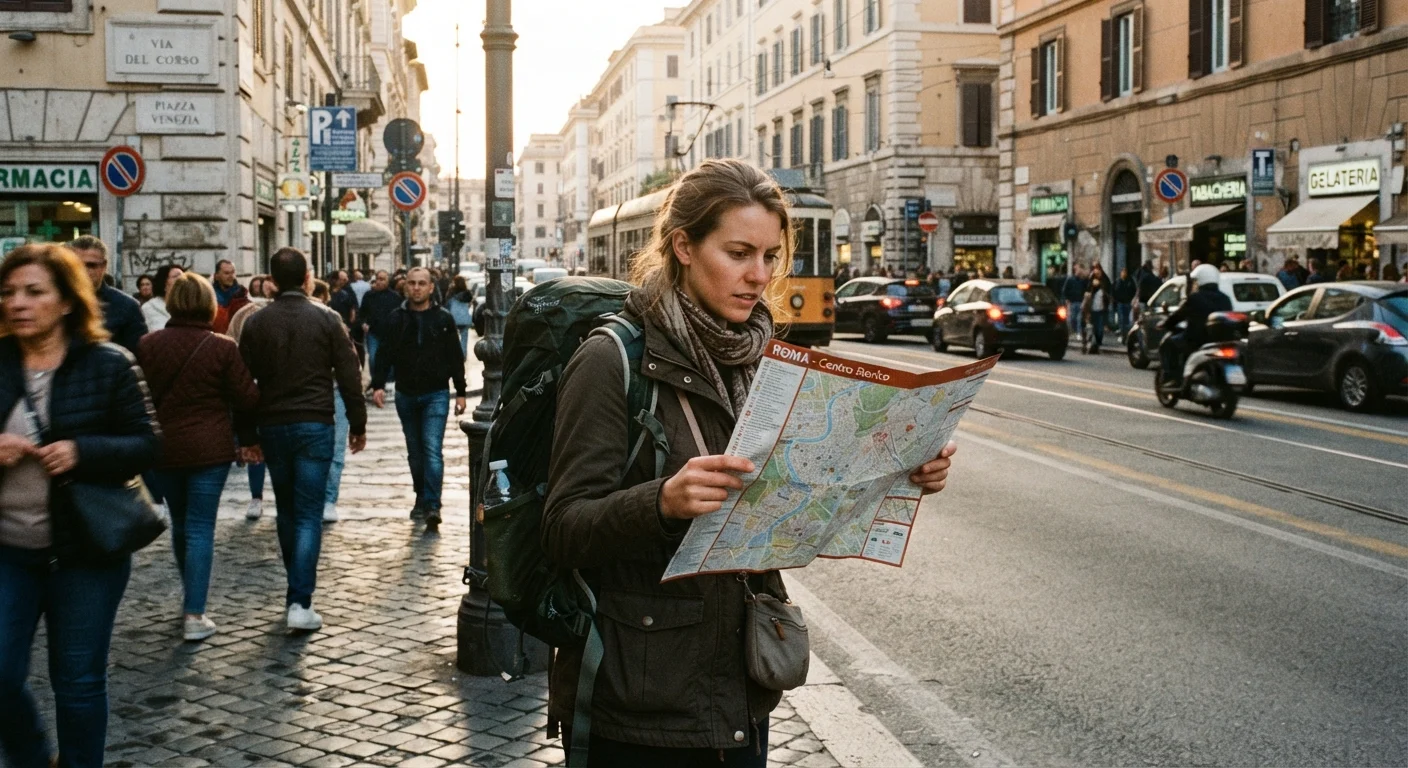
Avoid broadcasting that you're alone or unfamiliar with an area. Study maps before stepping out rather than stopping on a busy sidewalk with your phone open. When using transportation, our guide to transportation safety abroad covers what to watch for across ride-shares, taxis, and overnight buses. For consistent habits that hold up across different destinations, see travel safety habits that work anywhere.
Trust Your Instincts — Then Act on Them
If a situation, person, or route triggers unease, treat that signal as information rather than overreaction. Remove yourself from the situation — step into a shop, change direction, or ask for help from a visible authority. Experienced solo travelers consistently report that the instinct to disengage is usually correct. Having a rehearsed response — knowing you'll simply walk away — makes it easier to act without hesitation.
Accommodation, Digital Security, and Quick Wins
Where you stay shapes your safety baseline more than most travelers realize. Research neighborhoods before booking — a lower price in an isolated or poorly-reviewed area often carries a hidden cost in risk. Hotels and short-term rentals each involve different trade-offs; our comparison of hotel vs. short-term rental safety breaks down what to consider.
Digital precautions matter equally. Public Wi-Fi in cafes, airports, and hotels is a known attack surface for data theft. Carry a VPN, avoid accessing financial accounts on public networks, and be alert to ATM skimmers. More detail is available in our guide to digital security while traveling.
If you're still weighing whether solo travel suits you, a balanced look at the realities is in what solo travel is actually like. And when it comes to planning logistics differently as a solo traveler, how solo and group travel planning differ is a useful comparison.