How Each Accommodation Type Handles Safety
When comparing safety between hotels and short-term rentals, the most important distinction isn't about which type is inherently dangerous — it's about how safety is enforced and by whom.
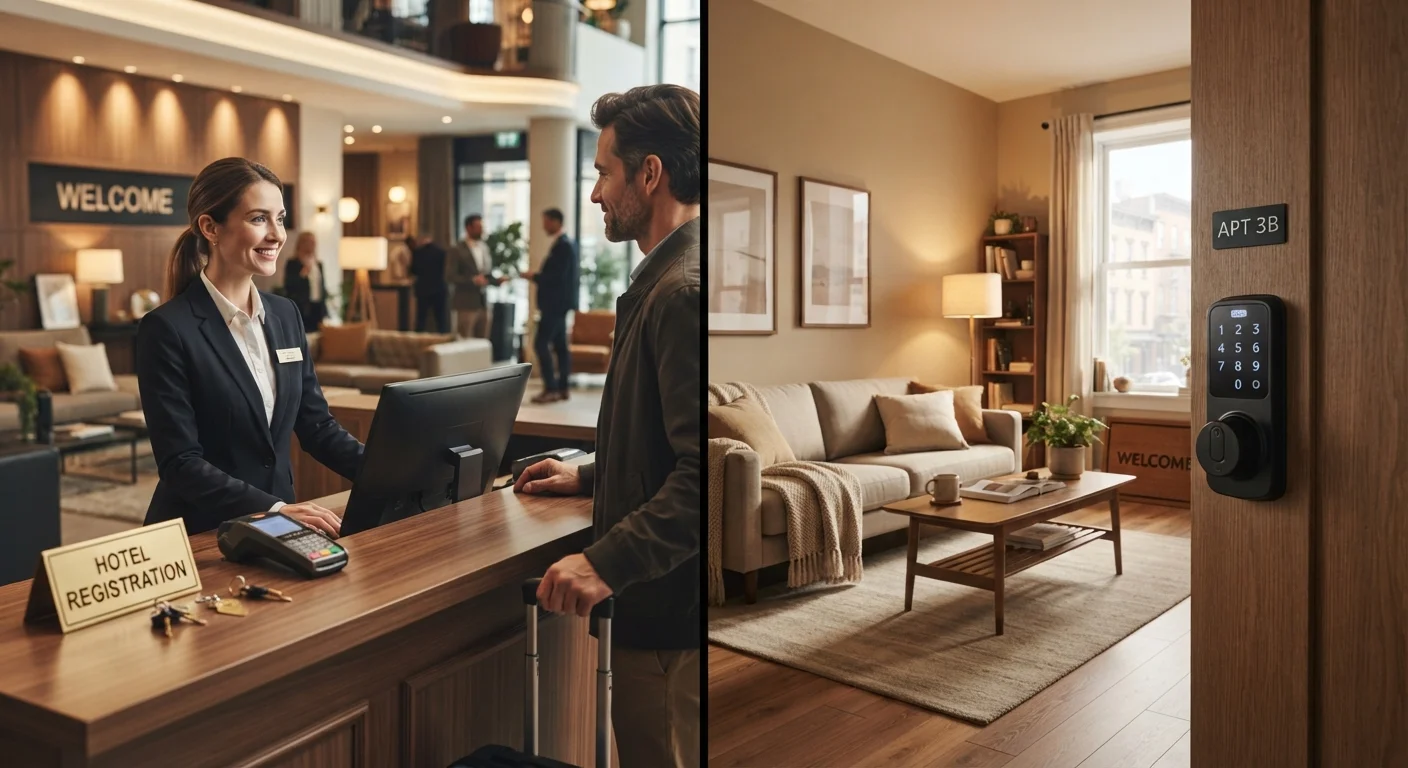
Hotels operate within a framework of regulatory requirements. Most jurisdictions in the US require hotels to pass fire inspections, maintain functioning sprinkler and alarm systems, and meet building codes. Front desks are typically staffed around the clock, key card access limits entry to common areas and rooms, and there are usually documented emergency procedures posted in guest rooms.
Short-term rentals, by contrast, are managed by individual hosts whose safety practices can vary enormously. Some hosts invest in quality deadbolts, working smoke detectors, and carbon monoxide alarms; others may not. Regulatory oversight of rental properties is patchwork across US cities and states — some municipalities have adopted inspection requirements, while others rely almost entirely on platform self-reporting.
For travelers building their overall safety awareness, understanding this structural difference is a practical first step before booking.
| Criterion | Hotels | Short-Term Rentals |
|---|---|---|
| On-site staff availability | 24/7 front desk standard | Remote host; response varies |
| Fire & safety code compliance | Regulated inspections required | Varies by city/state; often self-reported |
| Entry security | Key card access, lobby control | Smart lock or lockbox; quality varies |
| Privacy from strangers | Shared hallways and common areas | Entire-home options available |
| Hidden camera risk | Very low; CCTV typically disclosed | Low but documented cases exist |
| Emergency response support | On-site staff can assist immediately | Reliant on emergency services only |
| Legal accountability | Clear commercial liability framework | Platform-mediated; less direct |
| Wi-Fi security oversight | Managed by IT; still requires caution | Individual setup; minimal oversight |
Risk Factors Unique to Each Option
Each accommodation type carries distinct risk categories that go beyond fire safety or door locks.
Hotel-Specific Risks
- Shared spaces: Lobbies, elevators, and corridors are accessible to guests and non-guests alike, which creates exposure that private rentals don't have.
- Room security inconsistencies: Key card systems can be cloned or malfunctioned; some older hotels rely on physical keys with minimal tracking.
- Data exposure: Hotel Wi-Fi networks are frequent targets for man-in-the-middle attacks. See our guide to digital security while traveling for practical precautions.
Short-Term Rental-Specific Risks
- Hidden cameras: Documented cases exist of hosts placing cameras in rentals. Reputable platforms prohibit this, but enforcement depends on detection.
- Lock reliability: Key lockboxes and smart lock systems vary widely in quality, and some rentals may share entry codes across multiple guest stays without rotation.
- Neighborhood unfamiliarity: Unlike hotels, which tend to cluster in commercial or tourist zones, rentals can be in residential areas with less foot traffic and fewer nearby resources.
- Emergency response delays: Without on-site staff, guests facing a medical or security emergency may have slower response times compared to a hotel with 24-hour personnel.
~50%
Short-term rentals lacking CO alarms
Consumer safety research has indicated that a significant portion of short-term rental properties are not equipped with functioning carbon monoxide detectors, though figures vary by region and platform.
1 in 3
Travelers citing security as a booking factor
Surveys conducted by travel industry research groups consistently find that security and safety features rank among the top three factors US travelers consider when selecting accommodation.
Varied
Rental safety regulations by US city
As of recent years, fewer than half of major US cities had adopted comprehensive inspection or safety certification requirements specifically for short-term rental properties.
How to Evaluate Safety Before You Book
Regardless of which accommodation type you choose, proactive research reduces risk significantly. Here's what to look for in each case.
For Hotels
- Confirm the property has working smoke and carbon monoxide detectors — this is especially worth verifying for older independent properties outside major chains.
- Check whether the hotel uses key card access for elevator and floor entry, not just room doors.
- Read recent reviews specifically mentioning safety, cleanliness, or staff responsiveness — patterns in reviews reveal more than star ratings alone.
For Short-Term Rentals
- Prioritize listings that explicitly list safety features: smoke detectors, CO alarms, fire extinguisher, and first aid kit.
- Review host ratings carefully and pay attention to comments about responsiveness during the stay.
- Before arrival, confirm how the lock or entry system works and whether the code is unique to your booking.
- Upon arrival, check for anything unusual near smoke detectors, air purifiers, or alarm clocks — placement that seems oddly angled toward sleeping or changing areas warrants scrutiny.
Travelers planning longer or more complex trips may also find it useful to revisit how accommodation choices fit into broader planning priorities — our overview on short trips vs. extended travel addresses how those considerations shift by trip length.
Platform Policies Are Not Substitutes for Personal Vetting
Major short-term rental platforms have safety guidelines and host standards, but enforcement is largely reactive — meaning issues are often addressed after a guest reports them. Travelers should treat platform safety badges as a starting point, not a guarantee. Independently confirming that a property has working detectors, adequate locks, and clear emergency exit information remains the guest's most reliable safeguard.
Accountability and Recourse When Things Go Wrong
One underappreciated dimension of accommodation safety is what happens after an incident. Hotels carry commercial liability insurance and are subject to direct legal accountability under hospitality law. If a guest is injured due to a property defect, there is a clear legal entity to hold responsible.
Short-term rental accountability is more layered. Platform policies typically provide some form of guest protection, but coverage limits, claim procedures, and response times vary by platform and situation. Hosts are individuals, not businesses, and their personal insurance may not cover guest incidents in rental scenarios — some platforms offer supplemental host liability coverage, but guests should not assume this translates to seamless protection.
For solo travelers in particular, this distinction matters. Our solo travel safety guide highlights why having a clear point of contact — whether a hotel front desk or a reliably responsive host — is a concrete safety asset, not just a convenience.
Ultimately, neither hotels nor short-term rentals are free from risk. The more informed your booking decision, the better positioned you are to manage whatever comes up. Building consistent travel safety habits that apply regardless of where you stay is the most durable strategy of all.