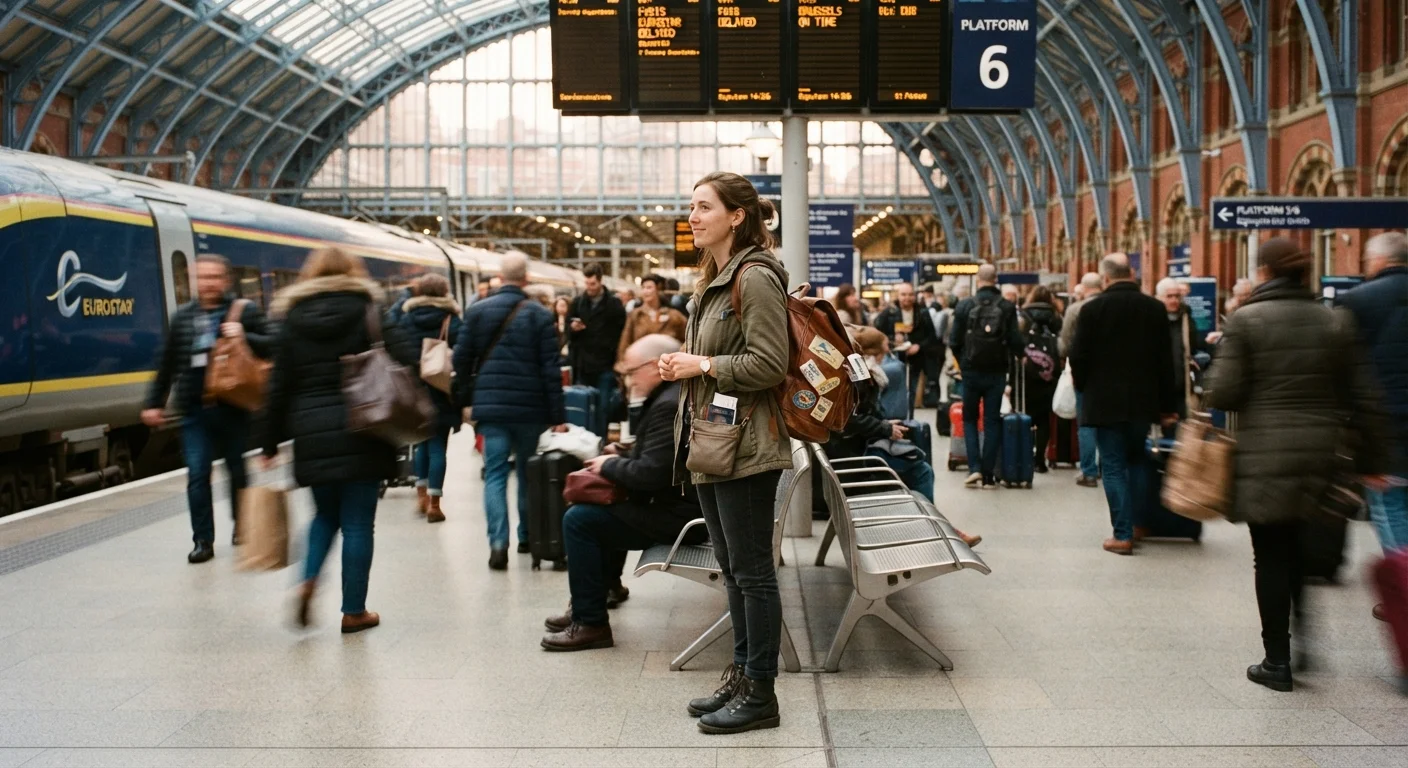
Why Most Travel Incidents Aren't Random
There's a common belief that travel danger is unpredictable — that something bad can happen to anyone, anywhere, at any time. But security researchers and experienced travelers consistently report a different reality: most incidents follow patterns. Pickpockets cluster near tourist landmarks and crowded transit hubs. Scammers target people who look confused or distracted. Opportunistic theft peaks when travelers are fatigued, jet-lagged, or preoccupied with their phones.
This doesn't mean travelers are to blame for crimes against them. What it does mean is that awareness is a genuine protective tool. Understanding the conditions under which incidents are more likely to occur — and adjusting your behavior accordingly — is precisely what situational awareness enables. For a broader foundation of travel safety principles, see our guide for first-time travelers.
~80%
Of travel theft is opportunistic, not planned
Security training organizations broadly estimate that the majority of tourist-targeted theft is opportunistic, relying on distraction and inattentiveness rather than sophisticated planning.
3x
Higher distraction risk when using smartphones in public
Research on pedestrian attention published in safety and urban mobility studies consistently finds that phone use significantly reduces environmental awareness and reaction time in public spaces.
The Three Levels of Situational Awareness
Researchers who study decision-making under uncertainty describe situational awareness as operating across three distinct levels. Understanding them helps travelers apply the concept practically.
- Perception: The first level is simply noticing — taking in the physical environment, the people present, their behavior, and any changes. This is the baseline skill: where are the exits? Is this crowd calm or agitated? Does something feel out of place?
- Comprehension: The second level involves interpreting what you're seeing. A person loitering near an ATM may or may not be suspicious — comprehension means placing that observation in context. Is this normal for this environment? Does the behavior match the setting?
- Projection: The third level is anticipation — using what you've noticed and understood to predict how a situation might evolve. If a crowd is rapidly thickening toward a single exit, what happens if the mood shifts? Planning for plausible scenarios before they unfold is what separates reactive travelers from prepared ones.
Solo travelers, in particular, benefit from developing all three levels, since there's no travel companion to serve as a second pair of eyes. Our article on solo travel safety explores how awareness applies when you're navigating unfamiliar places alone.
“The goal of situational awareness isn't to see danger everywhere — it's to see clearly enough that danger rarely catches you off guard.”
— Gavin de Becker, Security consultant and author known for research on human threat assessment
Practical Habits That Build Awareness Without Anxiety
Situational awareness doesn't require military training or a suspicious mindset. It's built through small, repeatable habits that gradually become automatic.
Establish a Baseline
When you arrive somewhere new — a hotel lobby, a train car, a market — take 60 seconds to observe what normal looks like. How are people moving? What's the noise level? What activities are happening? A baseline gives you a reference point: if something shifts noticeably, you'll feel it before you consciously name it.
Locate Exits First
Make it a habit to identify at least two exits whenever you enter any enclosed space. This isn't dramatic — it's the same principle applied in aircraft safety briefings. Knowing where exits are removes a critical decision from a high-stress moment.
Limit Phone Use in Public
Smartphones are the single largest generator of awareness gaps for travelers. Looking down at a screen narrows your visual field, signals inattentiveness, and marks you as a potential target for opportunists. Designate specific moments for map-checking — inside a café, with your back to a wall — rather than mid-stride on a busy street.
Trust Calibrated Instincts
Instinct in this context isn't mystical — it's your brain processing environmental signals faster than conscious thought can articulate them. If a situation feels wrong, that feeling often reflects a genuine anomaly worth heeding. Moving away from an uncomfortable situation is always a reasonable choice.
The 'Back to the Wall' Rule
When sitting in a café, restaurant, or waiting area in an unfamiliar place, choose a seat with your back to a wall and a clear sightline to the entrance. This classic positioning habit — used by security professionals — expands your field of vision and reduces vulnerability to approach from behind. It takes seconds to practice and quickly becomes second nature.
These habits pair well with the safety habits that hold up across different destinations — a useful reference for travelers heading somewhere unfamiliar.
Awareness as Part of Your Larger Travel Safety Framework
Situational awareness is a mindset skill, not a standalone solution. It works best when combined with pre-trip preparation: researching your destination's common risks, knowing local emergency numbers, carrying identification copies, and understanding where to seek help if needed.
Think of awareness as the real-time layer of a broader safety framework. Pre-trip planning handles known risks; awareness handles emerging, unpredictable ones. Together, they cover far more ground than either approach alone.
For travelers who want to build a complete, stage-by-stage safety approach — from planning through arrival to the journey home — our comprehensive travel safety resource is a useful next step. And for a practical starting reference on everything you need before your first independent trip, the Travel Essentials hub covers the key ground.