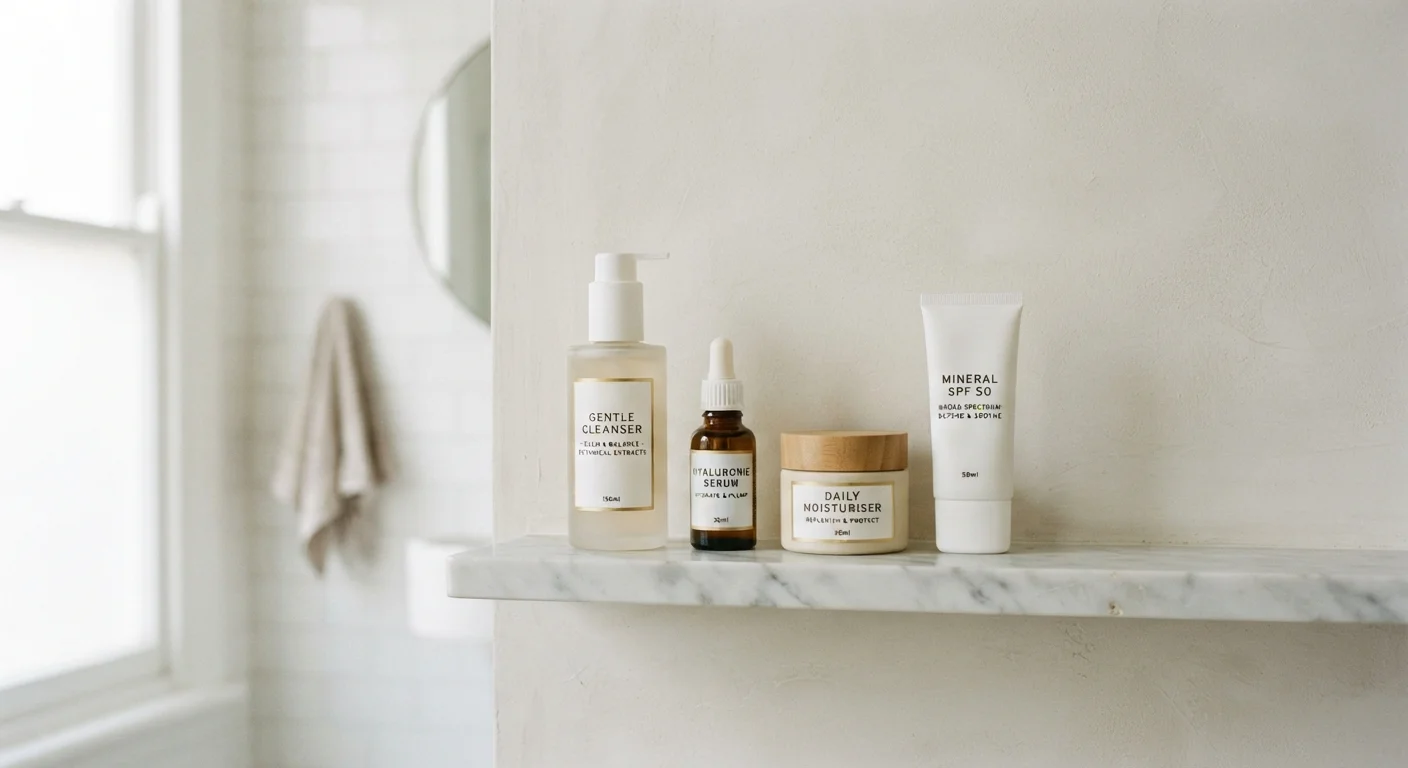
What Minimalist Skincare Actually Means
Minimalist skincare is not about neglecting your skin — it's about deliberately choosing fewer, well-chosen products and using them consistently. At its core, the approach typically involves three steps: a gentle cleanser, a moisturiser suited to your skin type, and a broad-spectrum SPF 30 or higher during the day. Some practitioners add a single active ingredient (such as a retinoid or vitamin C serum) once the basics are established.
The philosophy pushes back against the pressure to layer dozens of serums, essences, and treatments — a tendency that dermatologists note can overwhelm the skin barrier and make it nearly impossible to identify which product is helping or hurting. If you're building your first routine, this stripped-back starting point is frequently what professionals recommend anyway.
Minimalism Is a Starting Point, Not a Rule
"Minimalist" means different things to different people — for some it's three products, for others it might be six. The underlying principle is intentionality: using only what your skin genuinely benefits from, and nothing more. There is no universally correct number of products. Skin type, climate, age, and specific concerns all influence what an appropriate routine looks like.
The Real Advantages
There are well-established reasons why paring back works for many people.
Reduces risk of ingredient interactions and irritation
Combining multiple actives — especially acids, retinoids, and vitamin C — can cause redness, peeling, or barrier disruption. Fewer products dramatically lower this risk.
Makes identifying problem products much easier
When a reaction occurs in a ten-step routine, pinpointing the culprit is difficult. A minimal routine makes troubleshooting straightforward and methodical.
Builds consistency through simplicity
A two-to-three minute routine has a much higher completion rate than a 15-step regimen, and consistent application is where the real results come from over time.
Lower cost and reduced product waste
Using fewer products means spending less each month and generating less packaging — a financial and environmental benefit that accumulates significantly over the long term.
Supports a healthier skin barrier
Over-cleansing, over-exfoliating, and layering too many actives are leading causes of compromised skin barrier function; restraint protects the skin's natural defences.
Consistency is arguably the biggest factor: a short routine is easier to repeat morning and evening without skipping steps. Dermatological guidance consistently emphasises that regular use of even a basic regimen outperforms an elaborate one followed intermittently. Fewer products also mean a smaller monthly spend and less packaging waste — practical benefits that compound over time.
The Genuine Limitations
Despite its appeal, minimalism is not a universal solution. Some skin concerns genuinely require targeted actives that a three-step routine simply cannot deliver.
May not address targeted skin concerns
Conditions like active acne, hyperpigmentation, and clinically dry skin often require specific actives — such as benzoyl peroxide, azelaic acid, or prescription retinoids — that a basic routine doesn't include.
Can create a false ceiling on achievable results
For some skin types, a cleanser-moisturiser-SPF routine maintains skin health but doesn't improve texture, tone, or specific concerns without the addition of targeted ingredients.
SPF and other essentials still must not be skipped
The minimalist label can inadvertently justify omitting non-negotiables like daily sun protection, which is one of the most evidence-backed steps for long-term skin health.
Not always sufficient for ageing skin concerns
Those looking to address visible signs of ageing — fine lines, loss of firmness, uneven tone — typically benefit from evidence-backed actives like retinoids or peptides beyond the minimalist core.
People managing active acne, significant hyperpigmentation, or clinically dry conditions may find that a basic routine maintains the status quo without driving meaningful improvement. A dermatologist can help you identify whether your skin concerns warrant adding specific ingredients — such as niacinamide, azelaic acid, or prescription-strength retinoids — to a minimalist foundation. See our guide to introducing new ingredients safely if you decide to expand your routine thoughtfully.
It's also worth noting that minimalism doesn't mean cutting corners on what matters most. Skipping SPF — often justified as "too many steps" — is one of the most common habits that quietly undermine otherwise solid skin health, as explored in our overview of where routines go wrong.
3 steps
Core minimalist routine: cleanser, moisturiser, SPF
Dermatologists frequently cite these three as the non-negotiable foundation of any skincare routine, regardless of how many additional products are used.
SPF 30+
Minimum recommended daily sun protection factor
The American Academy of Dermatology recommends broad-spectrum SPF 30 or higher as a daily skincare essential for all skin tones and types.
How to Decide What's Right for Your Skin
The most useful question isn't "is minimalism good or bad?" but rather: what does my skin actually need? Someone with resilient, balanced skin may thrive on three products for years. Someone managing rosacea, persistent acne, or post-inflammatory marks may need a more considered selection of actives — ideally guided by a dermatologist or licensed aesthetician.
A practical middle ground is to start minimal and add only when you have a clear, specific reason. Introduce one new product at a time and allow several weeks to assess its effect — a process detailed in our guide on patch testing and slow integration. If you do layer multiple products, understanding the correct application order ensures each one performs as intended.
This article is for general informational purposes only and does not constitute medical or dermatological advice. Consult a qualified healthcare professional for guidance on your individual skin concerns or conditions.