Why New Ingredients Cause Problems
Skincare actives — ingredients like retinoids, AHAs, BHAs, vitamin C, and niacinamide — deliver real results, but they also demand respect. Introducing too many at once, or starting with a high-concentration product, is one of the most common ways people disrupt an otherwise stable skin barrier. The result is often redness, stinging, flaking, or breakouts that are mistakenly blamed on the ingredient itself rather than the application strategy.
Understanding your skin type is the essential first step. Sensitive or compromised skin has a thinner tolerance buffer, meaning it can react visibly to concentrations that drier or oilier skin types handle without issue. Even resilient skin types, however, can be overwhelmed by an aggressive introduction schedule.
The good news: most irritation from new actives is preventable with a methodical approach — not guesswork.
Best Practices for Introducing New Actives
The following practices reflect broadly accepted guidance from dermatology and skincare science. They are designed to protect your skin barrier while still allowing you to explore effective ingredients.
Introduce only one new ingredient at a time
Adding multiple new actives simultaneously makes it impossible to identify which one caused a reaction. Isolating each ingredient allows you to build a clear picture of what your skin tolerates before moving on.
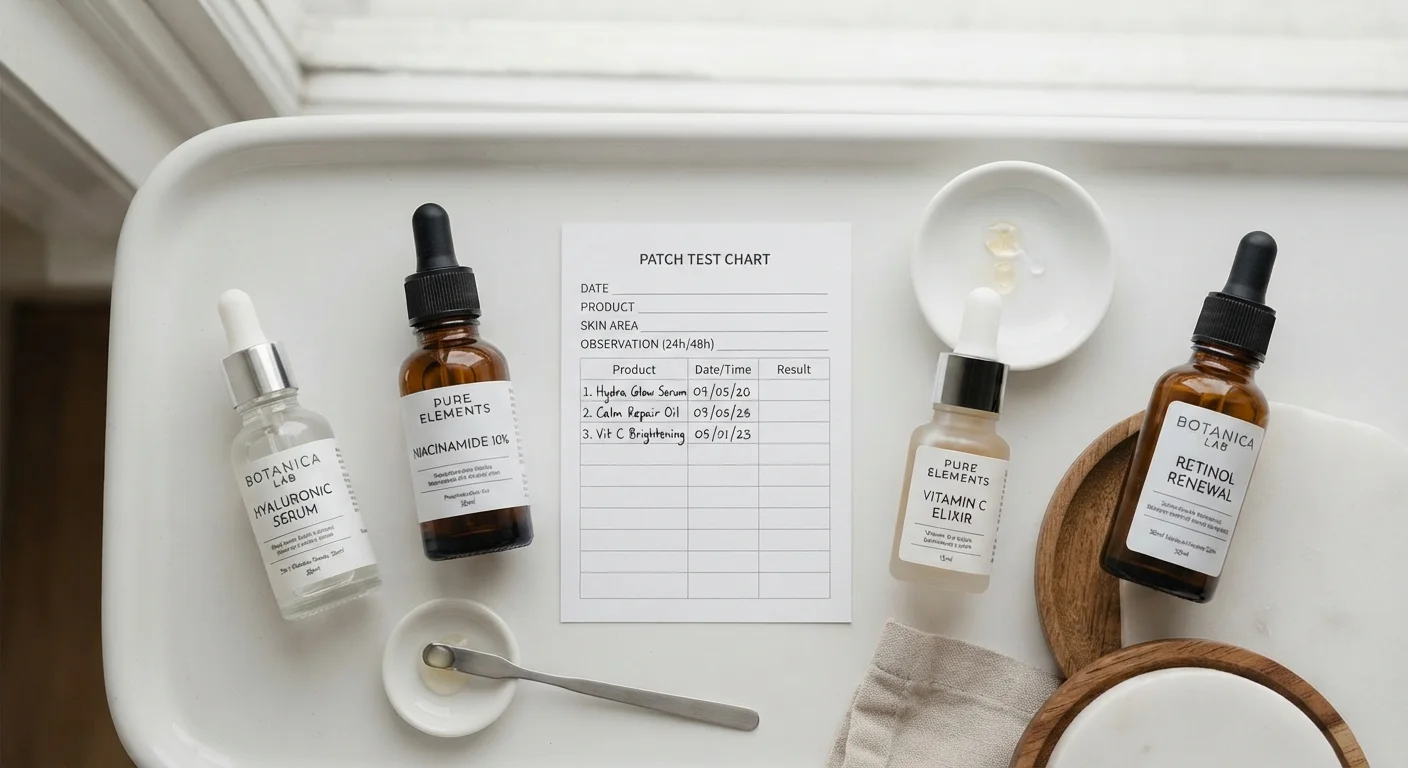
Always patch test before full-face application
A patch test exposes a small, less conspicuous area of skin to the ingredient first. This limits the extent of any reaction and gives you early warning before applying the product more broadly.
Start with the lowest available concentration
Higher concentrations increase efficacy but also raise the risk of irritation, particularly for first-time users of potent actives like retinol or glycolic acid. Beginning low gives your skin time to acclimate.
Follow a "low and slow" frequency schedule
Using a new active every night from day one overwhelms many skin types. Gradually increasing frequency over several weeks lets the skin barrier adapt without sustained disruption.
Avoid combining ingredients known to cause conflict
Certain actives — particularly retinoids and exfoliating acids — can compound irritation when used in the same routine. Awareness of common incompatibilities protects the barrier during the introduction phase.
Keep a simple skin journal during the introduction period
Reactions to actives can be delayed by several days, making it difficult to connect cause and effect without a written record. A journal removes that ambiguity.
Tracking Your Skin's Response
Reactivity to a new ingredient isn't always immediate. Some responses — particularly from retinoids or exfoliating acids — can appear two to five days after first use. This delay is exactly why a skin journal is so useful. Jotting down when you introduced a product, at what frequency, and any changes you noticed creates a reliable record you can reference if something goes wrong.
Distinguishing Purging From Irritation
Purging is a short-term increase in breakouts caused by accelerated cell turnover — it typically occurs in areas where you already break out and resolves within four to six weeks. Irritation, by contrast, tends to involve redness, stinging, or peeling in areas not prone to breakouts, and it persists or worsens over time. If you're unsure which you're experiencing, reducing product frequency is a safe first step. A dermatologist can help you interpret ongoing or severe reactions.
It's also worth distinguishing between purging and irritation. Purging — a temporary increase in breakouts — can occur with actives that accelerate cell turnover (such as retinol or AHAs) and generally clears within a few weeks. Persistent redness, burning, or peeling that doesn't improve is more likely irritation, and is a signal to scale back or stop use. When in doubt, consult a dermatologist rather than pushing through discomfort.
For guidance on how products interact once you've identified your tolerances, see our guide to layering skincare in the right order.
Quick Wins: Start Smart Today
You don't need a complex system to introduce new actives safely. These immediately actionable steps lower your risk before you even open a new product.
If you're weighing whether to simplify your routine before adding anything new, our look at the pros and cons of minimalist skincare offers useful perspective. And for a broader view of what commonly goes wrong in routines, where most skincare routines go wrong covers the habits that quietly undermine results.
This article is for general informational and educational purposes only and does not constitute medical or dermatological advice. If you experience persistent skin reactions, consult a qualified dermatologist.