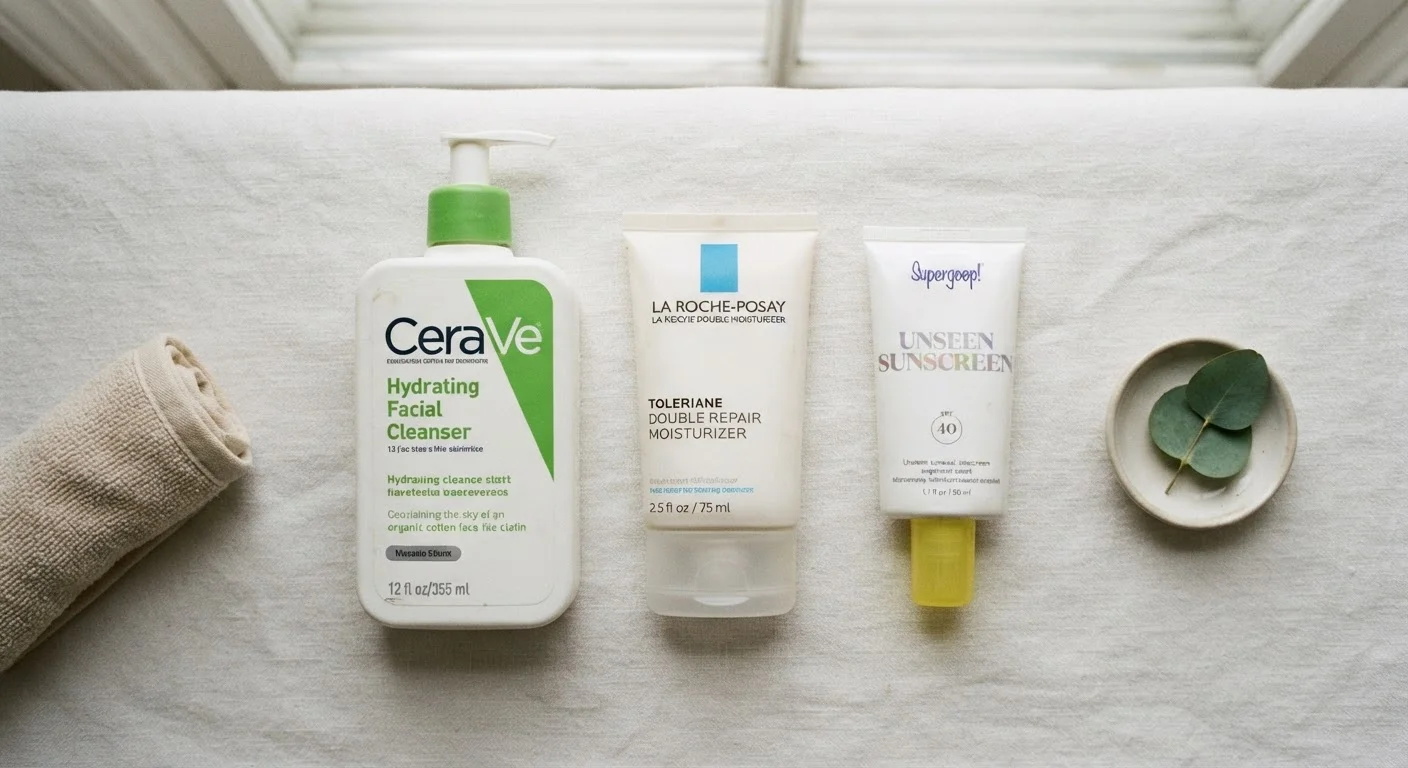
Why Skincare Doesn't Have to Be Complicated
Walk down any beauty aisle and the sheer volume of products can feel paralyzing. Toners, essences, ampoules, exfoliants, serums — the marketing suggests each one is essential. It isn't. Effective skincare is built on a handful of consistent, well-chosen steps, not a ten-product shelf.
The goal of a first routine is simple: keep the skin barrier healthy. That barrier is the outermost layer of your skin, responsible for locking in moisture and keeping irritants out. When it's intact, skin looks and feels better. When it's compromised — by over-cleansing, harsh ingredients, or skipping hydration — you may notice dryness, sensitivity, or breakouts.
Starting simply also helps you understand what your skin actually responds to, making it easier to troubleshoot later. For a deeper look at how product order affects performance, see our guide to layering skincare products correctly.
Skin barrier
The outermost layer of the skin that retains moisture and blocks irritants. Keeping it intact is the primary goal of a basic skincare routine.
Broad-spectrum SPF
A sunscreen rating indicating protection against both UVA rays (which age skin) and UVB rays (which cause burning). SPF 30 or higher is the widely recommended minimum.
Non-comedogenic
A label indicating a product is formulated to minimize pore-clogging. Useful for oily or acne-prone skin, though the term is not formally regulated.
Ceramides
Naturally occurring lipids (fats) in the skin that help hold the barrier together. Moisturizers containing ceramides can help restore and reinforce that structure.
Hyaluronic acid
A humectant — a substance that draws and retains water — found naturally in the body and commonly used in skincare to support surface hydration.
Retinoid
A family of vitamin A derivatives used in skincare to promote cell turnover. They require careful, gradual introduction and are typically an advanced addition, not a beginner step.
The Core Three: Cleanse, Moisturize, Protect
Every effective routine, no matter how elaborate, contains these three pillars:
- Cleanser: Removes dirt, excess oil, sweat, and environmental residue. Choose a gentle, sulfate-free formula. Over-cleansing strips the barrier, so twice daily is the typical recommendation — once in the morning, once at night.
- Moisturizer: Replenishes water content and reinforces the barrier. Ingredients like ceramides, hyaluronic acid, and glycerin are widely recognized by dermatologists for their barrier-supporting roles. Apply while skin is slightly damp to improve absorption.
- Broad-spectrum sunscreen (SPF 30 or higher): Applied each morning, this is the most evidence-backed step for protecting skin from UV-related damage. Look for "broad-spectrum" on the label, which means coverage against both UVA and UVB rays.
That's it for a starter routine. Resist the urge to add more until these three steps feel effortless.
Start with drugstore formulas
Price is not a reliable indicator of efficacy in skincare. Many well-regarded dermatologists recommend accessible, affordable formulas that contain the same evidence-backed ingredients as luxury alternatives. Master the habit first, then refine your choices as you learn what your skin responds to.
Understanding Your Skin Type
Choosing the right formulas requires a basic sense of your skin type. The main categories are:
- Oily
- Skin produces excess sebum, often leading to shine and enlarged pores. Lightweight, gel-based or oil-free moisturizers and non-comedogenic sunscreens tend to work well.
- Dry
- Skin feels tight, may flake, and absorbs moisture quickly. Richer creams with ceramides or shea butter offer more lasting hydration.
- Combination
- Oily in the T-zone (forehead, nose, chin) and normal or dry on the cheeks. A balanced, medium-weight moisturizer is often a practical starting point.
- Sensitive
- Prone to redness, stinging, or reactions. Fragrance-free, minimal-ingredient formulas reduce the risk of irritation.
If you're unsure of your type, wash your face with a gentle cleanser, pat dry, and observe how it feels and looks after 30 minutes without applying anything. That observation gives a reliable baseline.
When and How to Add More Products
Once your core three feel like second nature — typically after four to six weeks — you may want to address specific concerns like hyperpigmentation, fine lines, or persistent breakouts. This is where targeted ingredients enter the picture.
The most important rule: introduce one new product at a time. Adding multiple new ingredients simultaneously makes it impossible to identify what's helping or causing a reaction. Allow two to four weeks between additions. Our guide to introducing new skincare ingredients walks through patch testing and a practical integration process.
Common additions at this stage include vitamin C (for brightening, used in the morning), niacinamide (for pores and uneven tone), and retinoids (for cell turnover, used at night and introduced very gradually). Each has a meaningful body of research behind it, but none is a substitute for the core three.
Also worth knowing: your routine can and should differ between morning and evening. Morning and evening routines have different priorities — protection during the day, repair and treatment at night.
Avoid stacking actives too soon
Combining multiple potent ingredients — such as retinoids, AHAs, and vitamin C — before your skin has adjusted is one of the most common causes of irritation and barrier damage in new skincare users. Introduce one active at a time and give each several weeks before evaluating. If you notice persistent redness, stinging, or peeling, scale back and consult a dermatologist.
Building Consistency Into Your Day
The most sophisticated routine used sporadically will underperform a simple one applied daily. Skin responds to repetition. Dermatologists consistently emphasize that consistency is what produces visible change over time.
A few practical strategies that support habit formation:
- Keep products visible on your bathroom counter rather than stored away.
- Anchor the routine to an existing habit — brushing your teeth, making coffee — so it happens automatically.
- Accept that some mornings you only have time for SPF and moisturizer. That's still a meaningful routine.
Good skincare also creates a stronger base for everything that follows. As we explore in skincare as a foundation for makeup, well-hydrated, healthy skin makes any makeup application smoother and longer-lasting.
Finally, be patient with your skin. Four to six weeks is the minimum window for evaluating any meaningful change. Track reactions, note what feels comfortable, and adjust gradually. For an honest look at habits that quietly undermine even good routines, see where most skincare routines go wrong.
This article is for informational and educational purposes only and does not constitute medical or dermatological advice. Consult a qualified dermatologist or healthcare professional for concerns about your skin health.