Why Life Transitions Disrupt Your Sense of Style
Style is deeply contextual. The way you dress communicates not just aesthetic preference but also social role, life stage, and daily environment. When any of those change significantly — a new career, a geographic move, becoming a parent, retiring, or simply reaching a different decade of life — the wardrobe that served you well before can suddenly feel misaligned or inauthentic.
This dissonance is not a personal failing. It's a signal that your external presentation hasn't yet caught up with an internal shift. The discomfort you feel when your clothes no longer feel right is worth paying attention to: it's useful information, not a crisis. Understanding this makes the process of adaptation feel less like starting over and more like a deliberate evolution.
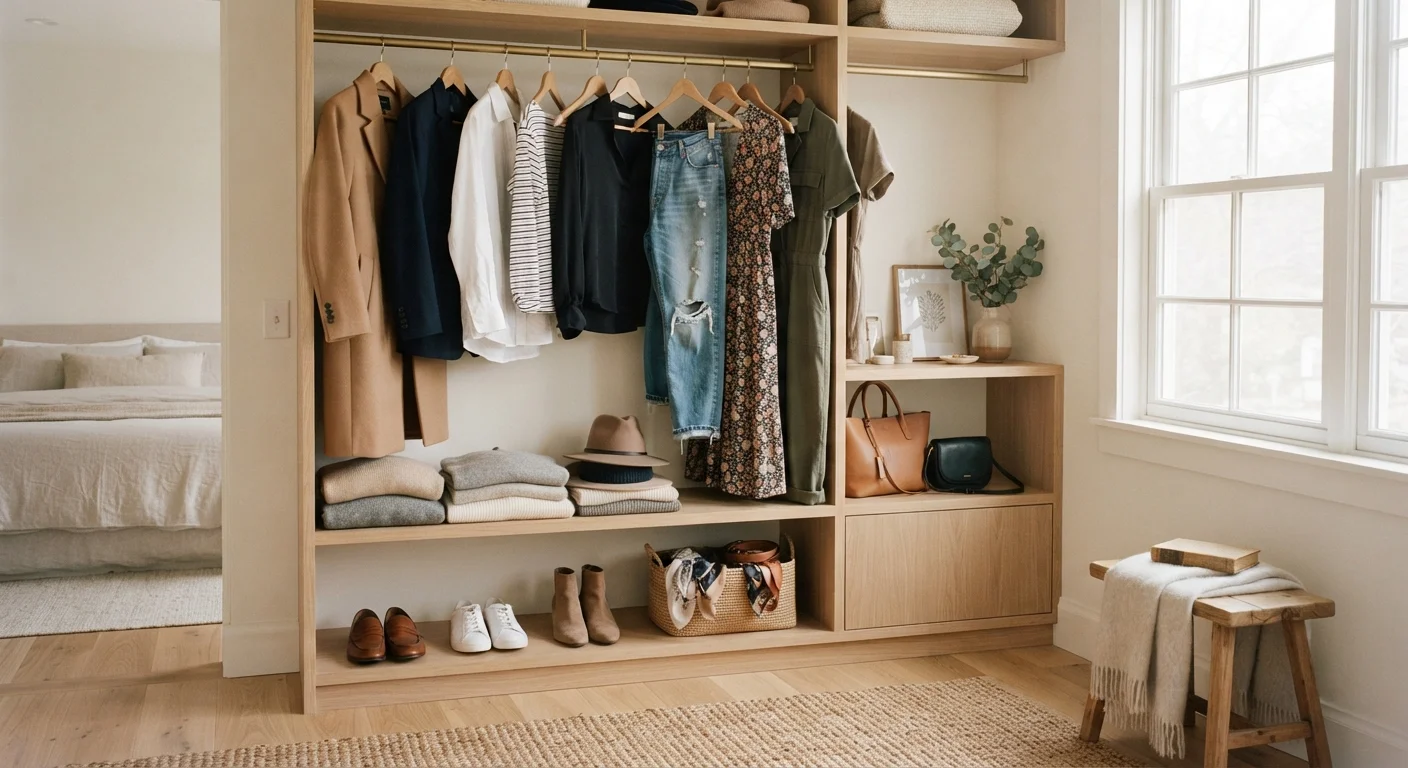
The goal of adapting your style through a transition is not to build an entirely new identity from scratch. It's to keep what genuinely still belongs to you, release what no longer fits your life, and fill in the gaps with intention.
What you will need
How to Adapt Your Wardrobe Step by Step
Avoid Impulse Overhauls After Major Changes
It's tempting to replace everything immediately after a big life shift — a new city, a new role, a changed relationship status. Resist the urge. Making sweeping purchases before you understand your actual new context often leads to a wardrobe that doesn't serve you. Give yourself at least a few weeks to observe what your new life genuinely requires before spending significantly.
The following steps walk you through a structured process for navigating wardrobe evolution during a life transition. You'll move from understanding your new context, through an honest audit of what you own, to deliberate gap-filling — all while maintaining the stylistic continuity that makes your wardrobe feel like yours.
Full-length mirror
Allows you to accurately assess how pieces fit and feel on your body during the edit process.
Notebook or notes app
Used to record your context analysis, style anchors, and wardrobe gaps.
Three sorting containers or bags
Helps physically separate items into keep, donate, and reassess categories.
Wardrobe audit checklist
A structured framework for systematically evaluating each item in your closet.
Define your new context in concrete terms
Before touching your wardrobe, write down what your new daily life actually looks like. Where are you going? Who are you around? What are the physical and social demands of your new context? A shift to remote work, for example, changes almost everything — formality levels, layering needs, comfort priorities. A move to a different climate is equally disruptive. Being specific here prevents vague, regret-prone shopping later.
Audit what you currently own with fresh eyes
Pull out everything and assess each item against your new context — not your old one. A blazer that was essential in a corporate office may have no function in a creative freelance life, and vice versa. Ask three questions per piece: Does it fit my body as it is now? Does it serve my actual new routine? Does it still feel like me? If an item fails all three, it's a strong candidate for removal. Use our wardrobe audit checklist for a more structured approach to this process.
Identify your style anchors and carry them forward
From what remains after your audit, identify the pieces and aesthetic patterns that still feel genuinely like you — regardless of context. These are your style anchors. They might be a silhouette preference, a colour palette you always return to, or a particular type of fabric. Note them explicitly. When you build out your adapted wardrobe, these anchors ensure continuity between who you were and who you're becoming.
Map the gaps between what you own and what you need
With your new context defined and your anchors identified, list the functional gaps — categories or types of pieces your current wardrobe can't cover for your new life. Be specific: "I need two versatile pieces appropriate for video calls" is more useful than "I need work clothes." Prioritise gaps by frequency of need. If you're working within a limited budget, focus on filling the highest-frequency gaps first.
Fill gaps intentionally, anchored in versatility
When adding new pieces, prioritise items that work across multiple contexts in your new life rather than single-use additions. Consider how each new piece interacts with at least three items you already own. This approach naturally builds a cohesive, functional wardrobe rather than a collection of disconnected purchases. If you're uncertain whether to invest in classic staples versus trend-led pieces during a transition, our look at classic versus trendy dressing can help clarify the trade-offs.
Wear and observe before declaring the process complete
After your initial edits and additions, spend two to four weeks actually living in your adjusted wardrobe before making further changes. Notice what you reach for, what stays untouched, and where friction appears. This observation period is valuable data. If outfits consistently feel off despite your efforts, common wardrobe mistakes — like proportional imbalance or a missing foundational layer — are often the cause.
Preserve Your Style Anchors
Even as your life changes, certain pieces or aesthetics will still feel unmistakably like you. These are your style anchors — a leather belt, a preference for relaxed silhouettes, an affinity for earthy tones. Carry them forward deliberately. They provide continuity and prevent your evolved wardrobe from feeling like someone else's clothes.
Remember that how you approach getting dressed — whether through proportion or mood — can shift during transitions too. Give yourself permission to experiment with both frameworks as your life recalibrates.
This article is for general informational and style guidance purposes only. Individual needs and circumstances vary.