Why Lip Colour Fades So Quickly
Lip colour faces challenges that most other makeup doesn't: constant movement from talking, eating, and drinking, plus natural oils from skin and food that chemically break down pigment. Understanding these forces is the first step toward countering them.
The surface texture of your lips also plays a significant role. Dry, flaky lips create an uneven base where colour sits in patches and lifts unevenly. Oily or heavily moisturised lips provide little grip for pigment to adhere to. Neither extreme supports long wear — which is why prep matters as much as the application itself. For a deeper look at how skin condition affects makeup performance, see our guide on skincare as a foundation for makeup.
Hydrate Smart the Night Before
If you know you'll be wearing lip colour for a long occasion, apply a nourishing lip balm the night before and let it absorb fully overnight. Arrive at your morning application with lips that are smooth and hydrated — but then let them settle for a few minutes before applying liner and colour, so surface oils are minimal. This balance between hydration and excess moisture is the sweet spot for long-lasting application.
Prep Your Lips Before You Even Open the Cap
Effective lip prep takes less than two minutes and makes a measurable difference to how long colour holds.
Gently exfoliate lips two to three times per week to remove dry, flaky skin
Flaky skin prevents even pigment deposit and causes colour to peel away from the surface rather than adhering smoothly. A smoother surface means the lipstick grips more uniformly and fades more evenly. This doesn't require a dedicated product — a clean, damp toothbrush used in gentle circular motions works well.
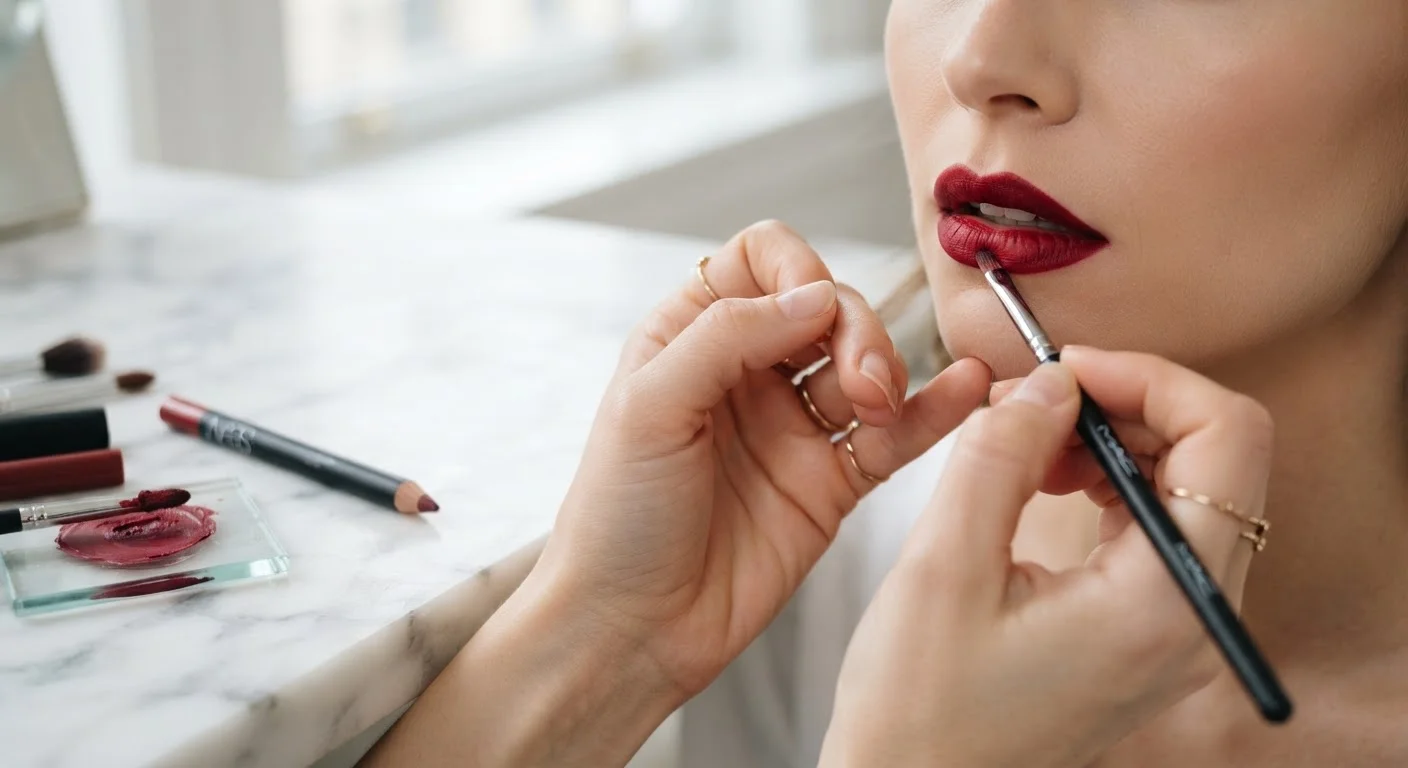
Apply lip liner across the entire lip surface, not just around the edges
Lip liner has a waxy, dry texture that gives pigment something to grip — far better than the natural oils on bare skin. Using it as an all-over base means your lipstick is bonding to liner rather than to skin, which significantly slows fading. It also keeps colour more uniform as it wears.
Apply lipstick in two thin layers with a blot in between
A thick single application sits on the surface and smears or transfers more easily. Blotting after the first layer removes excess moisture and oils from the formula, and the second layer then binds to that drier base for a more durable finish. This technique is a standard in professional makeup workflows.
Set lip colour with a light dusting of translucent powder pressed through a tissue
Pressing translucent powder through a single ply of tissue onto lips absorbs surface moisture and creates a thin, mattifying film over the colour without removing it. This reduces transfer onto cups and masks and is a well-known technique among professional makeup artists for long-wear applications.
Avoid applying oil-rich moisturiser or foundation directly on the lip area before colour
Oils in skincare and foundation formulas actively break down the binders in lipstick, causing colour to slip and fade faster. Keeping the immediate lip zone relatively dry before application gives the liner and lipstick a much better surface to adhere to.
Once lips are prepped and base makeup is complete, you're ready to apply with intention rather than habit. If you're building this step into a broader morning look, the everyday makeup routine framework is a useful reference for sequencing.
Application Techniques That Lock Colour In
How you apply lipstick matters as much as which formula you choose. These layering and setting methods are used by professional makeup artists to extend wear and keep edges crisp throughout the day.
2×
Longer wear with liner as an all-over base
Makeup artists and beauty educators widely report that using lip liner across the full lip — rather than just the border — roughly doubles the effective wear time of standard lipstick formulas.
3 min
Time needed for the full layering and setting method
The complete liner-fill, double-application, and powder-set technique takes approximately three minutes total, making it a practical addition to any morning routine.
Before you head out, a quick check of your lip line and overall finish can catch any application issues early — the pre-departure makeup check-in covers exactly what to look for.
Formula Type Changes the Equation
Matte and long-wear liquid lipstick formulas are engineered to resist transfer and tend to require fewer layering steps to achieve good staying power. Cream and gloss formulas are designed for comfort and luminosity, and will always require more technique to extend wear — that's a feature of their texture, not a flaw. The techniques above work across formula types, but results will vary based on the specific product's binders and finish.