Why Face Shape Enters the Conversation
Walk into almost any salon consultation and face shape will come up. Stylists use it as a shorthand for discussing proportion — specifically, how a haircut's silhouette interacts with the lines of your forehead, cheekbones, and jawline. The underlying idea is straightforward: different cuts add or reduce visual width and length in different places, and those effects land differently depending on your facial structure.
This isn't a modern invention. The face-shape framework has been a staple of professional hair education for decades, partly because it gives stylists and clients a shared vocabulary. Saying "I want something that adds volume at the crown" is easier when both people understand why that might matter for a particular face.
It's worth pairing this thinking with your broader sense of personal style, since a hairstyle exists within the context of how you present yourself overall — not as an isolated decision.
Face Shape Is a Framework, Not a Formula
Guidelines around face shape and hairstyle are widely used in the industry as starting points — not absolute rules. Stylists with experience across diverse hair textures and face structures will typically weigh many factors alongside face shape. If a recommendation doesn't resonate with you, it's worth saying so.
The Main Face Shape Categories — and Their Limitations
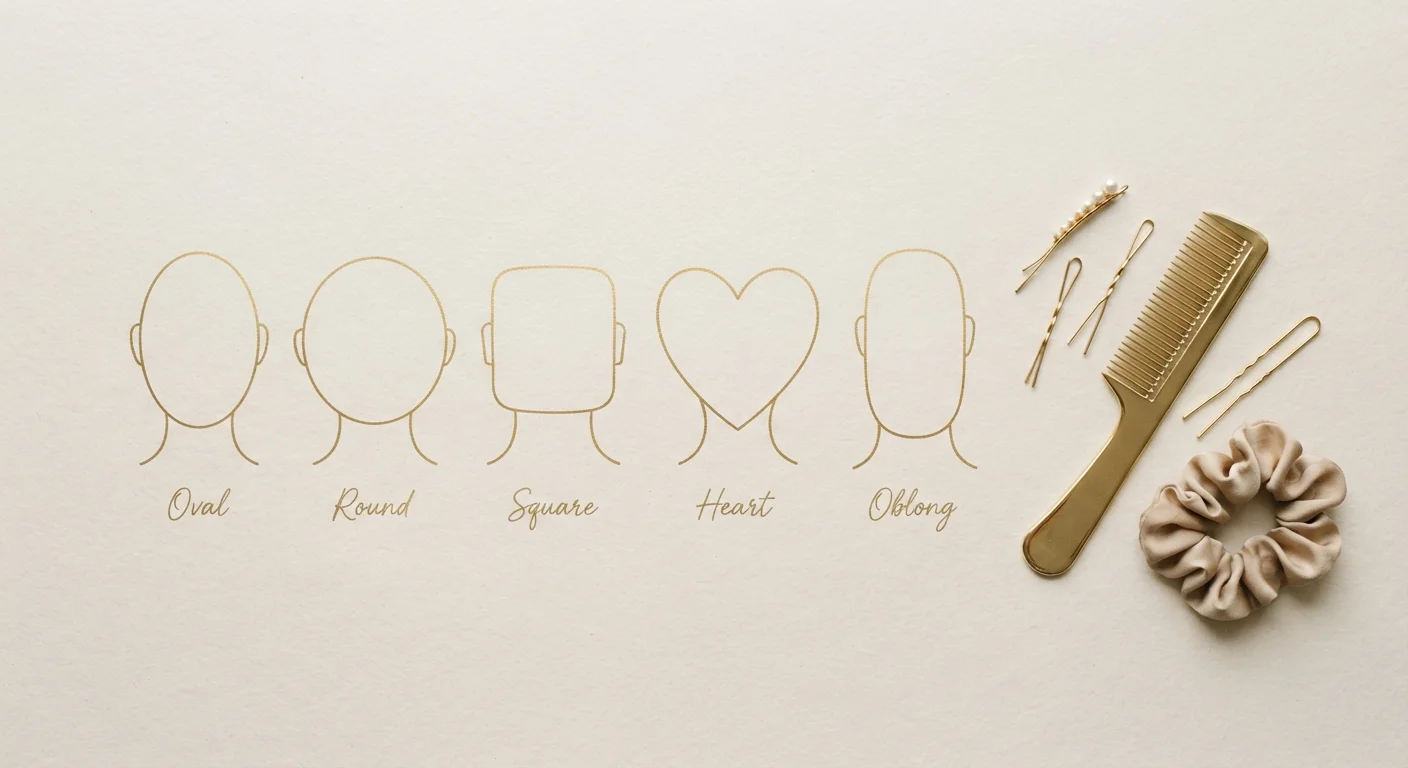
The five shapes most commonly referenced are oval, round, square, heart, and oblong (also called rectangular). Here's what each generally describes:
- Oval: Face length is roughly one and a half times the width, with a gently rounded jawline. Often cited as the most versatile shape because proportions are already considered balanced.
- Round: Width and length are similar, with soft curves at the jaw and forehead. Cuts that add height or length tend to create contrast with the natural roundness.
- Square: Strong, angular jawline roughly equal in width to the forehead. Softening layers or cuts with movement near the jaw can balance the angularity — though many people deliberately choose cuts that highlight it.
- Heart: Wider forehead tapering to a narrower chin. Volume near the jaw or longer lengths help balance the proportions visually.
- Oblong: Face is notably longer than it is wide, with a relatively even forehead and jaw width. Width-adding cuts — like blunt bobs or curtain bangs — can create a wider impression.
The honest caveat: most real faces don't fit cleanly into one category. Hybrid shapes are the norm, not the exception. Treating these as starting prompts rather than fixed rules keeps the process useful rather than frustrating.
5
Primary face shape categories used in styling
Oval, round, square, heart, and oblong are the five categories most widely referenced in professional hair education and styling guides.
Most
Faces blend more than one shape category
Hair and beauty educators broadly acknowledge that hybrid face shapes are more common than any single 'pure' category, making rigid rules difficult to apply.
What Face Shape Doesn't Account For
Face shape alone can't predict how a haircut will look on you, because hair itself is a major variable. Your texture, density, and natural growth patterns all influence the final silhouette. A blunt bob behaves very differently on fine straight hair than on coily, high-density hair — regardless of what shape your face is.
Curl pattern is a particularly important factor: wavy and curly hair naturally adds volume at specific points, which changes how a cut frames the face once it dries. A stylist working with your texture will factor in where your hair expands naturally, not just where the scissors land.
Lifestyle also matters. A low-maintenance cut that suits your schedule will almost always look better in practice than a technically "perfect" cut that requires 45 minutes of daily styling you won't do.
Ask Your Stylist About Texture, Not Just Shape
Before your next appointment, note how your hair behaves when air-dried: where it gains volume, where it lies flat, and how much it shrinks or expands. Sharing this information gives your stylist a more complete picture than face shape alone, and tends to produce a cut that actually performs well in your daily life.
Using the Framework Productively
The most useful way to approach face shape advice is as a filter for exploration, not a rulebook. If you're unsure where to start, knowing your approximate shape can help you browse references more efficiently — rather than scanning thousands of images, you can focus on cuts others have noted working well for similar proportions.
This mirrors the approach behind frameworks like dressing for your body shape vs. dressing for your mood — proportion-based guidelines can be genuinely helpful for some people, while others find mood and personal resonance more guiding. Neither approach is wrong.
When you consult a stylist, bring reference photos of cuts you're drawn to and be transparent about your texture and daily routine. The conversation will be far more productive than arriving with only a face shape label and expecting a prescription.