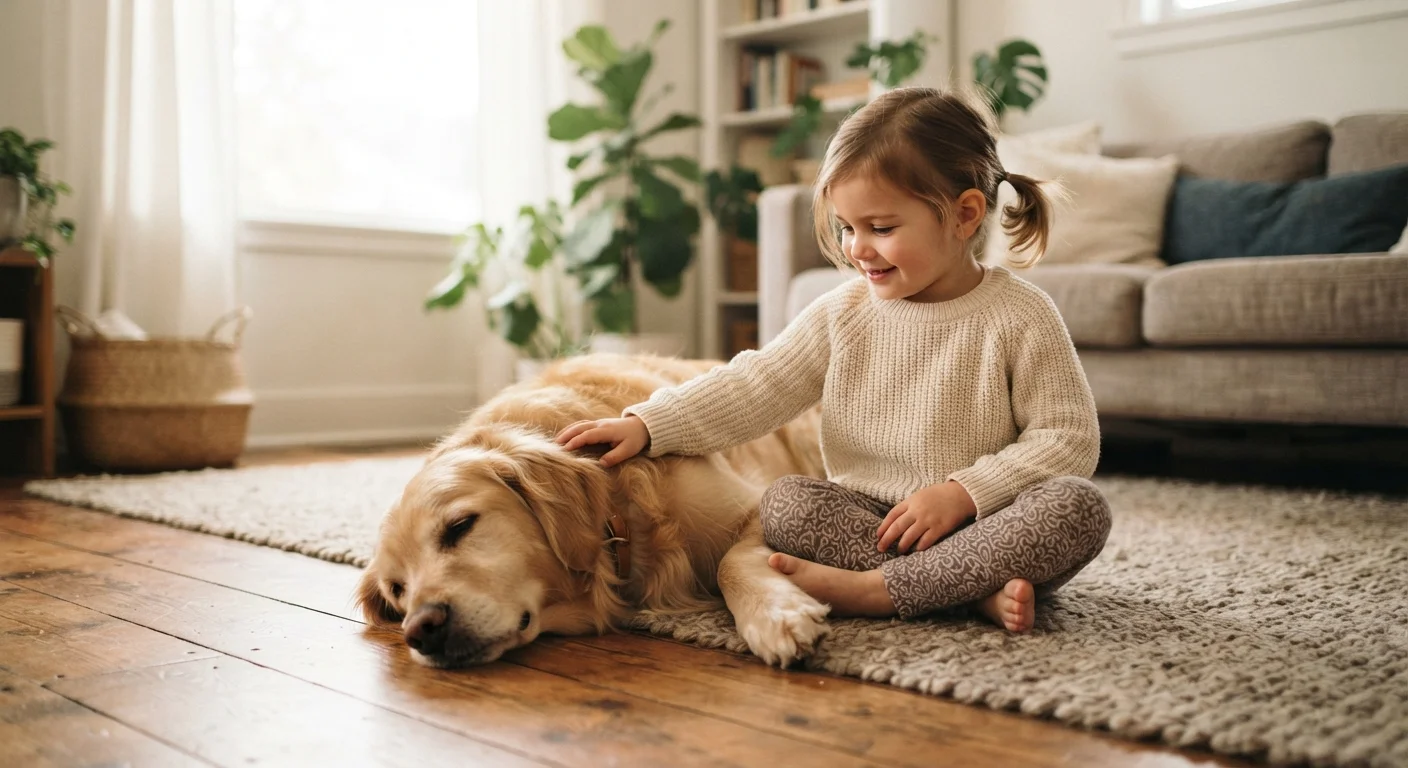
What Animals Actually Teach Children
Children learn in relationship — and animals offer a uniquely uncomplicated kind of relationship. A dog doesn't care about a child's grades. A cat offers warmth without expectation. These qualities make pets powerful, informal teachers of emotional intelligence.
When a child notices that their rabbit thumps when startled or that their dog turns away when overwhelmed, they're practicing the foundational skill of reading nonverbal cues. This is the same skill that underlies empathy in human relationships. Of course, children often get these readings wrong — understanding animal body language is a skill that takes time and active adult coaching to develop safely.
Beyond emotional learning, daily pet care introduces children to routine, consistency, and the idea that another living being depends on them. These aren't abstract lessons — they're experienced concretely, every morning at feeding time.
Guide the Relationship, Don't Just Allow It
The developmental benefits of living with animals don't happen automatically. Parents who actively narrate what an animal might be feeling ('The dog is moving away — she needs some quiet time right now') help children build real emotional literacy. These small coaching moments make a significant difference over time.
The Responsibility Question: What Research and Experience Tell Us
One of the most common reasons families adopt a pet is to teach children responsibility. The impulse is understandable — but the framing often sets everyone up for frustration.
Handing a pet to a child as "theirs" to care for, without realistic expectations or ongoing adult involvement, tends to backfire. The pet's needs don't pause when a child forgets, loses interest, or simply isn't developmentally ready. Placing too much too soon on a child often leads to unmet animal needs and misplaced guilt.
What works better is a gradual, scaffolded approach — giving children tasks they can genuinely manage and expanding those tasks as they grow. Matching pet care tasks to a child's developmental stage makes the lessons stick without setting the animal or the child up to fail.
~67%
U.S. households with a pet
According to the American Pet Products Association's National Pet Owners Survey, roughly two-thirds of American households include at least one pet.
3–4 years
Age empathy begins to emerge
Developmental psychologists generally place the early emergence of empathy between ages 3 and 4 — a window when animal interactions can meaningfully support emotional learning.
Attachment, Sibling Bonds, and Family Dynamics
Children don't just care for pets — they form genuine attachments to them, often treating them with the emotional complexity they'd extend to a sibling. They confide in them, compete with them for parental attention, and grieve them deeply. This sibling-like bond between children and household animals is well-documented and tells us something important: to a child, a pet is not a possession but a relationship.
That realization changes how families can approach everything from introductions to conflict. What actually makes the child-pet household work is less about rules and more about understanding both the child's and animal's needs simultaneously.
Pets Are Not a Developmental Guarantee
Research consistently shows associations between pet ownership and positive child outcomes — but association isn't the same as causation. Family dynamics, parental involvement, and the child's individual temperament all play significant roles. A pet can enrich development, but it isn't a substitute for engaged parenting or professional support when a child needs it.
Grief, Loss, and the Harder Lessons
For many children, the death of a pet is their first direct encounter with loss. This moment — painful as it is — carries genuine developmental significance. How adults respond shapes how children come to understand grief, impermanence, and emotional resilience.
Avoiding the topic or replacing the pet quickly can inadvertently teach children that grief should be suppressed. Conversely, honest acknowledgment — met with patience, ritual, and space — can be one of the most formative experiences of childhood. Helping children process pet loss with care is one of the most meaningful things a parent can do.
The science of pet ownership and child development is still evolving, and the picture is nuanced — the evidence is promising but complicated. What's clearer is this: when families engage thoughtfully with the animals in their home, children gain far more than a companion. They gain a classroom.