Why Full Handover Tends to Unravel
The pitch sounds appealing: get the kids a pet, assign them the responsibilities, and watch them grow into caring, accountable little people. Many families discover, often a few months in, that the reality is messier. The pet isn't getting fed consistently, the child is tearful when reminded, and the adult is doing most of the work anyway — just with more friction.
This pattern is common enough that it's worth understanding why it happens before it starts. Children are not miniature adults. Their executive function — the mental toolkit that governs planning, self-initiated action, and follow-through — is still developing well into adolescence. Assigning responsibility that outpaces this development doesn't accelerate growth; it creates stress for the child and risk for the pet.
The good news is that children can and do benefit from genuine involvement in pet care. The issue is almost always one of structure and expectation, not willingness. Age-appropriate responsibility frameworks make the difference between a child who feels capable and one who feels like they're constantly failing.
Declaring the pet 'the child's dog' and stepping back from daily involvement.
Why it happens: Parents often use pet ownership as a motivation tool or believe full ownership will naturally teach responsibility. The enthusiasm children show before a pet arrives makes full handover seem reasonable.
Assigning tasks without verifying whether the child has the developmental capacity to carry them out reliably.
Why it happens: Parents may conflate a child's willingness with ability. A seven-year-old may eagerly agree to daily feeding but lack the working memory and time-awareness to self-initiate it consistently.
Using pet care as a punishment or leveraging it as a conditional reward.
Why it happens: Tying chores to screen time or allowances is a common parenting strategy, so extending the same logic to pet care feels intuitive.
Skipping the follow-through check — assuming tasks are done because they were assigned.
Why it happens: Busy households run on trust and assumption. Once a routine is established, parents often stop verifying, especially if things have gone smoothly for a few weeks.
Failing to model the emotional dimensions of pet care alongside the practical tasks.
Why it happens: Adults focus on logistics — feeding schedules, vet visits, grooming — and assume the empathy piece develops on its own through proximity to an animal.
Not having a clear plan for when the child is sick, away, or simply unwilling to complete their tasks.
Why it happens: Parents set up routines in ideal conditions and don't anticipate gaps. When the child is unwell or overwhelmed with schoolwork, the pet's care can fall through.
How to Structure Pet Care as a Family Commitment
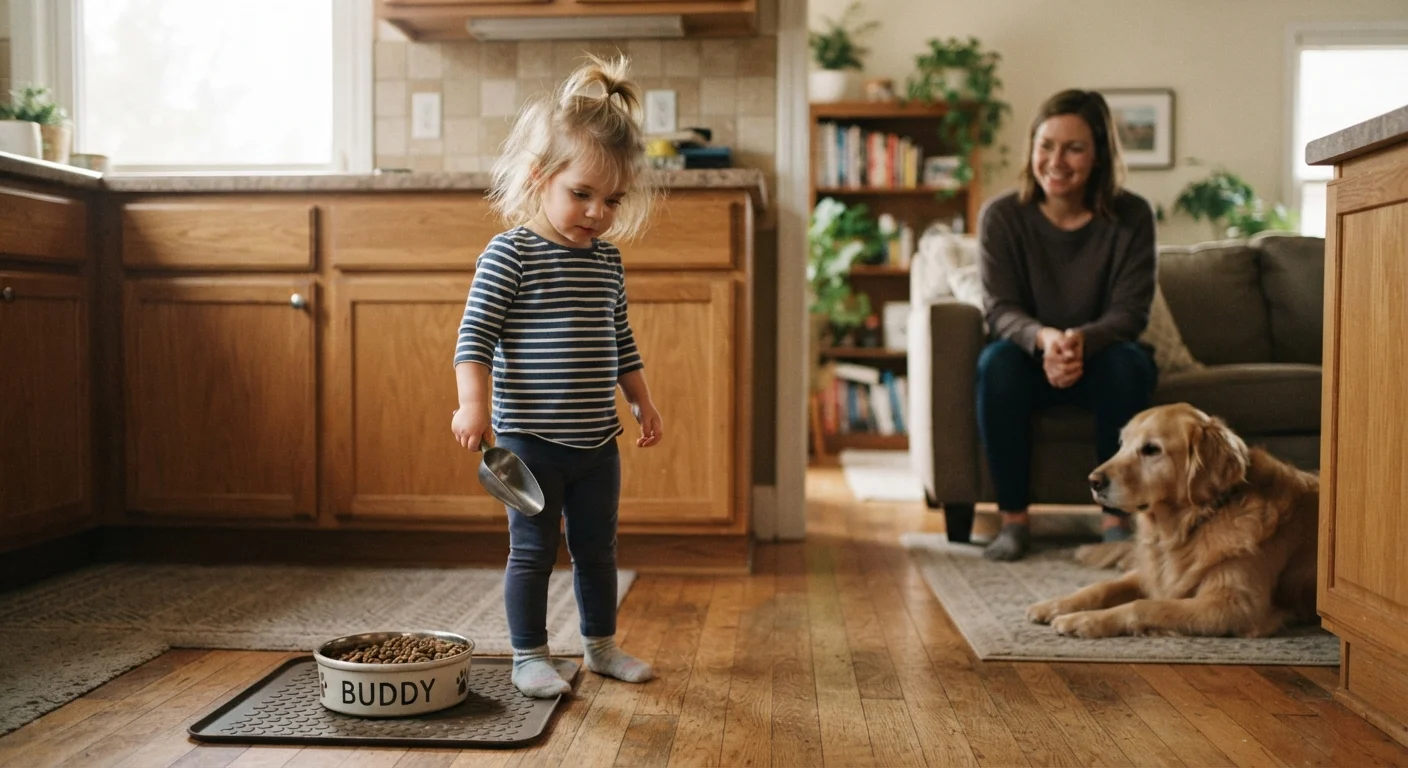
The most durable approach treats pet care as a whole-family responsibility with contributions scaled to each person's capacity. This removes the implicit pressure on one child while keeping everyone genuinely involved. Adults model the non-negotiable nature of care — the pet eats whether or not anyone feels like it today — and children observe that standard over time.
The Pet's Welfare Cannot Wait
A child forgetting to feed or water a pet is not a natural consequence to let play out — it's a welfare issue that adults must intervene in immediately. Unlike a forgotten homework assignment, unmet animal needs cause real suffering. Adults are always the fallback, regardless of what responsibilities have been assigned.
It also helps to revisit the responsibilities structure regularly. What a nine-year-old can handle shifts meaningfully by age eleven. Periodic conversations about what's working, what feels hard, and what might be adjusted give children agency without abandoning accountability. For families navigating this alongside other household dynamics, what actually makes children and pets work under one roof offers a useful broader frame.
Watch for Signs of Overwhelm in Children
Children who feel trapped by pet care obligations they can't manage may begin avoiding the pet altogether, displaying irritability, or expressing that they 'hate' the animal. These reactions are signals that the responsibility structure needs adjustment — not character flaws in the child. Address the system, not the child.
The goal isn't to protect children from responsibility — it's to give them responsibility they can actually succeed at. That's what builds the confidence and empathy that make pet ownership genuinely enriching. For a broader look at how animal care shapes children's character over time, raising empathetic children through animal care explores the developmental picture in depth.
This article provides general guidance on family and pet care dynamics and is not a substitute for advice from a qualified veterinarian, child development professional, or family counselor. If you have specific concerns about your child's wellbeing or your pet's health, please consult an appropriate professional.