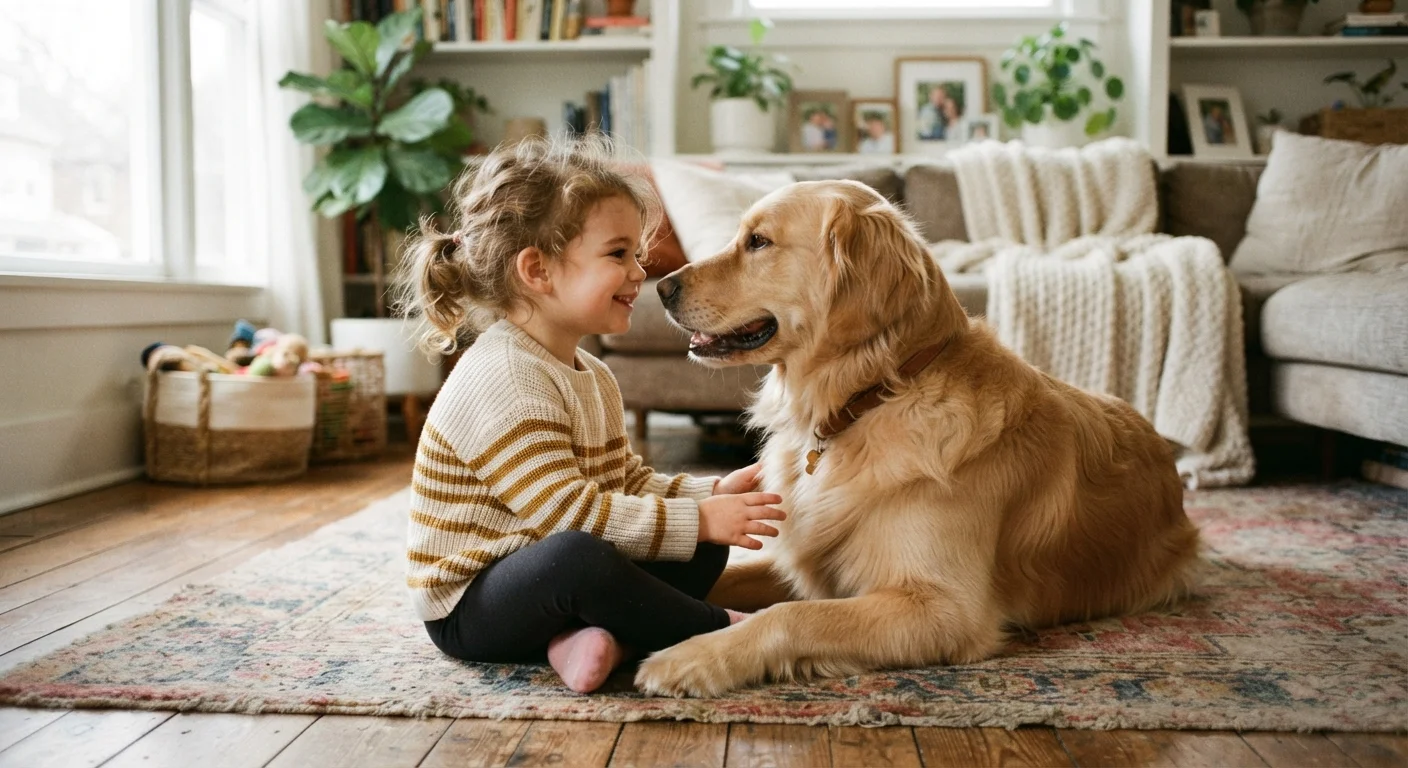
How the Sibling Comparison Became a Research Topic
Families have long described their pets in familial terms — "he's basically one of the kids" — but developmental researchers began taking this observation seriously in earnest over the past few decades. Studies exploring how children talk about, relate to, and emotionally depend on household animals revealed patterns that closely echoed what was already known about human sibling dynamics: loyalty, competition, protectiveness, and grief.
One influential line of inquiry examined what children do when they are stressed or upset. Rather than always turning to a parent, many children in these studies sought out the family dog or cat first — using the animal as a safe, non-judgmental emotional sponge. This behavior mirrors the way children sometimes confide in siblings before adults, valuing the horizontal relationship precisely because it carries less perceived consequence.
For families wanting to understand these patterns more deeply, our overview of how pets shape child development covers the broader developmental science behind living with animals.
“Children's relationships with their pets are not trivial attachments. For many children, the pet is a genuine relationship partner — someone to confide in, play with, and depend on — and the loss of that pet can be as significant as any other relationship loss.”
— Gail Melson, Professor Emerita of Developmental Studies, Purdue University, and researcher in child–animal relationships
The Emotional Architecture of the Bond
The sibling-like quality of child–pet relationships rests on a few key pillars: shared space, shared routines, and a perceived equality of emotional status within the family. When a pet sleeps in a child's room, greets them after school, and joins family outings, it accumulates the kind of shared history that defines close relationships. Children interpret this proximity the way they naturally interpret most social closeness — as belonging.
This belonging comes with the full emotional range siblings experience. Children report feeling proud of their pets, embarrassed by their behavior, protective of them around strangers, and genuinely hurt when adults seem to favor the animal. These aren't trivial feelings. They reflect sophisticated social cognition and emotional investment.
90%
Children who consider pets family members
Research published in family and human-animal interaction literature consistently finds the vast majority of children in pet-owning households describe their animals as full family members rather than property.
40%
Children preferring pets for emotional support over humans
Studies exploring children's coping strategies have found that a significant minority turn to pets before parents or peers when feeling upset, anxious, or in need of comfort.
1 in 3
Only children who describe a pet as their "best friend"
Surveys of school-age children consistently show that only children in particular assign best-friend status to household animals at notably high rates.
It's worth noting that the intensity of this bond can vary significantly depending on the child's temperament, the animal's species and personality, and whether the pet was present from the child's earliest years. A dog who arrived before a child learned to walk occupies a fundamentally different emotional position than one adopted when the child was already ten.
Rivalry, Jealousy, and the Fight for Parental Attention
One of the most recognizable sibling dynamics that surfaces between children and pets is competition for parental attention. A toddler who pushes the dog off a parent's lap or a school-age child who complains that "you always worry about the cat" is engaging in behavior that any parent of multiple human children would immediately recognize.
This rivalry matters because it tells parents something important: the child has genuinely integrated the pet into their mental model of the family hierarchy. The pet is not furniture; it is a competitor for love, and being a competitor means being a genuine presence.
Turn Rivalry Into a Teaching Moment
When a child expresses jealousy over attention given to the pet, resist the urge to dismiss the feeling as silly. Instead, name it: "It sounds like you felt left out when I was taking care of the dog." Then use it as a bridge to discuss how everyone in the family — people and animals — has needs that sometimes require attention. This approach validates the emotion while reinforcing the child's growing capacity for empathy.
Handled thoughtfully, these moments are opportunities rather than problems. A child who notices that the puppy is scared during a thunderstorm and tries to comfort it is practicing empathy in real time. A child who resents the new kitten for "getting too much attention" is learning to articulate and manage complex emotions — skills that transfer directly to human relationships.
Our article on what actually makes life with children and pets work offers practical guidance on navigating exactly these dynamics day to day.
What This Bond Means for the Whole Family
When a child treats the family pet like a sibling, it doesn't happen in isolation — it shapes everyone's role. Parents become, in effect, the parents of one more household member, and the responsibilities that come with that are real. The pet's welfare, emotional needs, and safety require adult oversight regardless of how naturally the child has stepped into a sibling role.
This is a crucial distinction. Children can love a pet with genuine sibling-intensity and still not be developmentally ready to be responsible for that pet's care. Our piece on the pitfalls of assigning pet responsibility too early explores where that line tends to fall.
For families, the child–pet sibling bond also shapes the emotional texture of major transitions. When a new baby arrives, children sometimes redirect attachment energy toward the pet during a period of disruption. When a pet dies, children can grieve with an intensity that surprises adults who underestimated the relationship's depth. Recognizing the bond for what it is — a genuine attachment — allows families to respond with the same care they would extend to any significant loss or change.
Whether your household has always been pet-oriented or you're weighing whether an animal belongs in your family's life, understanding what the research actually says about children and animals can help you make that decision with confidence.