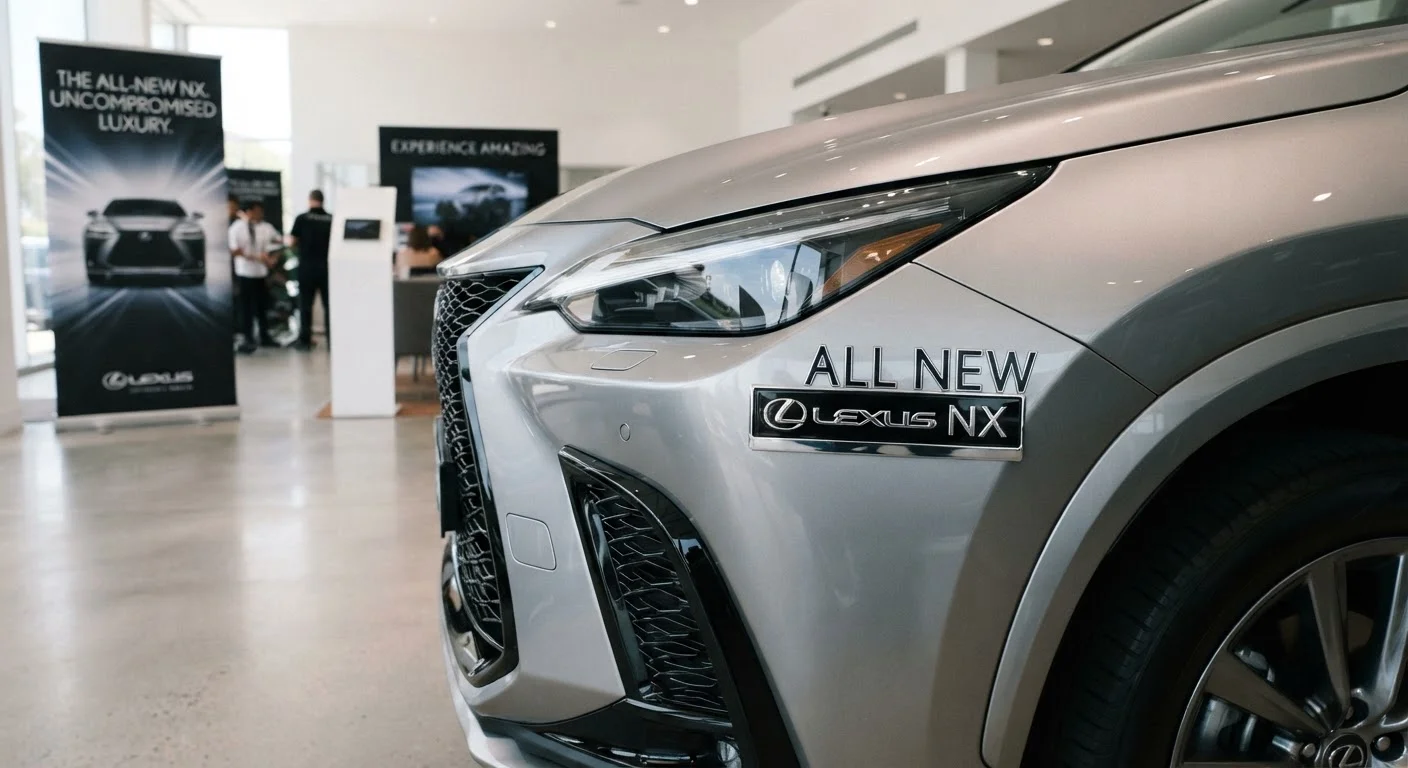
The Spectrum Behind One Simple Word
Walk into any dealership or browse an automaker's website and you'll encounter the word 'new' applied liberally. But behind that single adjective lies a spectrum of engineering reality that ranges from a fresh coat of metaphorical paint to a ground-up reimagining of the vehicle.
Automakers generally work in predictable cycles. A vehicle is introduced as a new generation, runs for several years, receives a mid-cycle update, then is eventually replaced by an entirely new generation. At each stage, the marketing language often sounds similar — but the substance is very different. Knowing which stage a particular model is in helps you evaluate it more accurately.
“The word 'new' in automotive marketing is one of the most elastic terms in the industry. It can describe a genuinely transformed vehicle or simply a refreshed appearance over an architecture that hasn't changed in years.”
— Automotive Editorial Team, Auto Editorial Team — Vehicle Market Analysis
Running Changes, Refreshes, and Full Redesigns
There are three main categories of automotive update, each carrying a different weight:
- Running changes are the smallest. These are adjustments made during a production year — a tweaked calibration, an added standard feature, a corrected part — without any fanfare or model-year designation change. Most buyers never notice them.
- Mid-cycle refresh (facelift) is the most common use of 'new' in press releases. The vehicle gets revised front and rear styling, updated infotainment systems, revised trim levels, and sometimes new powertrain tuning. The platform — the underlying frame, suspension architecture, and crash structure — stays put. If a generation launched four years ago, the refresh doesn't reset that clock.
- Full generation change (all-new) means the vehicle has been redesigned from the platform up. New architecture typically brings updated safety engineering, revised dimensions, and new powertrain options. Crash-test results from the previous generation no longer apply, and the reliability history essentially starts fresh. This is the update that most buyers would intuitively call genuinely 'new.'
For more on how safety testing applies to updated models, see our article on understanding NCAP and crash-test ratings.
Check the Generation Date, Not Just the Model Year
Before evaluating any vehicle as 'new,' look up when the current generation was introduced. A quick search for '[model name] generation history' typically reveals this. If the generation is more than four years old and no full redesign has been announced, any 'new' model year version is likely a refresh — not a ground-up update.
Why the Model Year Adds to the Confusion
The model year system compounds the ambiguity. In the United States, manufacturers can begin selling a new model year as early as January of the prior calendar year — meaning a vehicle badged as next year's model may have been built months ago. A car carrying the current year's badge could be sitting on a platform that last saw a fundamental redesign years earlier.
The model year vs. calendar year distinction is worth understanding before evaluating any vehicle on a lot. Always check when the current generation was introduced — not just what model year badge appears on the trunk.
5–7 years
Typical full-generation cycle for most vehicles
Most mainstream automakers redesign a vehicle from the platform up every five to seven years, with a mid-cycle refresh occurring roughly at the midpoint.
~3 years
Average time between model introduction and mid-cycle refresh
Industry analysts generally observe that mid-cycle updates occur around the three-to-four-year mark of a generation's lifespan, though timing varies by manufacturer and segment.
Software Updates: A New Dimension of 'New'
A growing number of vehicles now receive over-the-air (OTA) software updates that can alter how driver-assist systems behave, adjust powertrain mapping, or add infotainment features — sometimes significantly. This has introduced a new layer of complexity to the concept of 'new.' A vehicle purchased two years ago might today operate differently than it did at delivery.
However, software updates cannot change physical hardware. Suspension components, crash structures, and engine internals remain what they were on the production line. The role of OTA updates in defining a 'current' car is an evolving area that deserves its own consideration when evaluating a vehicle's modernity.
For a broader look at the connected features now standard on many vehicles, the guide on connectivity features in today's new cars breaks down what's genuinely included and what costs extra.
Platform Sharing Is Common — and Normal
Many vehicles across different brands or model lines share the same underlying platform. This is standard industry practice and doesn't inherently mean a vehicle is lesser. What matters is whether that platform is new or carried over, and how it performs in independent testing. Platform sharing often allows automakers to distribute development costs while maintaining distinct vehicle characters above the structural layer.
Decoding the Language Before You Decide
A few practical habits help cut through the marketing language. First, search for when the current generation was introduced — automotive press archives and manufacturer newsrooms document this clearly. Second, look for terms like 'carries over,' 'continues,' or 'revised' in official descriptions, which usually signal a refresh rather than a redesign. Third, check whether independent crash-test agencies have re-evaluated the model recently, which typically happens after a full generation change.
Understanding what 'new' actually means is foundational knowledge for any vehicle purchase. For first-time buyers especially, our first-time buyer's map to the new car market covers the broader landscape of segments, trims, and terminology in one place. Pair that with a closer look at how to read the window sticker to understand exactly what you're evaluating before committing.