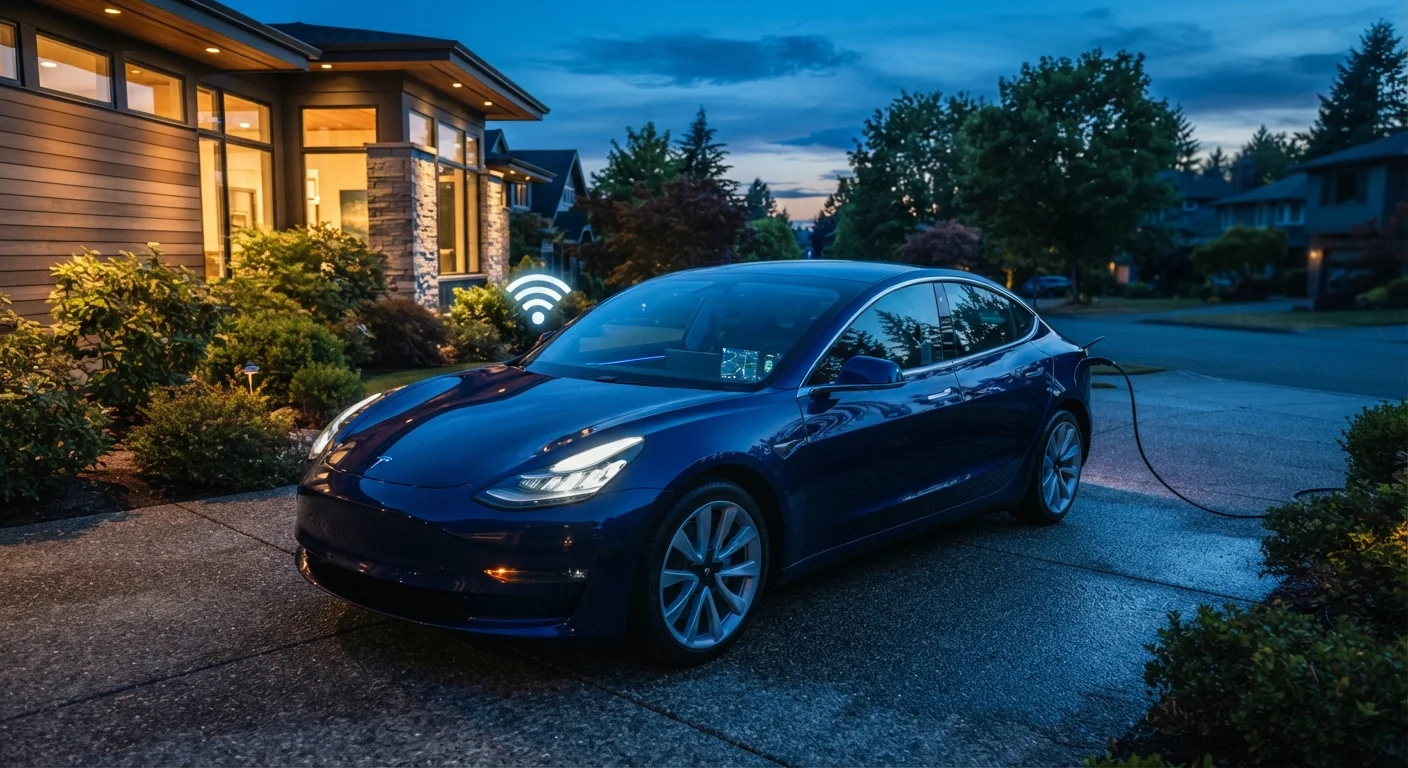
The Car You Buy Is No Longer a Fixed Product
For most of automotive history, buying a car meant accepting a static product. The features, capabilities, and behavior you got on delivery were the features, capabilities, and behavior you kept until you sold the vehicle. Software-defined vehicles are dismantling that assumption.
Today, a growing number of cars are architected more like smartphones than mechanical appliances. Their core functions are governed by software layers that can be rewritten remotely. An automaker can push a change overnight that alters how a car accelerates, how its headlights behave in rain, or which infotainment applications are available — all without the owner ever visiting a service bay.
This has significant implications for how we think about what it means for a car to be "current." What automakers mean when they call a car new has traditionally been tied to a model year or a physical redesign. OTA updates introduce a continuous dimension to that definition.
OTA Capability Varies Widely by Manufacturer
Not every connected car supports the same scope of OTA updates. Some manufacturers can update nearly every software system remotely; others limit wireless updates to infotainment while requiring dealer visits for powertrain or safety-system software. Before assuming your vehicle supports comprehensive OTA updates, consult the owner's manual or manufacturer's support site for specifics.
What OTA Updates Actually Change — and What They Can't
OTA updates are powerful, but they are bounded by the hardware already installed in the vehicle. Software can be rewritten; a physical sensor, battery cell, or structural component cannot be changed wirelessly.
In practice, OTA updates have been used to:
- Patch cybersecurity vulnerabilities before they are exploited
- Fix software bugs affecting infotainment, navigation, or driver-assist calibration
- Tune powertrain behavior, such as throttle response or regenerative braking curves
- Enable features that were built into the hardware at the factory but locked behind software
- Serve as the remedy for certain NHTSA safety recalls
What they cannot do is add hardware capabilities that were never physically installed — a camera that was never fitted, a radar unit that was omitted, or a battery pack that wasn't specified. The driver-assist systems your car shipped with set the ceiling for what software updates can unlock in that domain.
Check Update History Before Buying Used
If you're considering a used software-defined vehicle, ask the seller or dealer for the vehicle's software version and update history. A car running outdated firmware may be missing important security patches or feature improvements. Many manufacturers provide version history through their owner apps or support portals.
How This Reshapes the Model-Year Concept
The traditional model year exists because automakers once had to batch all changes into a single annual production run. Features improved once a year, at most. OTA-capable vehicles break that cadence entirely.
A vehicle released in January might have meaningfully different software by July — new features, refined behavior, or resolved complaints from early owners. This means two identical vehicles from the same production week can diverge in capability over time, depending on how each owner handles update prompts or whether regional rollouts apply.
~400M
Connected vehicles projected globally by mid-decade
Industry analysts have projected the global connected vehicle fleet will surpass 400 million units, creating the infrastructure base needed for widespread OTA deployment.
70+
ECUs in a typical modern vehicle
Contemporary vehicles can contain more than 70 electronic control units, each a potential target for software updates — underscoring the complexity of fleet-wide OTA management.
$35B+
Estimated annual dealer visit savings from OTA
Automotive research firms have estimated that OTA updates could save the industry tens of billions of dollars annually by reducing the volume of dealer-based software service visits.
This also complicates consumer expectations. Shoppers accustomed to researching a fixed feature set at purchase now need to consider what a manufacturer's update history and roadmap look like. Connectivity features in today's new cars increasingly include OTA infrastructure as a foundational selling point, not an afterthought.
What Owners Should Understand Before and After Purchase
Understanding OTA updates matters at two distinct moments: when choosing a vehicle and throughout ownership. Before buying, it's worth asking whether a vehicle's architecture supports OTA updates at all — and if so, which systems are covered. Not every connected car receives the same breadth of remote updates.
During ownership, keep a few practical considerations in mind:
- Accept updates promptly when they address safety or security issues. Running outdated firmware can leave known vulnerabilities unpatched.
- Read update notes before confirming installation. Manufacturers typically publish changelogs that describe what is being altered.
- Verify your connectivity. Most OTA updates require a stable Wi-Fi or cellular connection and sufficient battery charge before installation begins.
- Contact the manufacturer or dealer if a post-update behavior seems unexpected. Updates are reversible in many cases, and support channels exist precisely for this.
For ongoing car maintenance planning, think of software updates as part of the regular upkeep cycle — not separate from it. A vehicle that is mechanically sound but running outdated software is not fully maintained in the modern sense.
This article is for general informational purposes only. Specific OTA capabilities, update policies, and recall procedures vary by manufacturer and model. Consult your owner's manual and manufacturer resources for details specific to your vehicle.