What 'Connectivity' Actually Means in a New Car
Walk into any dealership today and you'll hear the word connectivity used freely — but it covers a wide range of capabilities. At its most basic, connectivity means the car can link to your phone or the internet. In practice, it encompasses everything from a simple Bluetooth audio connection to a full cellular modem embedded in the vehicle itself.
There are three broad layers to think about:
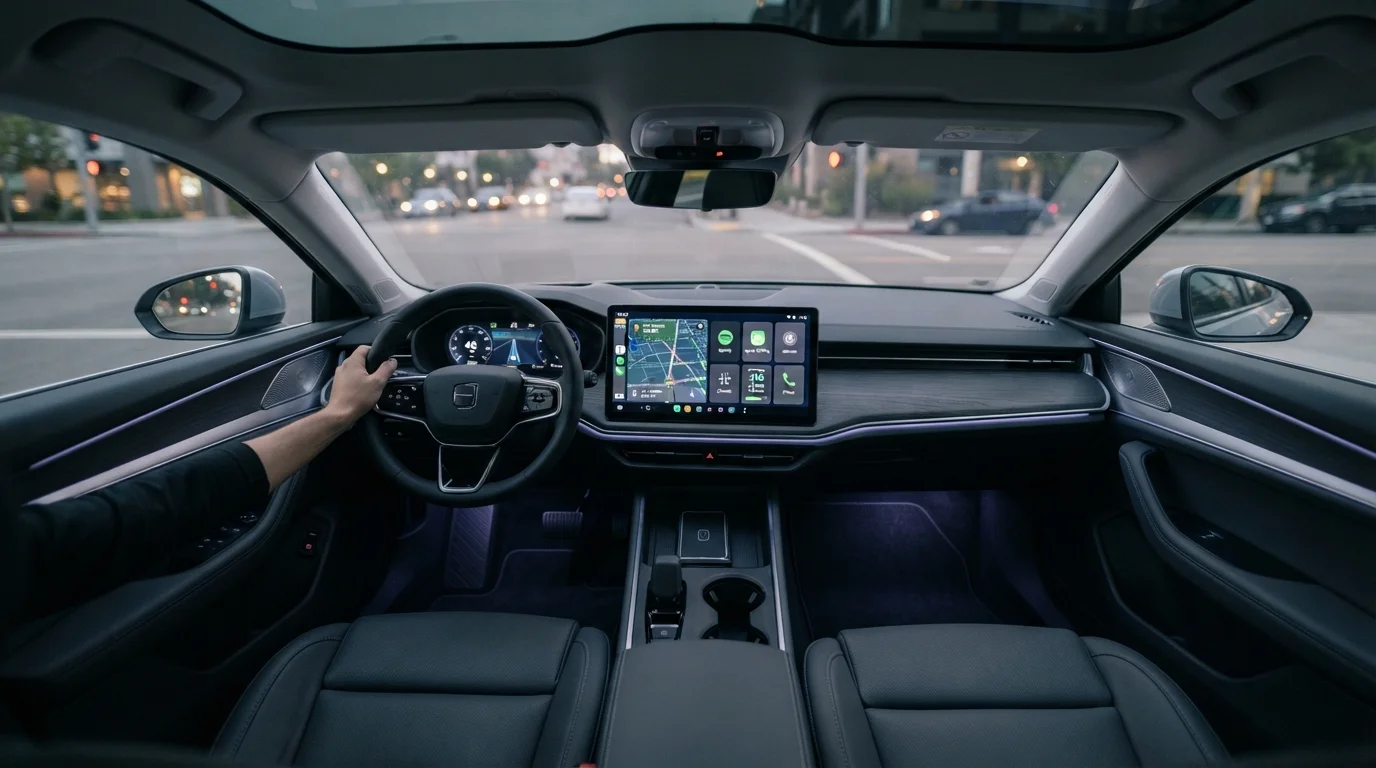
- Device mirroring: Apple CarPlay and Android Auto project your smartphone's interface onto the car's touchscreen. Wired versions use a USB cable; wireless versions use Wi-Fi and Bluetooth together.
- Embedded connectivity: The car has its own SIM card and cellular modem, operating independently of your phone. This powers built-in navigation with live traffic, remote vehicle monitoring, and Wi-Fi hotspot capability.
- Over-the-air (OTA) updates: Like a smartphone, some vehicles can receive software updates wirelessly, potentially changing interface features, fixing bugs, or adjusting driver-assist calibrations.
Understanding which layer a feature belongs to tells you a lot about what it costs and what dependencies it requires. For a deeper look at how OTA updates reshape the modern car, it's worth exploring how software-defined vehicles are changing buyer expectations.
What's Genuinely Standard in Most New Vehicles
Feature lists on new cars can feel overwhelming, but a handful of connectivity features have become effectively universal across the U.S. market, even at base trim levels:
- Bluetooth: Hands-free calling and audio streaming are standard on virtually every new vehicle.
- USB ports: At least one USB-A or USB-C port for charging and data — often more.
- Wired Apple CarPlay and Android Auto: Now included on the vast majority of new models from mainstream brands.
- A touchscreen infotainment display: Screen sizes and responsiveness vary, but touchscreen interfaces have replaced most physical controls.
What still varies is wireless CarPlay and Android Auto — the version that lets you use your phone without plugging in. This feature is far more common on mid-level and upper trims than on the base model.
~90%
New U.S. vehicles with CarPlay support
Apple has reported that CarPlay is available in approximately 90% of new vehicles sold in the United States.
$1B+
Projected annual connected-car services revenue
Industry analysts project automakers' connected services subscription revenues will grow into the billions annually as trial periods expire across vehicle fleets.
3 years
Typical complimentary connected services trial
Many automakers offer complimentary connected services trials ranging from one to three years at the point of new-vehicle purchase.
It's also useful to stay skeptical when automakers use language like "all-new connectivity suite" — check our guide on what automakers actually mean when they call a car 'new' to cut through the marketing.
What You're Actually Paying Extra For
This is where the sticker price diverges from the total cost of staying connected. Automakers have increasingly moved premium connectivity features behind subscription paywalls, following a model familiar from streaming services.
Read the Fine Print on Trial Periods
When a salesperson mentions that connected features come 'included,' ask specifically how long the trial lasts and what the annual renewal cost is. Trial periods often expire between one and three years after purchase, and the ongoing fees can add up across multiple subscriptions. Treat any trial as a temporary arrangement and budget accordingly.
Common features that may cost extra include:
- Remote access via app: Starting, locking, or locating your vehicle from your phone often requires a subscription after a trial period — typically one to three years — expires.
- Built-in Wi-Fi hotspot: The hardware may be installed, but actual hotspot service requires a cellular data plan activated through the automaker's provider.
- Real-time navigation and traffic data: The map may work offline, but live traffic routing and speed camera alerts often require a connected services subscription.
- Advanced OTA features: Some manufacturers offer expanded software capabilities — additional driving modes, enhanced audio tuning — as unlock-able paid features post-purchase.
The driver-assist technology in new cars can also intersect with connectivity fees, as some advanced monitoring systems rely on the car's cellular connection to function fully.
How to Evaluate What You Actually Need
Not every connected feature delivers equal value to every driver. Before choosing a trim level or activating a subscription, a few practical questions help clarify what's worth the cost:
- Do you already use your phone for navigation? If you rely on Google Maps or Apple Maps via CarPlay, you may not need the automaker's embedded navigation subscription.
- How important is remote access to you? If you rarely need to pre-condition the cabin or check vehicle status remotely, a remote access subscription may not pay for itself.
- Is the trial period long enough to evaluate? Many subscriptions begin with a complimentary period. Use that window actively to decide if the feature earns its annual fee.
- How often does the software need updating? If you own a vehicle with OTA capability, understand what updates are free and which may eventually be monetized.
Being a well-informed vehicle owner extends beyond connectivity. The car maintenance hub is a solid reference for the full picture of what responsible ownership involves — software features included.