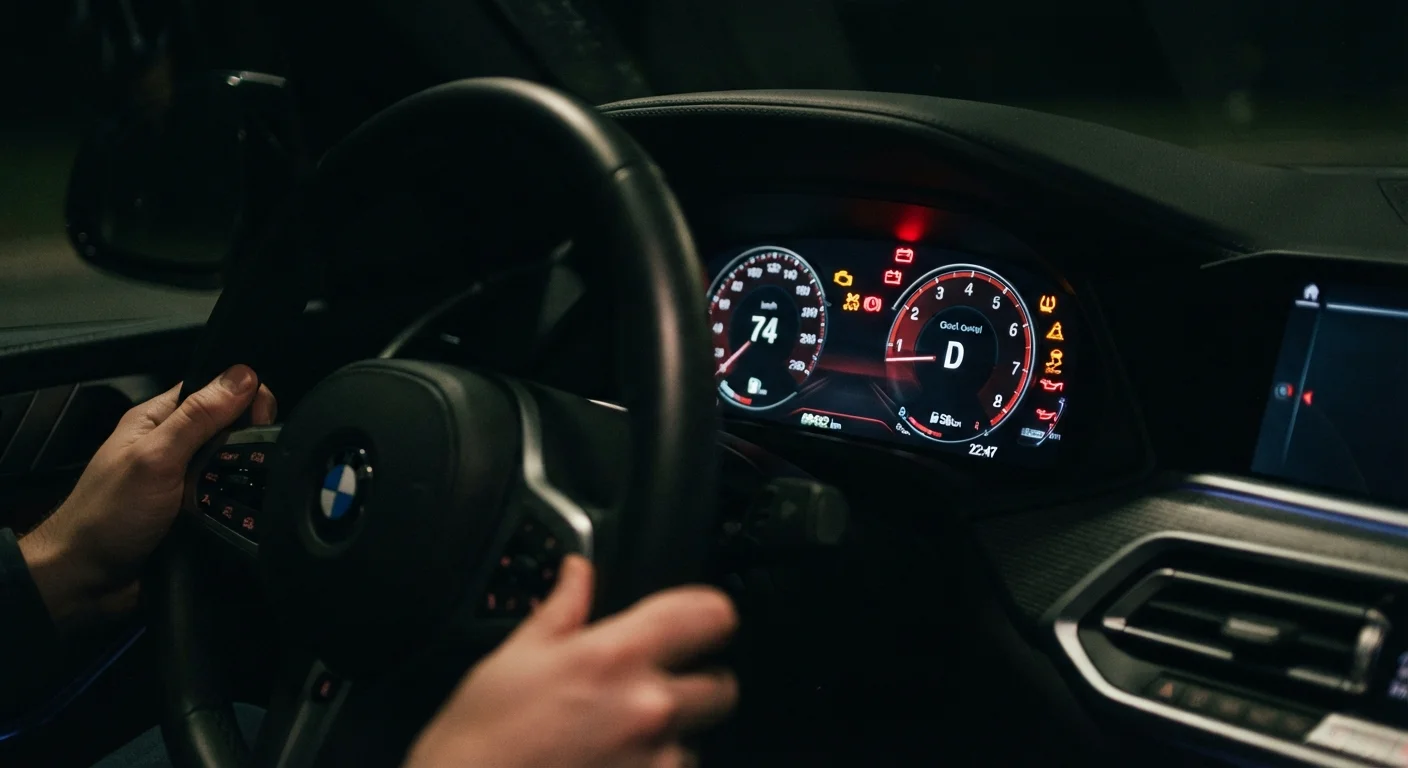
How Warning Lights Work
Every modern vehicle uses an onboard diagnostics system (OBD) that continuously monitors dozens of sensors across the engine, transmission, brakes, emissions system, and more. When a sensor reading falls outside acceptable parameters, the system triggers a warning light on the instrument cluster. The color of that light is your first clue about urgency.
Red lights signal serious or potentially dangerous conditions — stop driving as soon as it is safe to do so. Amber or yellow lights indicate a fault that needs attention soon but may not require immediate roadside action. Green and blue lights are informational, confirming that a system is active rather than warning of a fault.
Understanding this color hierarchy lets you respond proportionally rather than either ignoring every light or pulling over unnecessarily. For broader context on how driver-assist systems interact with the dashboard, see our guide on driver-assist technology acronyms.
| Color: Red | Stop driving as soon as safely possible |
| Color: Amber / Yellow | Schedule service promptly — not an emergency stop |
| Color: Green / Blue | Informational — system is active, no fault indicated |
| OBD-II standard adopted | Required on all US cars from 1996 onward (US Environmental Protection Agency) |
| Most common warning light | Check Engine Light — covers hundreds of potential fault codes |
| Owner's manual | Primary reference for vehicle-specific warning light definitions |
Lights That Demand Immediate Action
Certain warning lights represent conditions that can cause engine failure, brake loss, or safety risk within minutes of being ignored.
OBD-II
On-Board Diagnostics, second generation — a standardized system fitted to most vehicles sold in the US from 1996 onward. It monitors vehicle systems and stores fault codes that a scanner tool can retrieve.
Fault Code (DTC)
A Diagnostic Trouble Code stored by the OBD system when a sensor reading is out of range. Codes follow a standardized format (e.g., P0300) and help mechanics pinpoint the source of a fault.
Alternator
A generator driven by the engine belt that produces electricity to power the vehicle's systems and recharge the battery while the engine runs. Alternator failure typically triggers the battery warning light.
TPMS
Tire Pressure Monitoring System — a sensor-based system that alerts the driver when one or more tires drops significantly below the recommended inflation pressure.
Coolant
A fluid (usually a mix of antifreeze and water) circulated through the engine to regulate operating temperature. Low coolant level is a common trigger for the engine temperature warning light.
- Oil Pressure Warning (red oil can icon): Indicates critically low oil pressure. Pull over safely, switch off the engine, and check the oil level before driving further. Continuing to drive risks severe engine damage.
- Engine Temperature Warning (thermometer in liquid): The engine is overheating. Stop driving, allow the engine to cool, and check coolant levels — but never open a hot radiator cap. Our car fluid checks guide covers how to inspect coolant safely.
- Battery / Charging System (battery outline): The electrical charging system has failed, meaning the alternator may not be recharging the battery. The vehicle may only have minutes of power remaining. Battery health and failure causes explains the full picture.
- Brake Warning Light (exclamation mark in circle): If illuminated while driving with the parking brake released, this can indicate critically low brake fluid or a brake system fault. Do not ignore it — have the brakes inspected immediately.
Lights That Need Prompt — Not Panic — Attention
These amber lights indicate genuine faults but generally allow you to drive to a service appointment rather than stop immediately.
~200+
Fault codes a check engine light can represent
The OBD-II system uses hundreds of standardized diagnostic trouble codes, ranging from minor emissions faults to serious engine misfires.
1 in 4
Vehicles on US roads estimated to have an active check engine light
Industry estimates based on vehicle inspection data suggest a significant portion of cars in circulation carry unresolved fault codes at any given time.
- Check Engine Light (engine outline): One of the most misunderstood lights on any dashboard. It covers a wide range of engine and emissions issues — from a loose fuel cap to a misfiring cylinder. A diagnostic scan (OBD-II reader) by a mechanic will retrieve the stored fault code and identify the root cause.
- Tire Pressure Monitoring System / TPMS (flat tire icon): One or more tires has dropped below the recommended pressure. Check and inflate all four tires promptly; driving on underinflated tires increases blowout risk and reduces fuel efficiency.
- Traction Control / Stability Control (car with skid lines): If this light remains on while driving on dry roads, the system may have a fault rather than simply responding to a slippery surface.
- Transmission Temperature (thermometer in gear): The transmission fluid is overheating. Reduce speed, avoid towing, and have the transmission fluid level and condition checked soon.
Keeping your service history records up to date helps a mechanic diagnose recurring fault codes more efficiently.
What To Do When a Light Comes On
A dashboard light appearing for the first time can be unsettling, but a calm, systematic response protects both you and the vehicle.
- Note the color. Red means stop when safe; amber means schedule attention.
- Check for accompanying symptoms. Unusual sounds, smells, vibrations, or changes in handling alongside a warning light increase urgency significantly.
- Consult your owner's manual. Manufacturers use slightly different symbols, and your manual contains the exact definition for every icon in your specific vehicle.
- Get a diagnostic scan. For check engine and other amber faults, a qualified mechanic can read stored fault codes with an OBD-II scanner — many independent garages offer this check at low or no cost.
- Do not reset the light without resolving the fault. Clearing codes without fixing the underlying problem simply delays the warning and can mask worsening issues.
This article is for general informational purposes. Warning light behavior varies between vehicle makes, models, and model years. Always consult a qualified mechanic for diagnosis and repair of any fault indicated by your vehicle's warning system.